

THREE BRAINS: THINKING TO DOING TO BEING
It’s often useful to compare one’s brain to a computer, and it’s true that yours already has all the hardware you’ll need to change your “self” and your life. But do you know how best to use that hardware to install new software?
Picture two computers with identical hardware and software—one in the hands of a tech novice, and the other being used by an experienced computer operator. The beginner knows little about what kinds of things a computer can do, let alone how to do them.
The intention behind Part II, simply put, is to provide pertinent information about the brain so that when you, as its operator, begin to use the meditative process to change your life, you will know what needs to happen in your brain and in your meditations, and why.
Change Entails New Ways of
Thinking, Doing, and Being
If you know how to drive a car, then you’ve already experienced probably the most elementary example of thinking, doing, and being. At first, you had to think about every action you took, and about all those rules of the road. Later, you became fairly proficient at driving, as long as you paid conscious attention to what you were doing. Eventually, you were being a driver; your conscious mind slid over and became a passenger, and ever since, your subconscious mind has probably occupied the driver’s seat most of the time; driving has become automatic and second nature to you. Much of what you learn is via this progression from thinking to doing to being, and three areas of the brain facilitate this mode of learning.
But did you know that you can also go directly from thinking to being—and it’s likely that you’ve already experienced this in your life? Through the meditation that is at the heart of this book (this chapter will give you a prelude), you can go from thinking about the ideal self you want to become, straight to being that new self. That is the key to quantum creating.
Change all begins with thinking: we can immediately form new neurological connections and circuits that reflect our new thoughts. And nothing gets the brain more excited than when it’s learning—assimilating knowledge and experiences. These are aphrodisiacs for the brain; it “fondles” every signal it receives from our five senses. Every second, it processes billions of bits of data; it analyzes, examines, identifies, extrapolates, classifies, and files information, which it can retrieve for us on an “as needed” basis. Truly, the human brain is this planet’s ultimate supercomputer.
As you’ll recall, the basis for understanding how you can actually change your mind is the concept of hardwiring—how neurons engage in long-term, habitual relationships. I’ve talked about Hebbian learning, which states: “Nerve cells that fire together, wire together.” (Neuroscientists used to think that after childhood, brain structure was relatively immutable. But new findings reveal that many aspects of the brain and nervous system can change structurally and functionally—including learning, memory, and recovery from brain damage—throughout adulthood.)
But the opposite is also true: “Nerve cells that no longer fire together, no longer wire together.” If you don’t use it, you lose it. You can even focus conscious thought to disconnect or unwire unwanted connections. Thus, it is possible to let go of some of the “stuff” you’ve been holding on to that colors the way you think, act, and feel. The rewired brain will no longer fire according to the circuitry of the past.
The gift of neuroplasticity (the brain’s ability to rewire and create new circuits at any age as a result of input from the environment and our conscious intentions) is that we can create a new level of mind. There’s a sort of neurological “out with the old, in with the new,” a process that neuroscientists call pruning and sprouting. It’s what I call unlearning and learning, and it creates the opportunity for us to rise above our current limitations and to be greater than our conditioning or circumstances.
In creating a new habit of being ourselves, we are essentially taking conscious control over what had become an unconscious process of being. Instead of the mind working toward one goal (I’m not going to be an angry person) and the body working toward another (Let’s stay angry and keep bathing in those familiar chemicals), we want to unify the mind’s intent with the body’s responses. To do this, we must create a new way of thinking, doing, and being.
Given that to change our lives, we first have to change our thoughts and feelings, then do something (change our actions or behaviors) to have a new experience, which in turn produces a new feeling, and then we must memorize that feeling until we move into a state of being (when mind and body are one), at least we’ve got a few things going for us. Along with the brain being neuroplastic, we could say that we have more than one brain to work with. In effect, we have three of them.
(For our purposes, this chapter will limit its focus to those functions of the “three brains” that relate specifically to breaking the habit of being ourselves. On a personal note, I find that studying what the brain and the other components of the nervous system do for us is an endlessly fascinating exploration. My first book, Evolve Your Brain, covered this topic in more detail than would serve our purposes here; there are additional resources for study on my website, www.drjoedispenza.com; and of course, many other excellent publications and websites are available for those who want to learn more about the brain, the mind, and the body.)
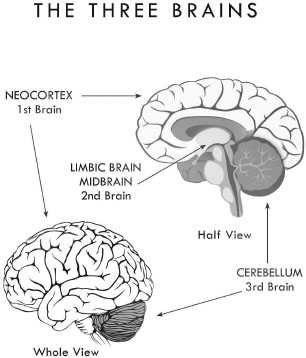
Figure 6A. The “first brain,” the neocortex or thinking brain (in white). The “second brain” is the limbic or emotional brain, responsible for creating, maintaining, and organizing chemicals in the body (in gray). The “third brain,” the cerebellum, is the seat of the subconscious mind (in charcoal).
From Thinking to Doing: The Neocortex Processes
Knowledge, Then Prompts Us to Live What We Learned
Our “thinking brain” is the neocortex, the brain’s walnut-like outer covering. Humanity’s newest, most advanced neurological hardware, the neocortex is the seat of the conscious mind, our identity, and other higher brain functions. (The frontal lobe, discussed in earlier chapters, is one of four parts of the neocortex.)
Essentially, the neocortex is the brain’s architect or designer. It allows you to learn, remember, reason, analyze, plan, create, speculate on possibilities, invent, and communicate. Since this area is where you log sensory data such as what you see and hear, the neocortex plugs you into external reality.
In general, the neocortex processes knowledge and experience. First, you gather knowledge in the form of facts or semantic information (philosophical or theoretical concepts or ideas that you learn intellectually), prompting the neocortex to add new synaptic connections and circuits.
Second, once you decide to personalize or apply knowledge you have acquired—to demonstrate what you learned—you will invariably create a new experience. This causes patterns of neurons called neural networks to form in the neocortex. These networks reinforce the circuitry of what you learned intellectually.
If the neocortex had a motto, it might be: Knowledge is for the mind.
Simply put, knowledge is the precursor to experience: Your neocortex is responsible forprocessing ideas that you have not yet experienced, which exist as a potential for you to embrace at some future time. As you entertain new thoughts, you begin to think about modifying your behavior so that you can do something differently when the opportunity presents itself, in order to have a new outcome. As you then alter your routine actions and typical behaviors, something different from the norm should happen, which will produce a new event for you to experience.
From New Events to New Emotions: The Limbic Brain
Produces Chemicals to Help Us Remember Experiences
The limbic brain (also known as the mammalian brain), located under the neocortex, is the most highly developed and specialized area of the brain in mammals other than humans, dolphins, and higher primates. Just think of the limbic brain as the “chemical brain” or the “emotional brain.”
When you’re in the midst of that new experience, and your senses send a rush of corresponding information from the external world to your neocortex, its neural networks organize themselves to reflect the event. Thus, experience enriches the brain even further than new knowledge.
The moment those networks of neurons fire with a pattern specific to that new experience, the emotional brain manufactures and releases chemicals in the form of peptides. This chemical cocktail has a specific signature that reflects the emotions you are experiencing in the moment. As you now know, emotions are the end products of experience; a new experience creates a new emotion (which signals new genes in new ways). Thus, emotions signal the body to record the event chemically, and you begin to embody what you are learning.
In the process, the limbic brain assists in forming long-term memories: you can remember any experience better because you can recall how you felt emotionally while the event was occurring. (The neocortex and limbic brain together enable us to form declarative memories, meaning that we can declare what we’ve learned or experienced.1 See Figure 6B[1] for more information on declarative and nondeclarative memories.)
You can see, then, how we are marked emotionally by highly charged experiences. All people who have been married can tell you where they were and what they were doing when they or their beloved proposed. Perhaps they were eating a great meal on the patio of their favorite restaurant, feeling the balmy breezes of that summer night and enjoying the sunset while the strains of Mozart played softly in the background, when their dinner partner got down on one knee and held out a little black box.
The combination of everything they were experiencing in that moment made them feel very different from their normal self. The typical internal chemical balance that their identity self had memorized got knocked out of order by what they saw, heard, and felt. In a sense, they woke up from the familiar, routine environmental stimuli that typically bombard the brain and cause us to think and feel in predictable ways. Novel events surprise us to the point that we become more aware in the present moment.
If the limbic brain had a motto, it might be: Experience is for the body.
If knowledge is for the mind, and experience is for the body, then when you apply knowledge and create a new experience, you teach the body what the mind has intellectually learned. Knowledge without experience is merely philosophy; experience without knowledge is ignorance. There’s a progression that has to take place. You have to take knowledge and live it—embrace it emotionally.
If you’re still with me as I’ve been discussing how to change your life, you’ve learned about gaining knowledge, and then taking action to have a new experience, which produces a new feeling. Next, you have to memorize that feeling and move what you’ve learned from the conscious mind to the subconscious mind. You’ve already got the hardware to do that in the third brain area we’ll discuss.
From Thinking and Doing to Being: The Cerebellum
Stores Habitual Thoughts, Attitudes, and Behaviors
Do you remember my talking about the common experience when we can’t consciously remember a phone number, ATM PIN, or lock combination, but we’ve practiced it so often that the body knows better than the brain, and our fingers automatically get the job done? That may seem like a small thing. But when the body knows equal to or better than the conscious mind, when you can repeat an experience at will without much conscious effort, then you have memorized the action, behavior, attitude, or emotional reaction until it has become a skill or a habit.
When you reach this level of ability, you have moved into a state of being. In the process, you’ve activated the third brain area that plays a major role in changing your life—the cerebellum, seat of the subconscious.
The most active part of the brain, the cerebellum is located at the back of the skull. Think of it as the brain’s microprocessor and memory center. Every neuron in the cerebellum has the potential to connect with at least 200,000—and up to a million—other cells, to process balance, coordination, awareness of the spatial relation of body parts, and execution of controlled movements. The cerebellum stores certain types of simple actions and skills, along with hardwired attitudes, emotional reactions, repeated actions, habits, conditioned behaviors, and unconscious reflexes and skills that we have mastered and memorized. Possessing amazing memory storage, it easily downloads various forms of learned information into programmed states of mind and body.
When you are in a state of being, you begin to memorize a new neurochemical self. That’s when the cerebellum takes over, making that new state an implicit part of your subconscious programming. The cerebellum is the site of nondeclarative memories, meaning that you’ve done or practiced something so many times that it becomes second nature and you don’t have to think about it; it’s become so automatic that it’s hard to declare or describe how you do it. When that happens, you will arrive at a point when happiness (or whatever attitude, behavior, skill, or trait you’ve been focusing on and rehearsing mentally or physically) will become an innately memorized program of the new self.
Let’s use a true-to-life example to take a practical look at how these three brains take us from thinking to doing to being. First, we’ll see how through conscious mental rehearsal, the thinking brain (neocortex) uses knowledge to activate new circuits in new ways to make a new mind. Then, our thought creates an experience, and via the emotional (limbic) brain, that produces a new emotion. Our thinking and feeling brains condition the body to a new mind. Finally, if we reach the point where mind and body are working as one, the cerebellum enables us to memorize a new neurochemical self, and our new state of being is now an innate program in our subconscious.
A Real-Life Example of the Three Brains in Action
As a practical look into these ideas, suppose that you recently read a few thought-provoking books about compassion, including one written by the Dalai Lama, a biography of Mother Teresa, and an account of the work of Saint Francis of Assisi.
This knowledge allowed you to think outside the box. Reading this material would have forged new synaptic connections in your thinking brain. Essentially, you learned about the philosophy of compassion (through other people’s experiences, not yours). Moreover, you’ve sustained those neural connections by reviewing what you learned on a daily basis: You’re so enthusiastic that you are solving all of your friends’ problems by offering advice and holding court. You have become the great philosopher. Intellectually, you know your stuff.
As you’re driving home from work, your spouse calls to say that you’ve been invited to dinner with your mother-in-law in three days. You pull off the road, and already you’re thinking about how you have disliked your MIL intensely ever since she hurt your feelings ten years ago. Soon you’ve got a mental laundry list: you never liked her opinionated way of talking; how she interrupts others; how she smells; even how she cooks. Whenever you’re around her, your heart races, your jaw tightens, your face and body are tense, you feel jittery, and you just want to jump up and leave.
Still sitting in your car, you remember those books on the philosophy of compassion, and you think about what you learned theoretically. It occurs to you, Maybe if I try to apply what I read in those books, I might have a new experience of my mother-in-law. What did I learn that I can personalize to change the outcome of this dinner?
When you contemplate applying that understanding with your MIL, something wonderful begins to happen. You decide not to react to her with your typical set of automatic programs. Instead, you begin to think about who you no longer want to be, and who you want to be instead. You ask yourself, How do I not want to feel, and how am I not going to act, when I see her? Your frontal lobe begins to “cool off” the neural circuits that are connected to the old you; you’re starting to unwire or prune away that old you from functioning as an identity. You could say that because your brain isn’t firing in the same way, you’re no longer creating the same mind.
Then you review what those books said to help you plan how you want to think, feel, and act toward your MIL. You ask yourself, How can I modify my behavior—my actions—and my reactions so my new experience leads to a new feeling? So you picture yourself greeting and hugging her, asking her questions about things you know she is interested in, and complimenting her on her new hairdo or glasses. Over the next few days, as you mentally rehearse your new ideal of self, you continue to install more neurological hardware so you’ll have the proper circuits in place (in effect, a new software program) when you actually interact with your MIL.
For most of us, to go from thinking to doing is like inspiring snails to pick up the pace. We want to stay in the intellectual, philosophical realm of our reality; we like to identify with the memorized, recognizable feeling of our familiar self.
Instead, by surrendering old thought patterns, interrupting habitual emotional reactions, and forgoing knee-jerk behaviors, then planning and rehearsing new ways of being, you are putting yourself into the equation of that knowledge you learned, and beginning to create a new mind—you are reminding yourself who you want to be.
But there is another step that we must address here.
What happened as you began to observe your “old-personality self” related to the familiar thoughts, habitual behaviors, and memorized emotions that you previously connected with your mother-in-law? In a way, you were going into the operating system of the subconscious mind, where those programs exist, and you were the observer of those programs. When you can become aware of or notice who you are being, you are becoming conscious of your unconscious self.
As you began to psychologically project yourself into a potential situation ahead of the actual experience (the impending dinner), you began to rewire your neural circuitry to look as though the event (being compassionate toward your MIL) had already taken place. Once those new neural networks began to fire in unison, your brain created a picture, vision, model, or what I will call a hologram (a multidimensional image) representing the ideal self that you were focused on being. The instant this happened, you made what you were thinking about more real than anything else. Your brain captured the thought as the experience, and “upscaled” its gray matter to look as though the experience had already occurred.
Embodying Knowledge Through Experience:
Teaching the Body What the Mind Has Learned
Soon it’s game time, and you find yourself sitting at dinner, face-to-face with “good ol’ Mom.” Instead of knee-jerking when her typical behaviors manifest, you stay conscious, remember what you learned, and decide to try it out. Rather than judging, attacking, or feeling animosity toward her, you do something completely different for you. Like the books encouraged, you stay in the present moment, open your heart, and really listen to what she’s saying. You no longer hold her to her past.
Lo and behold, you modify your behavior and restrain your impulsive emotional reactions, thereby creating a new experience with your MIL. That activates the limbic brain to cook up a new blend of chemicals, which generates a new emotion, and all of a sudden, you truly start to feel compassion for her. You see her for who she is; you even see aspects of yourself in her. Your muscles relax, you feel your heart opening, and you breathe deeply and freely.
You had such a great feeling that day that it lingers. Now you’re inspired and open-minded, and you find that you truly love your mother-in-law. As you couple your new, internal feeling of goodwill and love with this person in your external reality, you connect compassion with your mother-in-law. You form an associative memory.
Once you began to feel the emotion of compassion, in a sense you (chemically) instructed your body what your mind (philosophically) knew, and that activated and modified some of your genes. Now you’ve gone from thinking to doing: your behaviors match your conscious intentions; your actions are equal to your thought; mind and body are aligned and working together. You did exactly what those people did in those books. So by intellectually learning compassion with your brain and mind, then demonstrating this ideal in your environment through experience, you embodied this elevated feeling. You just conditioned your body to a new mind of compassion. Your mind and body were working together. You embodied compassion. In a sense, the word has become flesh.
Two Brains Have Taken You from Thinking to Doing,
but Can You Create a State of Being?
From your efforts to embody compassion, you now have your neocortex and limbic brain working together. You’re out of the box of the familiar, habitual memorized self, which operates within a set of automatic programs, and you’re in a new thinking and feeling cycle. You have experienced how compassion feels; and you like it better than covert hostility, rejection, and suppressed anger.
Hold on, though, you are not yet ready for sainthood! It’s not enough to have mind and body working together one time. That got you from thinking to doing, but can you reproduce that feeling of compassion at will? Can you repeatedly embody compassion independent of conditions in your environment, so that no person or situation could ever create that old state of being in you again?
If not, you haven’t yet mastered compassion. My definition of mastery is that our internal chemical state is greater than anything in our external world. You are a master when you’ve conditioned yourself with chosen thoughts and feelings, you’ve memorized desired emotional/chemical states, and nothing in your external life deters you from your aims. No person, no thing, and no experience at any time or place should disrupt your internal chemical coherence. You can think, act, and feel differently whenever you choose.

If You Can Master Suffering,
You Can Just as Easily Master Joy
You probably know someone who has mastered suffering, right? So you call her and ask, “How are you?”
So-so.
“Listen, I’m going to go out with some friends to a new art gallery, and then eat at this restaurant that has really healthy desserts. Afterward, we’re going to listen to some live music. Would you like to come with us?”
No. I don’t feel like it.
But if she said what she actually meant, she’d say, I’ve memorized this emotional state, and nothing in my environment—no person, no experience, no condition, no thing—is going to move me from my internal chemical state of suffering. It feels better to be in pain than to let go and be happy. I am enjoying my addiction for now, and all these things that you want to do might distract me from my emotional dependency.
But guess what? We can just as easily master an internal chemical state such as joy or compassion.
In the preceding example with your mother-in-law, if you practiced your thoughts, behaviors, and feelings enough times, “being” compassionate would become rather natural. You would evolve from just thinking about it, to doing something about it, to being it. “Being” means that it’s easy, natural, second nature, routine, and unconscious. Compassion and love would be as automatic and familiar to you as those self-limiting emotions you just changed.
So now you need to replicate this experience of thinking, feeling, and acting out of compassion. If you do, you will break the addiction of your past emotional state and neurochemically condition your body and mind to memorize the internal chemical state called compassion better than your conscious mind. Ultimately, if you repeatedly re-create the experience of compassion at will, practicing it independent of any circumstance in your life, your body would become the mind of compassion. You would memorize compassion so well that nothing from your outside world could move you from this state of being.
Now all three brains are working together; and you are biologically, neurochemically, and genetically in a state of compassion. When compassion becomes unconditionally ordinary and familiar for you, you have progressed from knowledge to experience to wisdom.
Progressing to a State of Being:
The Role of Our Two Memory Systems
We have three brains that allow us to evolve from thinking to doing to being. Take a look at this chart:
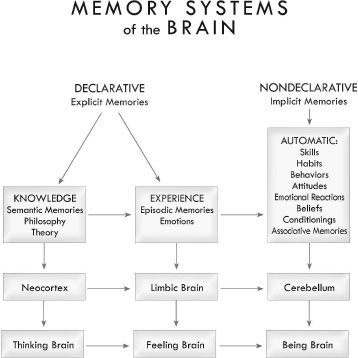
Figure 6B(1). Declarative and nondeclarative memories.
There are two memory systems in the brain:
— The first system is called declarative or explicit memories. When we remember and can declare what we have learned or experienced, those are declarative memories. There are two types of declarative memories: knowledge (semantic memories derived from philosophical knowledge) and experience (episodic memories derived from sensory experiences, identified as events in our lives with particular people, animals, or objects, while we were doing or witnessing a certain thing at a particular time and place). Episodic memories tend to imprint longer in the brain and body than semantic memories.
— The second memory system is called nondeclarative or implicit memories. When we practice something so many times that it’s become second nature—we no longer have to think about it; it’s like we almost can’t declare how we do it—the body and mind are one. This is the seat of our skills, habits, automatic behaviors, associative memories, unconscious attitudes, and emotional reactions.
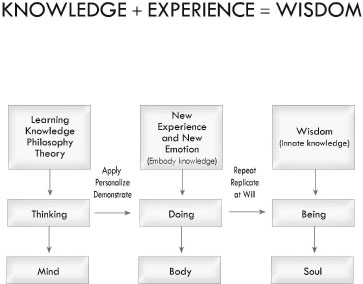
Figure 6B(2). Three brains: thinking to doing to being.
Thus, when we take what we learn intellectually (neocortex), and apply it, personalize it, or demonstrate it, we will modify our behavior in some way. When we do, we will create a new experience, which will produce a new emotion (limbic brain). If we can repeat, replicate, or experience that action at will, we will move into a state of being (cerebellum).
Wisdom is accumulated knowledge that has been gained through repeated experience. And when “being” compassionate is as natural as suffering; judging; blaming; or being frustrated, negative, or insecure, now we are wise. We are liberated to seize new opportunities, because somehow life seems to organize itself equal to how or who we are being.
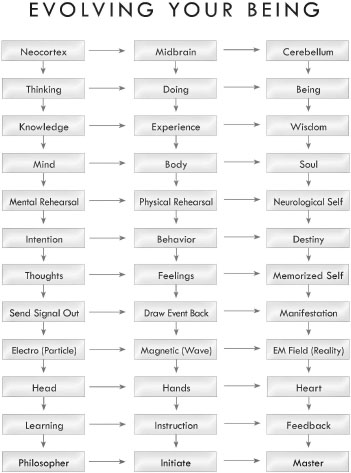
Figure 6C. This chart shows the progression of how the three brains align to correlate different avenues of personal evolution.
Going from Thinking Straight to Being:
A Prelude to Meditation
Going from thinking to doing to being is a progression that we’ve all experienced many times, whether it was when we learned to be a driver, a skier, a knitter, or a person to whom speaking a second language has become second nature.
Now, let’s talk about one of evolution’s great gifts to us as humans: the ability to go from thinking to being—without taking any physical action. Said another way, we can create a new state of being ahead of having an actual material experience.
We do this all the time, and it’s not a case of “Fake it till you make it.” For example, you have a sexual fantasy in which you inwardly experience all the thoughts, feelings, and actions you look forward to when your partner returns from a trip. You’re so present with your internal experience that your body is chemically altered and responds as if that future event is already upon you in that exact moment. You have moved into a new state of being. Similarly, whether you’re mentally rehearsing the speech you’re going to give, reminding yourself how you’re going to handle the confrontation that you need to have with your co-worker, or imagining what you want to eat when you’re really hungry but stuck in traffic—and in each case you’re thinking about that to the exclusion of everything else—your body will begin to move into a state of being just by thought alone.
Okay, but how far can you take this? Through thinking and feeling alone, can you finally be the person you want to be? Can you create and live a chosen reality, as my daughter did when she experienced the summer job of her dreams?
That’s where meditation comes in. People use meditative techniques for a lot of reasons, as you know. In this book, you will learn a special meditation designed for a specific purpose—to help you overcome the habit of being yourself and become that ideal self you desire. Through the remainder of this chapter, we’ll connect some of the knowledge we’ve covered up to now with the meditation you will soon learn. (Whenever I discuss meditation or the meditative process, I will be referring to the process that will be our focus in Part III.)
Meditation allows us to change our brains, bodies, and state of being. Most important, we can make these changes without having to take any physical action or have any interaction with the external environment. Through meditation, we can install the necessary neurological hardware, just as those piano players and finger exercisers made changes through mental rehearsal. (Those research subjects used mental rehearsal alone, but for our purposes, it is one component of the meditative process, albeit a very important one.)
If I asked you to think about the qualities that your ideal self would possess, or if I suggested that you contemplate what it would feel like to be a person of greatness such as Mother Teresa or Nelson Mandela, then just by contemplating a new way of being, you would begin firing your brain in new ways and making a new mind. That’s mental rehearsal in action. I’m now asking you to reflect on what it would feel like to be happy, content, satisfied, and at peace. What would you envision for yourself if you were to create a new ideal of you?
Essentially, the meditative process allows you to answer this question by bringing together all of the information, learned and wired synaptically into your brain, about what it means to be happy, content, satisfied, and at peace. In meditation, you take that knowledge and then place yourself in the equation. Instead of merely asking what it would mean to be happy, you put yourself in the position of practicing, and thus living in, a state of happiness. After all, you know what happiness looks and feels like. You’ve had past experiences with it yourself; you’ve seen other people’s versions of it. Now, you get to pick and choose from that knowledge and experience to create a new ideal of yourself.
I’ve talked about how, through the frontal lobe, you activate new circuits in new ways to create a new mind. Once you experience that new mind, your brain creates a kind of holographic image that gives you a model to follow in creating your future reality. Because you have installed new neural circuits ahead of any real experience, you don’t have to carry out a nonviolent revolution, as Gandhi did; you don’t have to lead your people and be burned at the stake, as Joan of Arc was. You simply have to use your knowledge and experience of those qualities of courage and conviction to produce an emotional effect within you. The result will be a state of mind. By repeatedly producing that state of mind, it will become familiar to you, and you will be wiring new circuits. The more often you produce that state of mind, the more those thoughts will become the experience.
Once that thought-experience transformation takes place, the end product of that experience will be a feeling, an emotion. When this occurs, your body (as the unconscious mind) does not know the difference between an event that takes place in physical reality and the emotions you created by thought alone.
As someone who is conditioning the body to a new mind, you’ll find that your thinking brain and the emotional brain are now working in concert. Remember that thoughts are for the brain, and feelings are for the body. When you are both thinking and feeling in a specific way as a part of the meditative process, you are different from when you started out. The newly installed circuits, the neurological and chemical changes that have been produced by those thoughts and emotions, have altered you in such a way that there is physical evidence in the brain and body that shows those changes.
At that point, you’ve moved into a state of being. You’re no longer just practicing happiness or gratitude or whatever; you are being grateful or happy. You can produce that state of mind and body every day; you can continually reexperience an event and produce the emotional response to that experience of how you would feel if you were that new, ideal self.
If you can get up from your meditative session and be in that new state of being—altered neurologically, biologically, chemically, and genetically—you have activated those changes ahead of any experience, and you will be more prone to acting and thinking in ways equal to who you are being. You have broken the habit of being yourself!
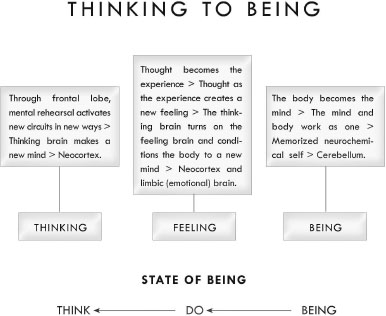
Figure 6D. You can go from thinking to being without having to do anything. If you are mentally rehearsing a new mind, there will come a moment that the thought you are thinking about will become the experience. When this occurs, the end product of that inward experience is an emotion or feeling. Once you can feel what it would feel like to be that person, your body (as the unconscious mind) begins to believe it is in that reality. Now your mind and body begin to work as one, and you are “being” that person without having to do anything yet. As you move into a new state of being by thought alone, you will be more prone to do things and think things equal to how you are being.
As a reminder, when you are in a new state of being—a new personality—you also create a new personal reality. Let me repeat that. A new state of being creates a new personality … a new personality produces a new personal reality.
How will you know whether this meditative practice has activated your three brains to produce the intended effect? Simple: you will feel different as a result of investing in the process. If you feel exactly as you did before, if the same catalysts produce the same reactions in you, then nothing has happened in the quantum field. Your same thoughts and feelings are reproducing the same electromagnetic signal in the field. You haven’t changed chemically, neurologically, genetically, or in any other way. But if you eventually get up after your meditation sessions and feel different from when you began them, and if you can maintain that modified state of mind and body, then you have changed.
What you’ve changed inside of you—the new state of being that you created—should now produce an effect outside of you. You’ve moved beyond the cause-and-effect model of the universe, that old Newtonian concept of something external to you controlling your thoughts, actions, and emotions. I’ll return to this point in a bit.
You will also know that your meditation has been fruitful if something unexpected and new shows up in your life as a result of your efforts. Remember: the quantum model tells us that if you have created a new mind and a new state of being, you have an altered electromagnetic signature. Because you are thinking and feeling differently, you are changing reality. Together, thoughts and feelings can do this; separately they cannot. Let me remind you again: You can’t think one way and feel another and expect anything in your life to change. The combination of your thoughts and feelings is your state of being. Change your state of being … and change your reality.
Here’s where coherent signals really come into play. If you can send into the quantum field a signal coherent in thought and feeling (state of being), independent of the external world, then something different will show up in your life. When it does, you’ll no doubt experience a powerful emotional response, which will inspire you to create a new reality once again—and you can use that emotion to generate an even more wonderful experience.
Let me get back to Newton. We are all conditioned by the Newtonian notion that life is dominated by cause and effect. When something good happens to us, we express gratitude or joy. So we go through life waiting for someone or something outside ourselves to regulate our feelings.
Instead, I’m asking you to take control and to invert the process. Rather than waiting for an occasion to cause you to feel a certain way, create the feeling ahead of any experience in the physical realm; convince your body emotionally that a “gratitude-generating” experience has already taken place.
To do this, you can pick a potential in the quantum field and get in touch with how it would feel if you were experiencing it. I’m asking you to use thought and feeling to put yourself in the shoes of that future self, that possible you, so vividly that you begin to emotionally condition your body to believe that you are that person now. When you open your eyes after your meditative session, who do you want to be? What would it feel like to be this ideal self, or to have this desired experience?
To fully break the habit of being yourself, say good-bye to cause and effect and embrace the quantum model of reality. Choose a potential reality that you want, live it in your thoughts and feelings, and give thanks ahead of the actual event. Can you accept the notion that once you change your internal state, you don’t need the external world to provide you with a reason to feel joy, gratitude, appreciation, or any other elevated emotion?
When your body experiences that the event is occurring in that moment and it feels real to you, based solely on what you’re focused on mentally and are feeling emotionally, then you are experiencing the future now. The moment you are in that state of being, in that now moment and present in that experience, that’s when you are connected to all possible realities that exist in the quantum field. Remember that if you are in the past or the future, based on your familiar emotions or anticipation of some effect, you don’t have access to all possibilities the quantum field holds. The only way to access the quantum field is by being in the now.
Keep in mind that this cannot be just an intellectual process. Thoughts and feelings must be coherent. In other words, this meditation requires that you drop down about ten inches out of your head and move into your heart. Open your heart and think about how it would feel if you embodied a combination of all the traits that you admire and that make up your ideal self.
You may object that you can’t know how it would feel, because you’ve never experienced what it’s like to have those traits and to be that ideal self. My response is that your body can experience this before you have any physical evidence, ahead of your senses: If a future desire that you’ve never experienced actually does manifest in your life, you’d have to agree that you would experience an elevated emotion such as joy, excitement, or gratitude … so those emotions are what you can naturally focus on. Instead of being enslaved to emotions that are only the residue of the past, you are now using elevated emotions to create the future.
The elevated emotions of gratitude, love, and so forth all have a higher frequency that will help you move into a state of being where you can feel as though the desired events have actually occurred. If you are in a state of greatness, then the signal you send into the quantum field is that the events have already come to pass. Giving thanks allows you to emotionally condition your body to believe that what is producing your gratitude has already happened. By activating and coordinating your three brains, meditation allows you to move from thinking to being—and once you are in a new state of being, you are more prone to act and think equal to who you are being.
Perhaps you’ve wondered why it may be hard to move into a state of gratitude or to give thanks ahead of the actual experience. Is it possible that you’ve been living by a memorized emotion that has become so much a part of your identity, on a subconscious level, that now you cannot feel any other way than you’re accustomed to? If so, maybe your identity has become a matter of how you appear to the world on the outside, to distract you and change how you feel on the inside.
In the next chapter, we’re going to examine how to close that gap and bring about true liberation. When you can readily feel gratitude or joy, or fall in love with the future—without needing any person, thing, or experience to cause you to feel that way—then these elevated emotions will be available to fuel your creations.
