
Since our human ancestors first began etching their histories upon cave walls and stone tablets, like a thread through the needle of time, the heart has appeared as a symbol to represent health, wisdom, intuition, guidance, and higher intelligence. The ancient Egyptians, who referred to the heart as ieb, believed the heart, rather than the brain, was the center of life and the source of human wisdom. The Mesopotamians and the Greeks both thought of the heart as the center of the soul. The Greeks, however, considered it an independent source of heat within the body, while the Mesopotamians believed it was a fragment of the sun’s heat. They even performed human sacrifices whereby they extracted a still-beating human heart to offer it to the Sun God. The Romans understood the heart to be the body’s most life-giving vital organ.
In the 17th century, during the early years of the scientific revolution, French philosopher René Descartes argued that mind and body were two radically distinct substances. Through this mechanistic view of the universe, people began to view the heart as an extraordinary machine. The mechanism of the heart as a physical pump began to overshadow its nature as humanity’s connection to an innate intelligence. Through scientific inquiry, the heart slowly ceased to be recognized as our connection to feelings, emotions, and our higher selves. It has only been through the new science of the last few decades that we’ve began to reconcile, understand, and recognize the true significance of the heart both as a source that generates electromagnetic fields and as our connection to the unified field.
We know that the heart, beyond its obvious role in sustaining life, is not simply a muscular pump that moves blood throughout our body but an organ capable of influencing feelings and emotions. The heart is a sensory organ that guides our decision-making ability as well as our understanding of ourselves and our place in the world. It’s a symbol that transcends time, place, and culture. It’s a commonly accepted premise that when we are connected to the heart’s inner knowing, we can tap into its wisdom as a source of love and higher guidance.
You may well be wondering why it is that out of all the organs in the body (such as the spleen, liver, or kidneys), the heart is the only one to have intelligence. Since 2013, we’ve gone to great lengths to measure and quantify coherence and transformation, which are central to understanding the heart’s role. Almost everyone recognizes that the elevated feelings of the heart connect us to the consciousness of love, compassion, gratitude, joy, unity, acceptance, and selflessness. These are feelings that fill us up and make us feel whole and connected, rather than the feelings of stress that divide communities and drain us of vital energy. The problem is that these elevated feelings of the heart often occur through chance—dependent upon something external in our environment—rather than as something we can produce for ourselves on demand.
Without a doubt, it’s a challenge to maintain our mental and emotional equilibrium in today’s fast paced, stress-filled, productivity-focused, hurry-up-and-finish culture, and the loss of this equilibrium can have serious ramifications for our health. For instance, at the turn of the 20th century, hardly anyone died of heart disease, while today it’s the leading cause of death for both men and women. Each year in the United States alone, heart disease costs approximately $207 billion in health care services, medications, and lost productivity.1 Stress is one of the main contributing factors to heart disease, and it’s reaching an epidemic level. Fortunately, there’s an antidote. What we’ve found in researching and studying the many facets of heart coherence is that we can in fact regulate our internal states, independent of the conditions in our external environment. Just like developing any skill, voluntarily creating heart coherence requires knowledge, application, and practice.
Integral to our understanding of the heart has been our partnership with the pioneering, groundbreaking work of the HeartMath Institute. HMI is a nonprofit research and education organization that works to better understand heart-brain coherence. Since 1991, HMI has researched and developed reliable, scientifically based tools to help people bridge the connection between their hearts and minds, as well as deepen their connection with the hearts of others. Their mission is to help people bring their physical, mental, and emotional systems into balanced alignment through the intuitive guidance of the heart.
The foundation of our partnership is built upon the shared belief that in order to create a new future, a person needs to marry a clear intention (coherent brain) with an elevated emotion (coherent heart). HMI’s research has proven that by combining an intention or thought (which, as you have read, acts as the electrical charge) with a feeling or emotion (which you already understand acts as a magnetic charge), we can change our biological energy—and when we change our energy, we change our lives. It’s the union of these two elements that produces measurable effects on matter, moving our biology away from living in the familiar past to living in the new future. At our workshops across the world, we teach our students to maintain and sustain these elevated states of being so they can cease living as victims of circumstance, swinging from one emotion to the next, and begin living as the creators of their reality. This is the process whereby we create a new state of being—or a new personality, which creates a new personal reality.
For the past several years, one of the goals of our partnership with HMI has been to teach our students to intentionally regulate and sustain something called heart coherence. Like the regular beating of a drum, heart coherence refers to the physiological function of the heart that causes it to beat in a consistent, rhythmic, orderly manner (the opposite, when it is not operating in an orderly manner, is heart incoherence). When we are in heart coherence, we can access the “heart’s intelligence,” which HMI defines as:
The flow of awareness and insight that we experience once the mind and emotions are brought into balance and coherence through a self-initiated process. This form of intelligence is experienced as direct, intuitive knowing that manifests in thought and emotions that are beneficial for ourselves and others.2
As you’ll discover in this chapter, the benefits of heart coherence are numerous, including lowering blood pressure, improving the nervous system and hormonal balance, and improving brain function. When you maintain and sustain elevated emotional states, independent of the conditions of your external environment, you can gain access to the kind of high-level intuition that fosters a better understanding of yourself and others, helps prevent stressful patterns in your life, increases mental clarity, and promotes better decision making.3 In addition to HMI’s research findings, our data strongly suggests that sustained heart-centered emotions promote healthier gene expression.4
Heart coherence begins with the steady, coherent drumbeat of the heart through cultivating, practicing, and sustaining elevated emotions; such emotions include gratitude, appreciation, thankfulness, inspiration, freedom, kindness, selflessness, compassion, love, and joy. The benefits of that coherent beat are felt throughout all systems of the body. Consciously or unconsciously, many of us practice feeling unhappy, angry, or fearful each day. So why not practice creating and maintaining joyful, loving, altruistic states instead? Wouldn’t that eventually create a new internal order, resulting in overall health and happiness?
The Heart Bridge
As you read in the chapter on blessing the energy centers, the heart, located right behind the breastbone, is the body’s fourth energy center. It is our bridge to greater levels of awareness and energy, as well as the center where our divinity begins. The heart is the intersection of our lower three energy centers (associated with our earthly body) and our upper three energy centers (associated with our higher self). It serves as our connection to the unified field and represents the union of duality or polarity. It is where separation, division, and polarized energy merge to become one—where opposites unify as the yin and the yang, good and bad, positive and negative, male and female, past and future.
When your heart becomes coherent, your nervous system responds by increasing the brain’s energy, creativity, and intuition, which has a positive effect on virtually every organ in the body. Now the heart and the brain are working together, causing you to feel more whole, connected, and content—not only within your own body, but also with everything and everybody. When you are in a heart-centered state, the wholeness you feel consumes any feelings you may have of want and lack. From this creative state of wholeness and oneness, magic begins to happen in your life because you’re no longer creating from duality or separation—you’re no longer waiting for something outside of you to provide relief from the internal feelings of lack, emptiness, or separation. Instead, you are becoming more familiar with your new, ideal self and creating new experiences of yourself. If you keep activating your heart center properly enough times during the creative process each day, in time you will feel more like your future has already happened. How can you ever want or feel lack if you feel whole?
If the first three centers reflect our animal nature and are based on polarity, opposites, competition, need, and lack, the fourth center begins our journey to our divine nature. It is from within this heart center that we change our mind and energy from living in selfish states to living in selfless states, and then we feel less affected by separation or duality and are more prone to make choices for the greatest good of everyone.
All of us have felt the consciousness of the heart center at one time or another in our lives. This energy is related to being fulfilled and at peace with yourself and your surroundings. When we embrace the feelings related to the heart—feelings that lead us to give, nurture, serve, care, help, forgive, love, trust, and so on—we can’t help but feel filled up, whole, and complete. I believe this to be our innate nature as human beings.
Homeostasis, Coherence, and Resilience
As you have now learned, the autonomic nervous system, the involuntary division of the nervous system, is divided into two subsystems: the sympathetic nervous system and the parasympathetic nervous system. As you know, the sympathetic nervous system when switched on regulates the body’s unconscious actions and responses, such as increased breathing, elevated heart rate, excess perspiration, dilation of the pupils, and so on. Its primary function is to stimulate the fight-or-flight response when real or perceived danger is imminent. This system works to protect us in our outer environment. The parasympathetic nervous system complements the sympathetic nervous system in that it performs the exact opposite functions. Its role is to conserve energy, relax the body, and slow the high-energy functions of the sympathetic system. The parasympathetic system maintains protection in our inner environment. If you think of the ANS as an automobile, the parasympathetic system would be the brake and the sympathetic system the accelerator. Both branches of the ANS continuously relay communications between the heart and the brain; in fact, the heart and the brain have more nerve connections to each other than any other systems in the body.5 These two systems, the sympathetic and parasympathetic, are always working to maintain a state of homeostasis (relative equilibrium between all systems) within the body.
When the body is in a state of homeostasis, we generally feel relaxed and safe within our current environment. From this state of homeostasis, where all the body’s systems are working in harmony and minimal amounts of energy are wasted, we can intentionally affect the nervous system to create coherence. In order to feel these emotions of coherence, the neural connections between the heart and brain must be functioning optimally in a balanced and coordinated manner. When the heart is beating in such an orderly, coherent fashion, it brings the ANS into coherence, which in turn improves our brain functions by causing us to feel more creative, focused, rational, aware, and open to learning.
As you know, the opposite of coherence is incoherence. When the heart is beating incoherently, we feel out of balance, on edge, anxious, and unfocused. Because the body is operating in survival, we function more from an animalistic, primitive perspective than from the higher heart-centered emotions of our greater humanity and divinity. Incoherence is brought on by stress, which is the body and mind’s response to disruptions and upsets in our external environment. If the parasympathetic nervous system functions best when we feel safe, then the sympathetic nervous system is activated mostly when we feel unsafe. The stress we experience when we feel unsafe is not necessarily about the event itself but the result of unmanaged emotional reactions to the event.
In a state of homeostasis, you can think of the body as a sophisticated, finely tuned machine, but when emotions such as resentment, anger, jealousy, impatience, and frustration persist, our internal equilibrium is thrown out of balance. If you think about a time recently when you felt stress, it probably felt somewhat like a fragmented rhythm. (As it turns out, this is exactly what the heart is doing—beating in a fragmented rhythm.) In a state of chronic stress, the body struggles to maintain homeostasis and we may begin to suffer from myriad stress-related symptoms. This constant stress draws from the invisible energy field around our body and depletes our vital life force, leaving little time or energy for repair and restoration. As a result of the body’s reliance on the stress hormones, now we’re caught in an addictive loop where incoherence and chaos start to feel normal, but at what cost?
The long-term effects of stress can be catastrophic. According to one Mayo Clinic study of people with heart disease, psychological stress was the strongest predictor of future cardiac events, including cardiac death, cardiac arrest, and heart attack.6 Many people, because they live in states of chronic stress, don’t even realize they are living under stress until an event such as a heart attack occurs. It makes sense, then, that if the heart is beating incoherently for extended periods of time, not working in balance and order, sooner or later it is going to fail.
Key to our ability to manage stress is what’s known as resilience, which HMI defines as “the capacity to prepare for, recover from, and adapt in the face of stress, adversity, trauma, or challenge.”7 Resilience and the management of emotions are both integral to many important physiological processes involved in energy regulation, how fast the body bounces back after the stress response, and our ability to maintain health and homeostasis.
HRV: Communication between the Heart and Brain
We’ve been led to believe that the brain reigns over our biology. While this is partly true, the heart is an autorhythmic organ, which means the heartbeat is self-initiated from within the heart, not from the brain. For example, it’s a known fact that in all kinds of species the heart can be removed from the body and placed in a salt solution called Ringer’s solution, where it will continue to beat for extended periods of time—independent of any neurological connection to the brain. In a fetus, the heart begins beating before the brain is even formed (at about three weeks), while the electrical activity of its brain doesn’t even begin until around the fifth or sixth week.8 This demonstrates that the heart is capable of initiating communication with the central nervous system.
Another factor that makes the heart unique is that it contains nerves from both branches of the ANS, which means any and every change in both the parasympathetic and sympathetic nervous systems affects the way the heart works on a beat-to-beat basis. This is important because whether we are conscious of it or not, every emotion we experience influences our heart rhythm, which gets communicated directly through the central nervous system. In this way, the heart, the limbic brain, and the ANS have a very intimate relationship because balance or imbalance in one affects the other. (As a side note, the limbic brain—the seat of the autonomic nervous system—is also called the emotional brain, so when you change your emotions, you affect your autonomic functions.) Today, with about 75 percent accuracy, science can predict what someone is feeling just by looking at the beat-to-beat activity of the heart using heart rate variability analysis.9
HRV (heart rate variability) is a physiological phenomenon that measures environmental and psychological challenges as reflected by the variation of the heart’s beat-to-beat intervals (thus the term variability). Among its uses, HRV can measure the flexibility of our heart and nervous system (which reflects our health and fitness), as well as how well we are balancing our mental and emotional lives.10 By studying the heart’s rhythms as measured by HRV, scientists can detect patterns that deepen our understanding of how humans process emotions and the effects of feelings and emotions on our well-being. In this way, continued HRV research offers us a unique window into the communication between the heart, brain, and emotions.11
Many studies show that having a moderate level of variability makes us better able to adapt to life’s challenges.12 But a low level of heart rate variability is a strong and independent predictor of future health problems, including all causes of mortality.13 Low HRV is also associated with numerous medical conditions. When we are young, we have greater variability, but as we age, our variability decreases. HRV patterns are so consistent that when scientists look at an HRV reading, they can generally estimate the subject’s age within approximately two years.
For many years, a steady heart rhythm was considered a sign of good health, but now we know that our heart rhythm changes with each and every heartbeat, even when we are sleeping. Over the years, HMI researchers have discovered information encoded within these beat-to-beat intervals by looking at the spaces between heartbeats in HRV readings rather than the spikes related to the beats themselves. This is somewhat similar to Morse code, where we understand communications by the intervals between transmissions.14 In the case of our heart, the intervals between its beats are complex transmissions used to relay communications between the brain and body.
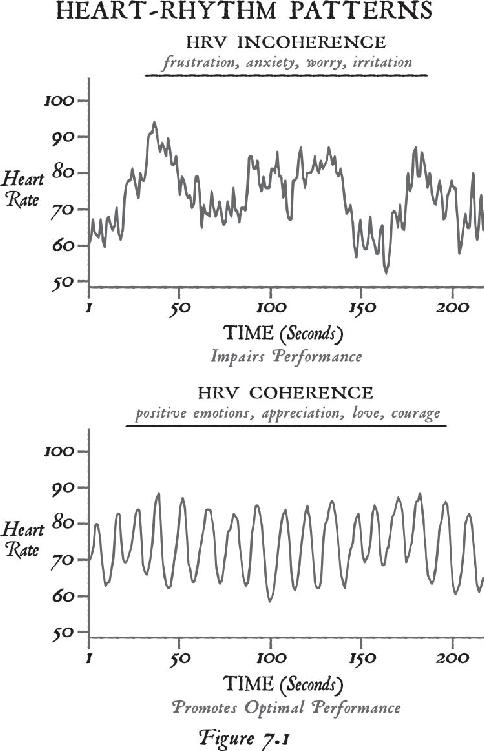
During the 1990s, researchers at HMI discovered that when people focused on their hearts and evoked elevated emotions such as appreciation, joy, gratitude, and compassion, those feelings could be observed as coherent patterns in the heart’s rhythms. The opposite was true of stressful feelings, which caused the heart rhythms to be incoherent and to appear jagged and irregular. This discovery linked emotional states to HRV patterns (see Figure 7.1).15 The researchers also observed that heart rate (beats per minute) and heart rhythm were two separate biological responses. For instance, a person could have a high heart rate and still maintain a state of coherence; therefore it was determined that the heart’s rhythms can create coherent internal body states.
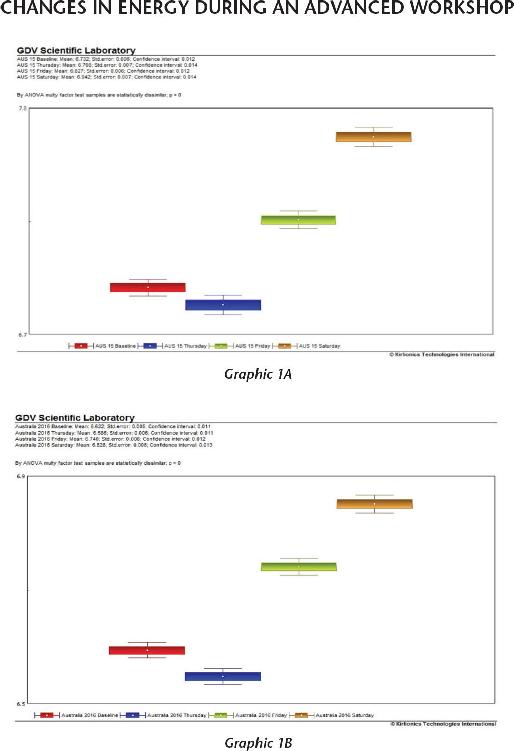
In some of our advanced workshops, when students break the energetic bonds with everyone and everything in their past-present reality, they draw from the ambient field to build their own individual electromagnetic field. When this occurs, the energy of the room can drop. Both figures demonstrate this phenomenon during two advanced workshops in Australia in 2015 and 2016. The red line is the baseline measurement on Wednesday—the day before the event starts, when no one is in the room. The blue line is Thursday—the first full day. You can see that the energy in the room decreased slightly. The green line is Friday—the second day. You can see how the energy of the room continues to rise as students break through on Friday. At this point, instead of drawing energy from the field, they are contributing energy to the field.
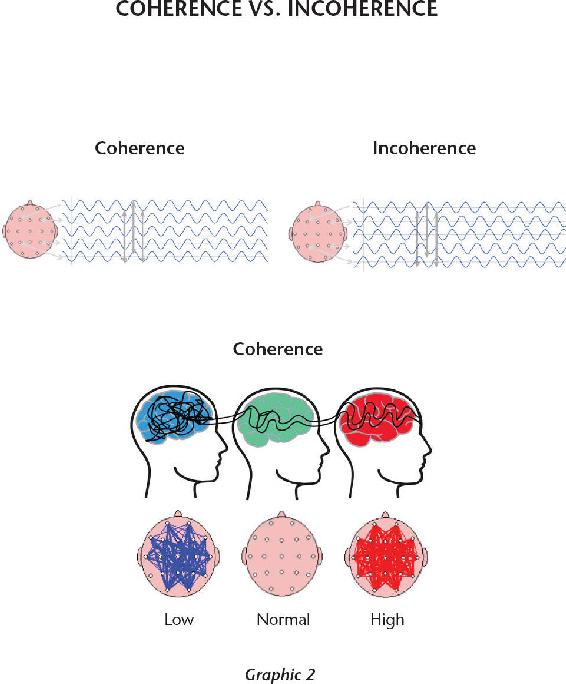
In the first image, both circles represent a top view of a person wearing an EEG brain cap. The head is facing forward, so the nose is pointing toward the top of the page and ears are on both sides. The tiny white circles represent different brain compartments, where we can measure brain waves in those specific areas. On the left, you can see how the arrows are all lined up in perfect order, showing the waves in phase. That’s coherence. On the right, you can see that the waves of the brain are not in phase and the arrows do not line up with the peaks and valleys. That’s incoherence.
Since I will be showing you different brain scans in the pages ahead, I want to familiarize you with how we measure coherence and incoherence. Look at the second set of images. If there is a lot of blue in the brain, it means there is low coherence (hypo-coherence) and different areas of the brain communicate less with each other. If there is a lot of red in the brain, it means that there is high coherence (hyper-coherence) and different areas communicate more with each other. If there is no blue and no red, it means normal or average coherence.
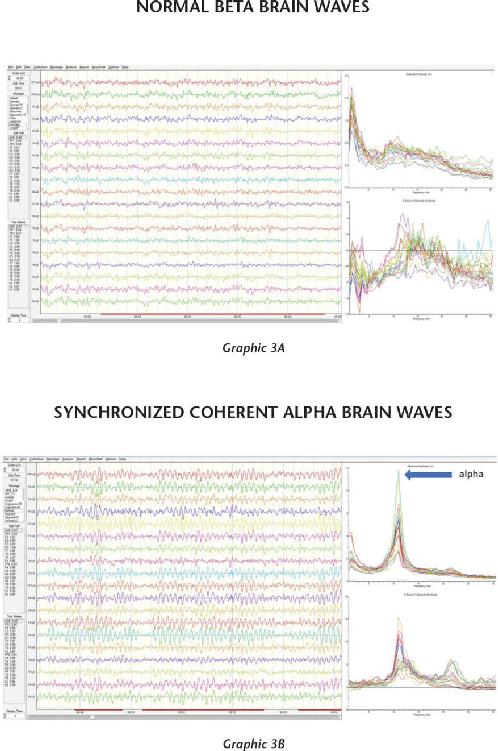
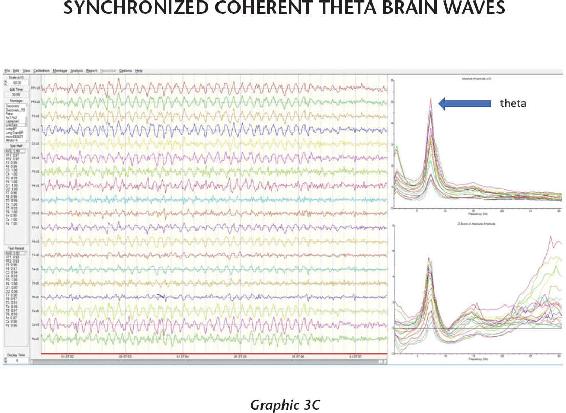
Look at each of the thin vertical blue lines on the strip charts in Graphics 3A, 3B, and 3C and follow them down to the bottom. You’ll see how they represent one-second intervals. Each of the 19 horizontal wavy lines is related to different compartments of the brain being measured—the front, both sides, the top, and the back of the brain. If you count the number of cycles (from the top of one wave to the top of the next wave) between the two blue vertical lines, you will know the brain waves in each individual area of the brain. That’s how we determine beta, alpha, theta, delta, or gamma brain waves. If you need to review the different frequencies of brain waves, review Figure 2.7.
When you go from a narrow focus to an open focus and you take your attention off matter (some thing) and place your attention on space or energy (no thing), your brain waves change from beta to alpha or to theta. Graphic 3A shows a normal thinking busy brain in beta brain waves. Graphic 3B shows a person who is in coherent global alpha brain waves. Notice how beautifully synchronized each part of the brain is when this person opens their focus. The blue arrow pointing to the peaks shows how the entire brain is coherent in 12-cycles-per-second alpha brain waves. Graphic 3C demonstrates a person in coherent theta brain waves. Once again, the blue arrow pointing to the top of the peaks demonstrates that the entire brain is synchronized in about 7 cycles per second, which is the theta range for brain waves.
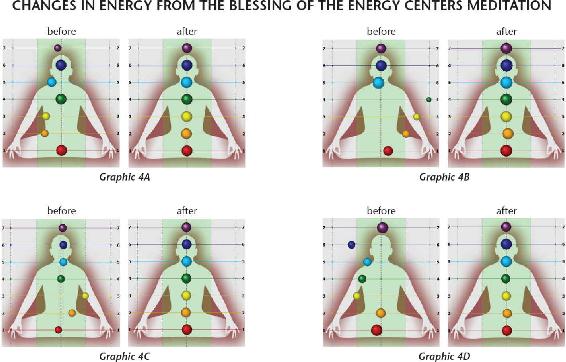
The images on the left show GDV measurements of students’ energy centers before they started an advanced event. The images on the right side show the changes just a few days later after the Blessing of the Energy Centers meditation. Notice the difference in the size and the alignment of each center.
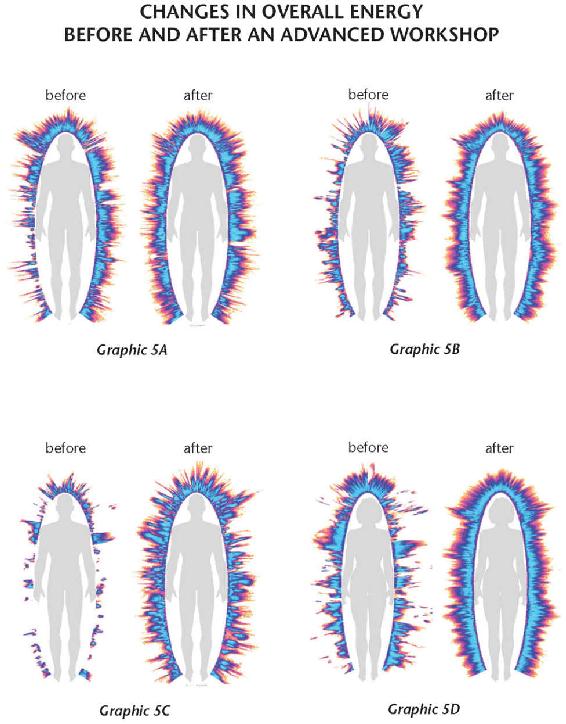
The images on the left demonstrate some GDV measurements of subjects’ energy before they started an advanced workshop. The images on the right show the changes in their vital energy a few days after the workshop.
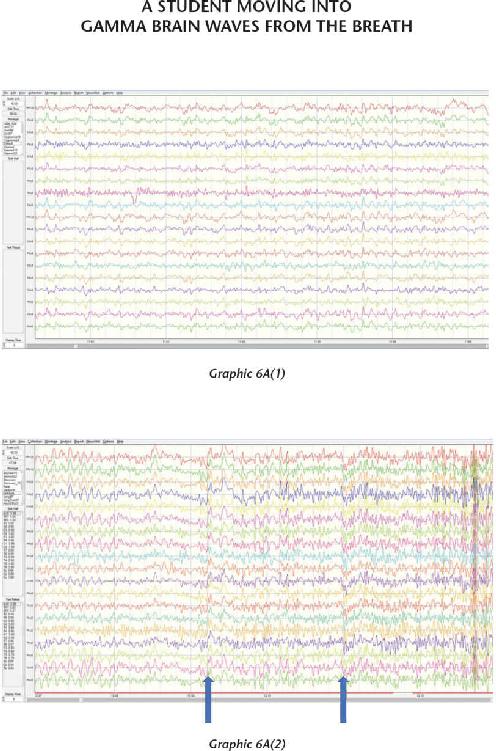
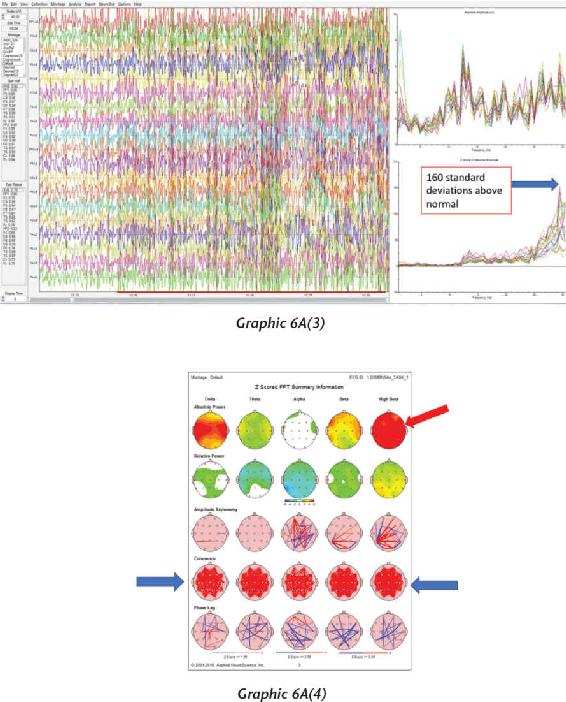
Graphics 6A(1), 6A(2), and 6A(3) show a student transitioning to gamma brain waves as a result of the breath as he passes through high beta. His brain is very aroused with energy. You can see an obvious change in frequency in the brain when this occurs (shown by the blue arrows). The amount of energy in his brain is 160 standard deviations outside normal. Now look at Graphic 6A(4). When there is a lot of red in the brain, it means there is a lot of energy. When there is blue in the brain, it means there is very little energy. Therefore, the red arrow that points to the totally red circle means there is an enormous amount of energy in high beta brain state as it transitions to gamma. The software used here does not record gamma brain waves per se, but from viewing the other measurements in the charts above, we know that the amount of energy in the brain in the totally red circle reflects gamma as well as high beta. The blue arrows pointing to the row labeled Coherence show there is intense communication along with high energy in all measured brain frequencies.
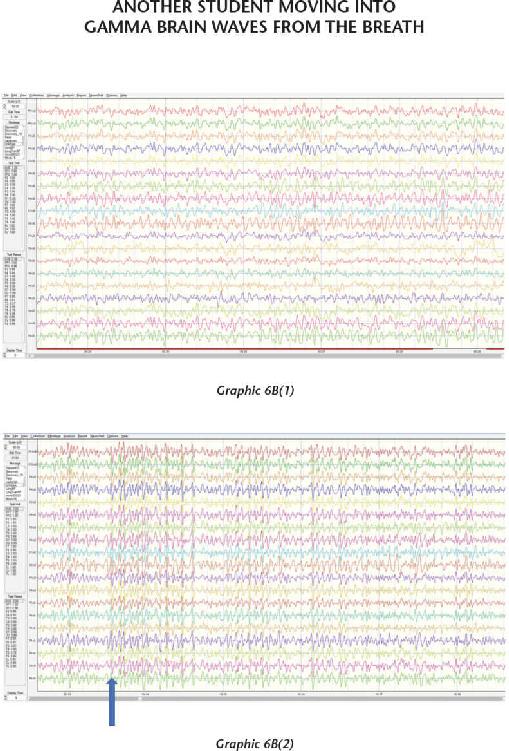
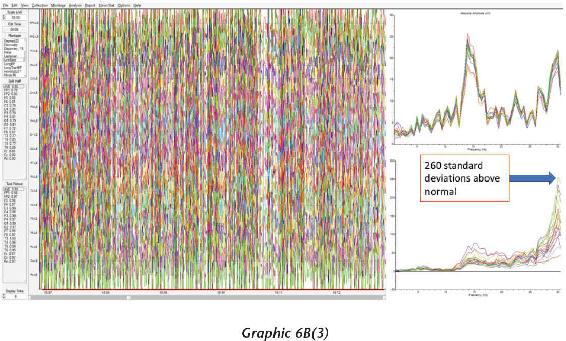
You can see a similar transition in these graphics. The blue arrow at the bottom of the strip chart in Graphic 6B(2) shows the moment the brain is moving from high beta to gamma. Graphic 6B(3) shows that the energy in the brain is 260 standard deviations above normal. To put this in context, 99.7 percent of the population falls within 3 standard deviations above or below normal. Anything outside of 3 standard deviations is supernatural.
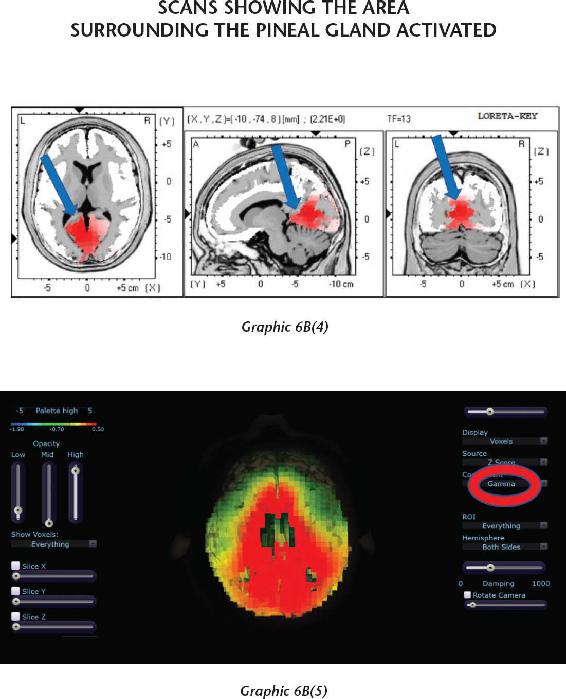
The red area of the brain where the blue arrows are pointing in 6B(4) is the region that surrounds the pineal gland as well as a region called Brodmann area 30, which is associated with strong emotions and the formation of new memories. Our team sees this pattern in those areas of the brain repeatedly when students produce gamma brain waves. Graphic 6B(5) is a three-dimensional picture of the same student’s brain from below, showing a significant amount of energy coming from inside the limbic brain.
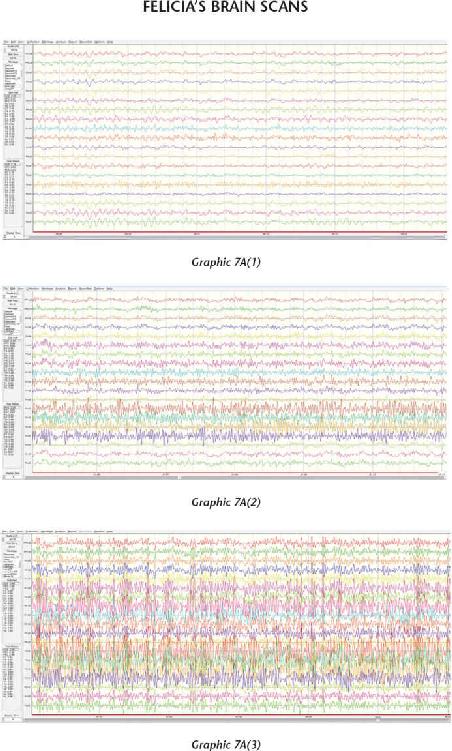
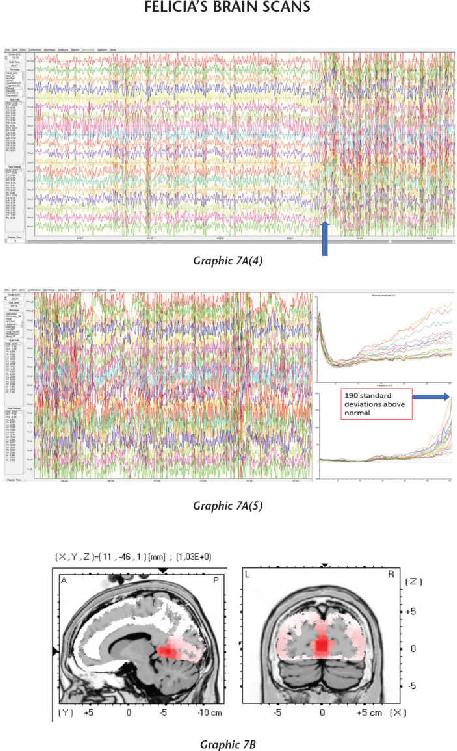
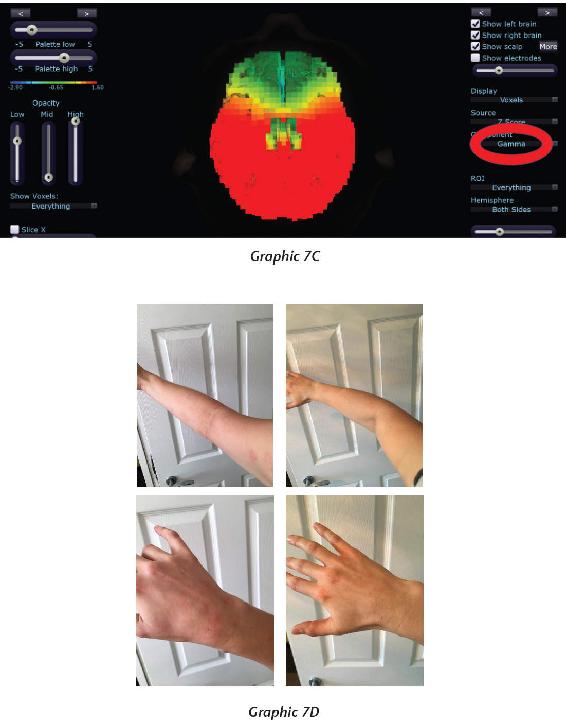
Graphics 7A(1) through 7A(5) show Felicia’s brain transitioning from normal beta to high beta before she moves into a high-energy gamma state. (The blue arrow shows the transition.) The energy in gamma is 190 standard deviations above normal as she connects to the unified field. The area of the pineal gland as well as the part of the brain that processes strong emotion is highly activated, as seen in 7B. The image in 7C is the underside of the brain. The red region demonstrates that energy in gamma is coming from inside the limbic brain. Take a look at Graphic 7D to see the changes in Felicia’s skin condition the following day after she received a biological upgrade from the unified field.
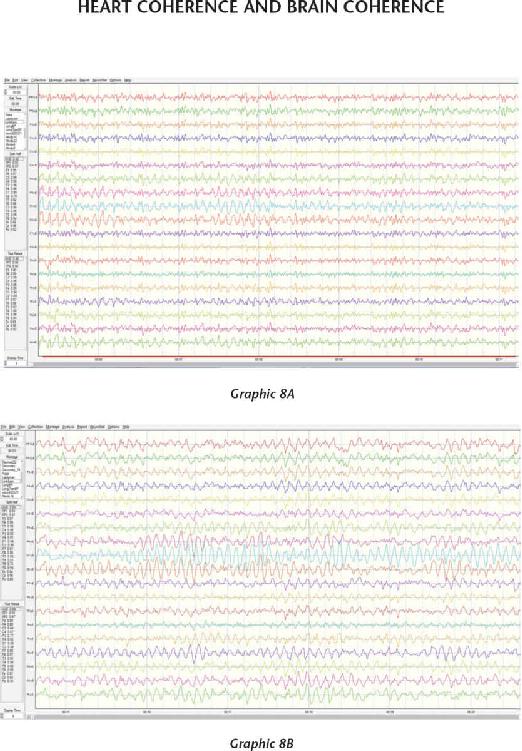
The first scan represents the measurement of a person’s brain before she activates her heart center. The brain is in a dominant frequency of desynchronized beta brain waves, indicating a busy and distracted brain. The second scan measures the same brain about 10 seconds later as she moves into heart coherence. The entire brain goes into a coherent alpha brain wave state.
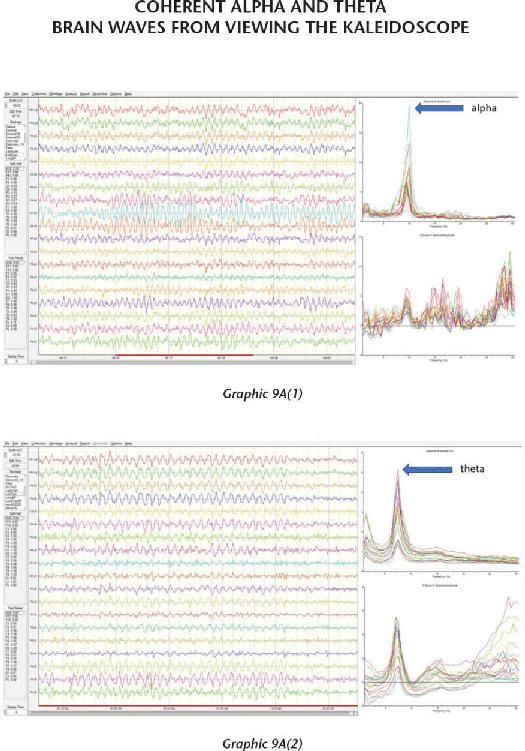
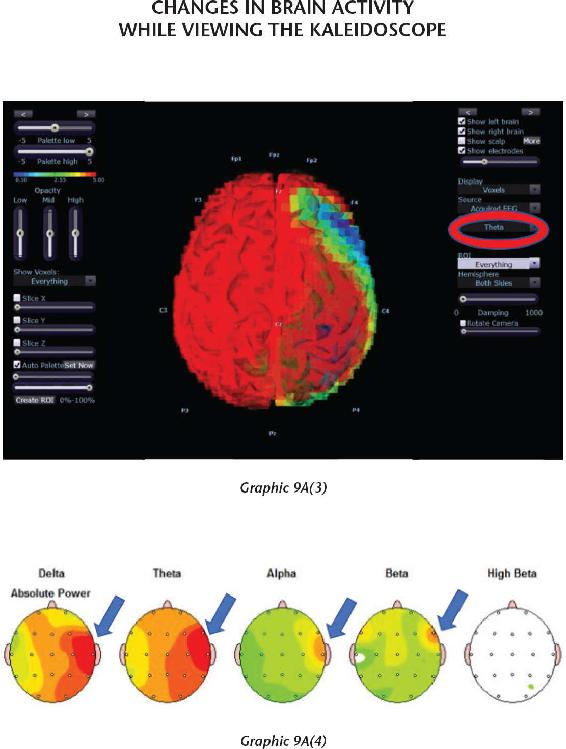
Graphic 9A(1) shows a brain scan of a student who is in coherent alpha brain waves while watching the kaleidoscope. Graphic 9A(2) illustrates a person in coherent theta brain wave states viewing the kaleidoscope in trance. Graphic 9A(3) shows a three-dimensional image of the brain (nearly all in red) of another student, indicating almost the whole brain in a theta state. The red oval on the right shows the brain is being measured in theta. Graphic 9A(4) shows the brain scan of a student at different brain wave frequencies watching the kaleidoscope. The red and orange areas marked with the blue arrows on the right of each brain show a strong amount of activity in delta, theta, alpha, and beta brain waves.
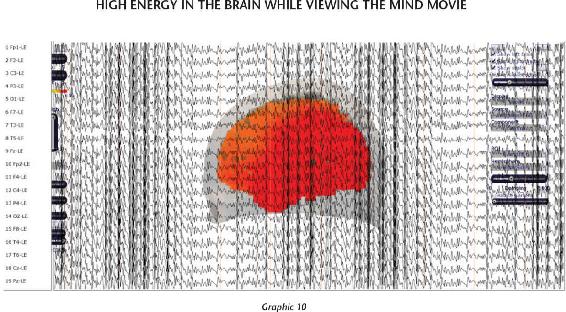
This is a brain that is fully engaged in the Mind Movie experience. There is a significant amount of coherent high beta and gamma brain waves activating the entire brain.
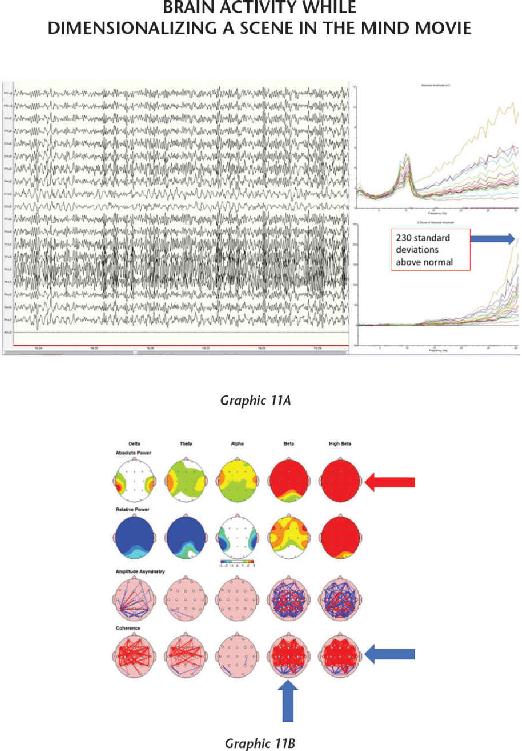
When this person dimensionalized a scene in her Mind Movie during a meditation, she reported that she had a full-on sensory experience without her physical senses. In Graphic 11A you can see her brain is in coherent high beta and gamma. The energy in her brain is about 230 standard deviations above normal. The red arrow in Graphic 11B shows there is quite a bit of energy in high beta as she moves into gamma. The blue arrows indicate that there is a lot of coherence in the brain as well. It is important to note that she cannot make her brain do this. The experience is happening to her.
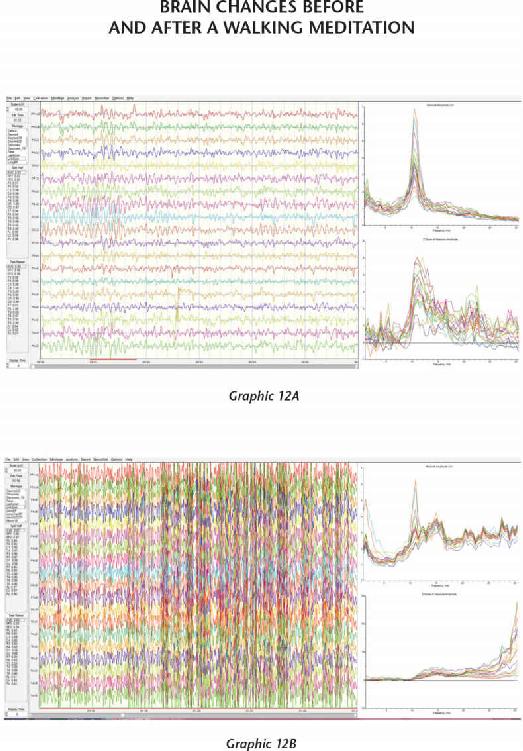
Graphic 12A shows a baseline measurement of a person with normal beta and alpha brain waves before his walking meditation. If you review his post-scan in Graphic 12B, an hour and twenty minutes later, you’ll see he changed his brain to a high-energy gamma state.
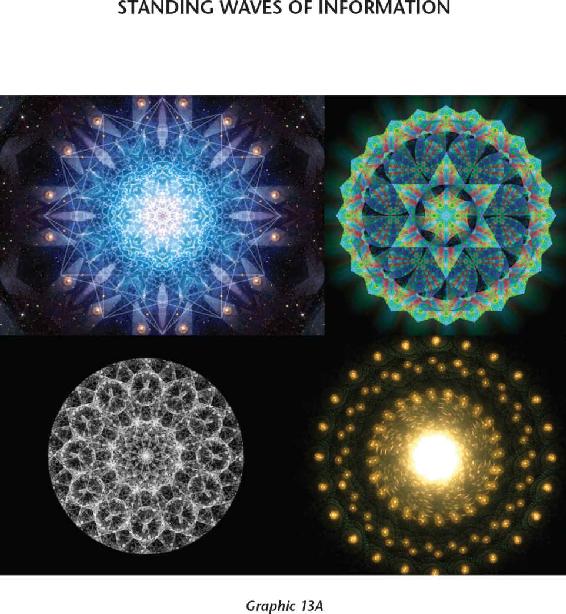
Fractal patterns in the form of complex geometric configurations are standing waves of frequency and information that can be de-scrambled by the brain into very powerful imagery. Although these images are two-dimensional, they give you an idea of how the patterns appear.
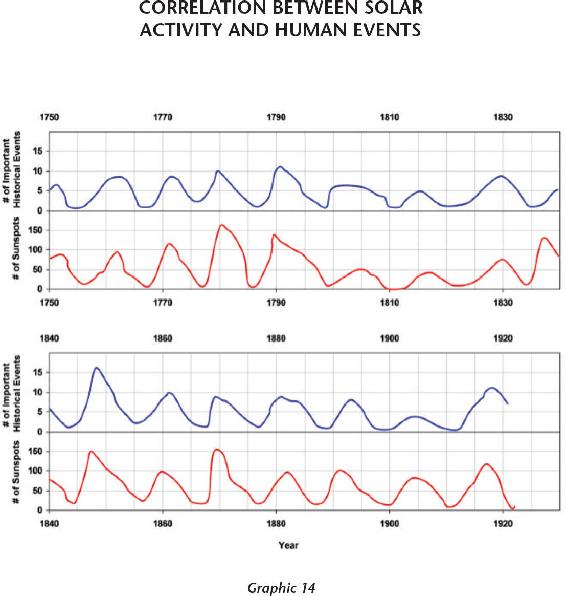
For the years 1749 to 1926, Alexander Chizhevsky compared the annual number of important political and social events with increased solar activity. On the graph, the blue line illustrates sun flares and the red line relates to human excitability. Notice that every time there is high solar activity, there is a correlation with heightened human events.
Created from data provided in the translation of Alexander Chizhevsky’s paper “Physical factors of the historical process.”
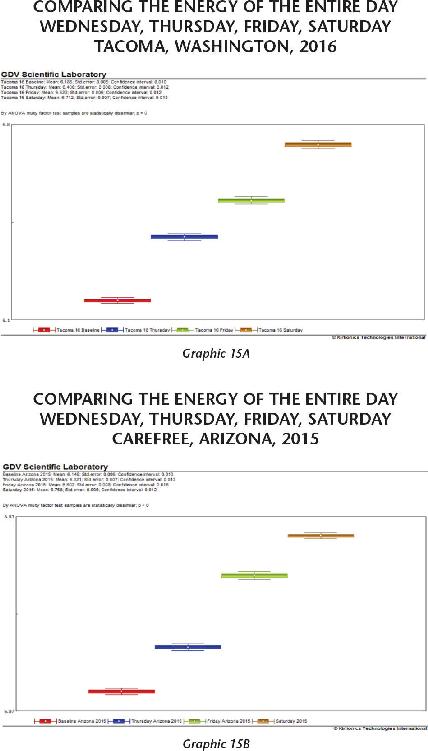
Graphics 15A and 15B demonstrate an increase in the collective energy of the room over 3 days in our advanced workshops. The first line, in red, is our baseline measurement and shows the room’s energy before the start of the event on Wednesday. As you look at the red, blue, green, and brown lines (each color representing a different day), you’ll see that each day the energy steadily increases.
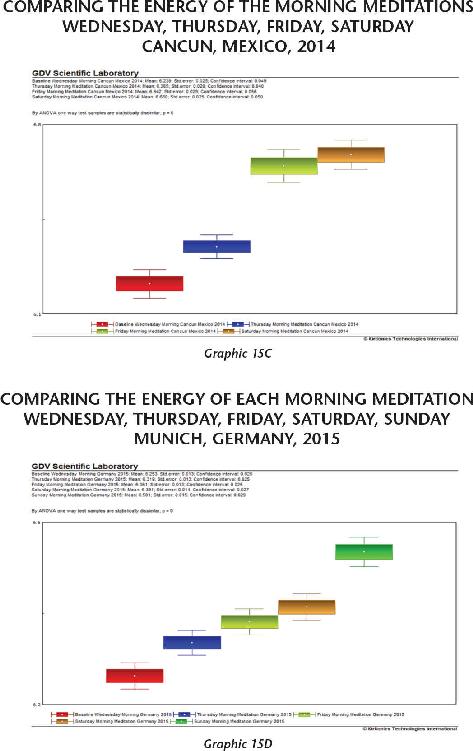
In Graphics 15C and 15D, the same color scale applies; however, these measurements reflect specific time intervals during each day’s morning meditations. Graphic 15D has an extra green line because we measured the energy of the room during the 4 A.M. pineal gland meditation. As you can see, the energy was very high that morning.
Compliments of the HeartMath Institute, the top HRV graph represents incoherent heart rhythms as a result of feeling emotions like resentment, impatience, and frustration. The bottom HRV graph represents coherent heart rhythms as a result of feeling emotions like gratitude, appreciation, and kindness.
When our HRV is in a heart-coherent pattern, it reflects increased synchronization and harmony within the two branches of the ANS, as well as in the activity occurring in our higher-level brain centers. So much of what we’ve learned from Western medicine has caused us to believe that we cannot control our body’s autonomic nervous system (like heart rate and blood pressure) because such functions are beyond the domain of the conscious mind, not to mention the separation between the voluntary and involuntary nervous systems. We now know, however, that you don’t have to be a yogi or a mystic to be able to master such skills. You just have to be supernatural, which can be learned. This is one reason why HMI teaches the importance of heart coherence not only to individuals, but also to the military, law enforcement, schools, athletes, and other high-functioning individuals—so people can maintain clarity, decision-making ability, and composure in high-stress situations.
The Benefits of Heart Coherence
When we choose to cultivate and experience elevated emotions and the coherent signal of those elevated emotions reaches the brain, if the amplitude of the signal is high enough, chemicals equal to those feelings and emotions are released into the body. We call this a feeling, and positive feelings like this make us feel lighter and freer—in other words, the energy of your whole state of being is elevated. If you are feeling an elevated sense of well-being in a safe environment, the energy of those feelings sets in motion a cascade of at least 1,400 biochemical changes in the body that promote growth and repair.16 Instead of drawing from the invisible field of energy around your body to transform energy into chemistry, now you’re adding to and expanding that field, resulting in a new expression of chemistry reflective of the change in energy. How? If the first three energy centers of the body are energy consumers when we are out of balance, the heart is an energy expander, and when you rest your attention in your heart to create and sustain elevated emotions, that coherent energy causes your heart to beat like a drum. It’s that coherent, rhythmic beating that creates a measurable magnetic field around your heart, and thus your body. Just like the focused beat of a drum that produces a measurable sound wave, the stronger the coherent rhythm of the heart, the more expanded your field becomes.
When you are feeling hurt, anger, stress, jealousy, rage, competition, or frustration, on the other hand, the signal from the heart to the brain becomes incoherent, and this triggers the release of approximately 1,200 chemicals into the body equal to those feelings.17 This chemical dump lasts approximately 90 seconds to two minutes. In the short term, these stressful feelings are not harmful; in fact, if they’re resolved they improve your resilience. However, the long-term effects of unresolved survival emotions put the entire body into a state of incoherence, making you vulnerable to stress-related health challenges. These survival emotions draw from the field around your body, causing you to feel separate and materialistic because you are putting most of your focus and attention on matter, your body, the environment, time, and of course, the source of your problems.
Among HMI’s most significant findings is that what we feel on a minute-to-minute, second-to-second basis influences the heart, and that our feelings and emotions are a key aspect of unlocking “heart intelligence.” Because feelings and emotions are energies that emit powerful magnetic fields, the stronger the elevated feelings, the stronger the magnetic field. In fact, the heart produces the strongest magnetic field in the body—five thousand times greater in strength than the field produced by the brain.18
Place your finger on your wrist and feel your pulse. That pulse is a wave of energy called the blood pressure wave and it travels through your entire body, influencing everything, including brain function. Not only does the heart’s magnetic pulse reverberate through every cell of the body, but it also produces a field around your body that can be measured up to 8 to 10 feet away using a sensitive detector called a magnetometer.19 When you activate the heart by calling up elevated emotions, you are not only broadcasting that energy to every cell; you are also radiating those feelings out into space. This is where the heart moves beyond biology and into physics.
Using electroencephalograms, scientists at the HMI laboratory discovered that when the heart goes into coherence, the brain waves entrain with the heart’s rhythm at a frequency of 0.10 Hz and also that the synchronization between heart and brain is increased when the subject is in a heart-coherent state. The coherent frequency of 0.10 Hz has been shown to be a state of optimum performance associated with increased access to our deeper intuition and internal guidance. Once the analytical mind is out of the way, the individual can move down the ladder of consciousness from alpha to theta to delta brain waves—the state in which restorative functions in the body take place. Coincidentally, we often see our students reporting profound or mystical experiences in deep delta around .09 to .10 Hz (.09 Hz is just a hundredth of a cycle per second off reported optimum coherence) while their hearts are in a very coherent state. However, the amplitude of energy produced by the heart increases the level of energy in the brain, in some cases more than 50 to 300 times the normal level or more.
Supporting evidence of heart-brain coherence was further demonstrated by a series of experiments performed by Gary Schwartz, Ph.D., and his colleagues at the University of Arizona. In their experiments, they found inexplicable communications between the heart and the brain that made no sense via neurological or other established communication pathways. This discovery established the fact that energetic interactions between the heart and the brain exist through electromagnetic fields.20 Both examples point to the fact that when we focus our attention on our heart and emotions, the heart’s beating acts as an amplifier. This increases the synchronization between our heart and brain and creates coherence not only in the physical organs, but also in the electromagnetic field surrounding our body.
Also noteworthy is that right behind the breastbone sits a small gland called the thymus, which has an intimate connection with the heart center. As one of the main organs of the immune system, the thymus serves a vital role in the promotion of T cells, which defend the body from pathogens such as bacteria and viruses. The thymus gland functions optimally up to the onset of puberty, but it begins to shrink as we get older because of natural decreases in the production of human growth hormone.
As with many vital organs, the thymus is also prone to the negative effects of long-term stress. When we’re living in emergency mode for extended periods of time and diminish our vital energy field, all of our energy is directed outward to protect us from external threats, leaving little energy to protect us from internal threats. Eventually, this leads to dysfunction of the immune system. It makes sense, then, that as the heart center becomes activated with energy, by mobilizing the parasympathetic nervous system for growth and repair, the thymus gland should become more active as well, because now we’re adding energy in that gland. Therefore, the thymus gland should also benefit from the practice of sustaining coherence within the body, aiding in the support of the overall vitality of our immune system and long-term health.
You learned earlier in this book that in my own independent studies, when our students were able to feel and sustain gratitude and other elevated emotions for a total of 15 to 20 minutes per day for four days, the energy of the emotions signaled the immune cell genes to make a protein called immunoglobulin A. The significant increase in IgA is a perfect example of one of the many positive cascading effects of heart coherence.
What all of this boils down to is that the quality of our heart’s rhythm has consequences for our overall health. If the heart beats in harmonious rhythms, its efficiency reduces stress on other systems of the body, maximizes our energy, and creates states whereby we thrive mentally, emotionally, and physically. If there is disharmony in our heart rhythms, the opposite is true. This incoherence leaves us with less energy available for healing and for maintaining health and long-term building projects, creating unrest within our internal states and putting increased stress on the heart and other organs.21 Heart attacks and heart disease, for example, occur when the body has been under stress for extended periods of time. When we intentionally choose elevated emotions, however, focusing less on disharmony and more on gratitude, our bodies respond positively and we enjoy improved health.
The next time you use an elevated emotion to tune in to your future and embrace those feelings before the event unfolds—and feel gratitude that the event has already occurred—just know that the worst thing that probably can happen to you is that you begin to heal.
The Effects of Chronic Stress
When we live in a constant state of stress, our heart center becomes incoherent and this stifles our ability to create. In response to chaotic heart rhythms, the brain becomes very dis-integrated and incoherent, and that incoherence is reflected in the two branches of the ANS. If the parasympathetic system is the brake and the sympathetic system is the accelerator, when they are working in opposition, your body is receiving a message akin to stepping on the gas while your foot is on the brake. It doesn’t take a significant amount of automotive knowledge to understand the ramifications of these opposing forces—we wear out the brakes and put stress on the drivetrain, while the resistance wastes energy and reduces fuel efficiency. Eventually, this habituation of stress wears down the body so much that it eliminates our ability to repair and maintain health, depleting our vitality and resilience.
If resilience is based on efficient energy management, you may feel completely drained, out of sorts, and perhaps sick while under the influence of chronic stress. The more addicted we become to these states of stress, the less likely we are to open our hearts, go within, and consciously create heart coherence.
An experience I had at my home in a rural area of Washington State serves as a good example. One November evening I came home from work, parked my car as I always did, and began walking down the 40-yard path to my house. It was pitch black. About 30 yards from my front door, off to my right, I heard an ominous growl coming from behind some very large rocks. Immediately, I narrowed my focus on matter (some thing) and found myself thinking, What could be lurking in the darkness? I began searching in my mind and then my environment for knowns from my past memory bank in order to predict my future. Could it be one of my dogs? I wondered. I started calling out their names, but there was no response. As I took a few more steps, the growling became louder.
Without my having to think about mobilizing the energy in my body, the hair on the back of my neck stood up, my heart rate and respiratory rate increased, and my senses became heightened in preparation for fight or flight. I took out my cell phone and turned on the flashlight to narrow my focus on the possible threat, but I still couldn’t see what was making the noise. From the darkness, the growling continued. I slowly backed up and finally fled to my barn, where my ranch hands were putting away the horses for the night. We grabbed our guns and flashlights and returned to the scene just in time to see a cougar and her cub scurrying away through the bushes.
You can probably gather from this story that a highly stressful situation like this is not the time to open your heart or trust in the unknown. It’s not a time to take your attention off things in your outer material world to focus on a new possibility in your mind. It’s a time to run, hide, or fight. But if you are perpetually hooked into the fight-or-flight state—even if there is no cougar in the bushes—you will be less likely to want to close your eyes and go within because you have to keep your attention on the perceived threat outside of you. No new information can enter your nervous system that is not equal to or relevant to the emotions you are experiencing, so you can’t program your body for a new destiny. So it makes sense that the more you live addicted to the stress hormones in your normal life, the less likely you are to want to create, meditate, or open your heart and be vulnerable.
In 1991, the pioneering work of J. Andrew Armour, M.D., Ph.D., showed that the heart literally has a mind of its own. With as many as 40,000 neurons, the heart has a nervous system that functions independently of the brain. The technical term coined for this system is the intrinsic cardiac nervous system, more commonly known as the “heart-brain.”22 This discovery was so monumental that it led to a new field of science called neurocardiology.
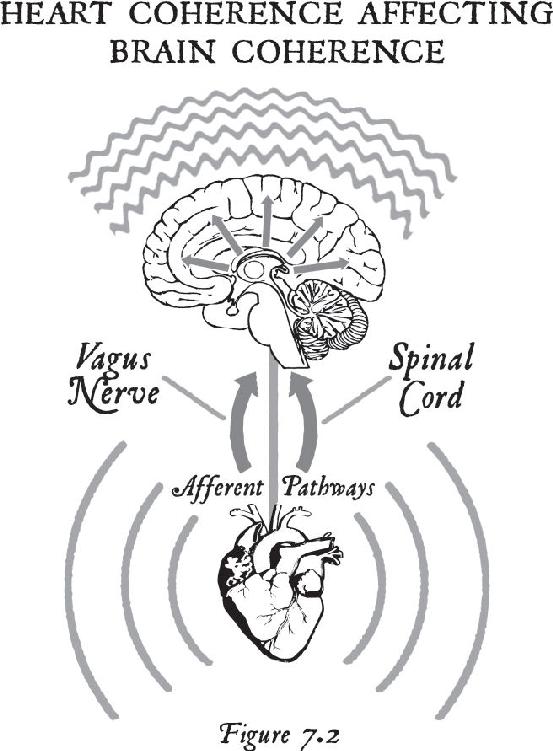
When the heart moves into coherence, it acts as an amplifier, sending coherent information through its afferent nervous pathways straight to the thalamus, which synchronizes the neocortex and the brain’s survival centers.
The heart and the brain are connected by efferent (descending) and afferent (ascending) pathways; however, 90 percent of the connecting nerve fibers ascend from the heart up to the brain.23 Armour uncovered that these direct, afferent neural pathways continuously send signals and information that interacts with and modifies activity in the brain’s higher cognitive and emotional centers.24 These signals from the heart to the brain connect through the vagus nerve and continue straight to the thalamus (which synchronizes cortical activity such as thinking, perceiving, and understanding language), then to the frontal lobes (responsible for motor functions and problem solving), and on to the brain’s survival center, the amygdala (which signals emotional memory). The core cells of the amygdala even synchronize to the heart’s beating.25 (See Figure 7.2.) This means that if your heart center is open, it’s keeping your brain’s survival centers in check. It’s possible, then, that the more heart centered you are, the less likely you will react to stressors in your life. The reverse is also true: the less energy you have in your heart center, the more likely you will be living in survival mode.
This tells us that our feelings and heart rhythms affect what emotional memories and responses transpire in us, so stress and anxiety can trigger brain-wave patterns to match an anxiety habit of the past. Conversely, just like a computer that matches patterns, elevated emotions of the heart can produce coherence in brain-wave patterns, so if you’re summoning the feelings of your future by creating elevated states, your brain is beginning to lay the neural networks for those future emotions or that new destiny. Armour’s discovery of the afferent neural pathways from the heart to the brain proves that the heart independently processes emotions, responds directly to the environment, and regulates its rhythms—without receiving information from the brain. That’s because the heart and the ANS always work together. Also noteworthy is that the nerves facilitating this communication enable the heart to sense, remember, self-regulate, and make decisions about cardiac control independent of the nervous system.26
To put it simply, emotions and feelings originating in the heart play an important role in the way we think, process information, feel, and understand the world and our place in it.27 Once the heart center is activated, it acts as an amplifier to jump-start the brain, enhance its activity, and create balance, order, and coherence throughout the body.
As I said earlier, every thought you think produces corresponding chemistry equal to that thought, which in turn creates an emotion. Therefore, you are suggestible only to the thoughts equal to your emotional state. We now know that when our students are heart centered and feel more wholeness and oneness, they’re less separate from their dreams. When they feel gratitude, abundance, freedom, or love, all of those emotions welcome corresponding thoughts. Those heart-centered emotions open the door to the subconscious mind so that you can program your autonomic nervous system equal to the thoughts of your new future. We also know that if they live in the feeling of fear or lack but try to think they’re abundant, they can’t produce a measurable effect, because change can only happen when thoughts are in alignment with the emotional state of the body. They can think positively all they want, but without a corresponding feeling or emotion equal to that thought, the message cannot be felt or understood throughout the rest of the body.
So you could repeat the affirmation I am fearless until you’re blue in the face, but if it’s fear you’re actually feeling, the thought I am fearless never makes it past the brain stem, which means you’re not signaling the body and ANS into a new, specific destiny. The feeling is what produces the emotional charge (energy) to stimulate your ANS into a different destiny. Without the feeling, a disconnect remains between your brain and body—between the thought of health and the feeling of health—and you can’t embody that new state of being.
It’s only when you change your energy that you can produce more consistent effects. If you sustain these elevated emotions on a daily basis, eventually your body, in its innate intelligence, begins to make relative genetic changes in the way I described earlier. That’s because the body believes that the emotion you are embracing is coming from an experience in your environment. So when you open your heart center, practice feeling an emotion before the experience occurs, and marry it with a clear intention, the body responds as if it’s in the future experience. That heart-mind coherence then influences your body chemistry and energy in a series of ways.
If coherence between the heart and the brain can originate in the heart, and their synchronization results in optimal performance and health, then you should be taking time every day to focus on activating your heart center. By intentionally choosing to feel the elevated emotions of the heart rather than waiting for something outside of yourself to elicit those emotions, you become who you are truly meant to be—a heart-empowered individual. When you are living by the heart, you naturally choose love and innately demonstrate it through compassion and care for the well-being of yourself, others, and planet Earth. Through our partnership with HMI, our students have demonstrated that with practice, we can in fact produce, regulate, and sustain elevated feelings and emotions—independent of events in our external world.
In our workshops around the world, through the practice of regulating heart rhythms to sustain elevated emotions, we teach our students how to generate heart and brain coherence. We then measure their abilities using HRV monitors. During guided meditations, we ask our students to surrender to the feelings of gratitude, joy, and love, and we encourage daily practice outside of our formal instruction, because when one chooses to practice sitting in a state of coherence, it becomes a habit. I hope that with enough practice, our students can replace old mental scripts of feeling unworthy, fearful, or insecure with more elevated states of being and fall deeply in love with their lives. We’ve seen enough of them demonstrate that it is indeed possible to produce positive, measurable, tangible effects in their lives simply by shifting the paradigm of their thoughts and feelings. These dedicated individuals return to their homes, where the positive effects they’ve produced in their own lives ripple out to positively affect their families and communities, continuously expanding their vibrational influence of harmony and coherence throughout the world.
By repeatedly practicing the regulation of heightened emotional states, in time the constant feeling of elevated emotions creates a new emotional baseline. This baseline then begins to continuously influence a new set of thoughts equal to the heightened feelings. The summation of those novel thoughts creates a new level of mind, which then produces more corresponding emotions equal to those thoughts, further sustaining that baseline. When this feedback loop between the heart (body) and mind (brain) occurs, you are in an entirely new state of being—the consciousness of the unlimited mind and the energy of profound love and gratitude. The repetition of this process is what it means to recondition your body, rewire your brain, and reconfigure your biology equal to your new state of being. Now you are naturally, automatically, and regularly broadcasting a different electromagnetic signature of energy into the field. This is who you are, or who you have become.
Countless history books could be written through the lens of incoherent emotions. Whether the result is a Shakespearean tragedy, genocide, or a world war, survival emotions such as blame, hate, rage, competition, and retribution have resulted in an endless, unnecessary trail of pain, suffering, oppression, and death. The results have caused humans to live in opposition and conflict rather than in peace and harmony. This is a time in history when we can break that cycle. This is a pivotal moment in the story of humanity where ancient wisdom and modern science are intersecting to provide us with the technology and scientific understanding to learn not only how to more efficiently and effectively manage our emotions, but also what that means for our health, relationships, energy levels, and personal and collective evolution. It doesn’t require moving mountains—only changing our internal state of being. This allows us to alter the way we act with one another, replacing stressful situations with positive experiences that give us energy, fill our spirit, and leave us with a sense of wholeness, connection, and unity. The brain may think, but when you turn your heart into an instrument of perception, it knows.
Examples from Our Workshops
To see an example of how heart coherence creates brain coherence, take a look at Graphics 8A and 8B in the color insert. The first image shows relatively low-normal beta brain-wave patterns before the person begins to create heart coherence. The second image shows a significant change once the person moves into sustained heart coherence just a few seconds later. That’s because the heart acts as an amplifier to influence the brain to create very coherent synchronized alpha brain waves.
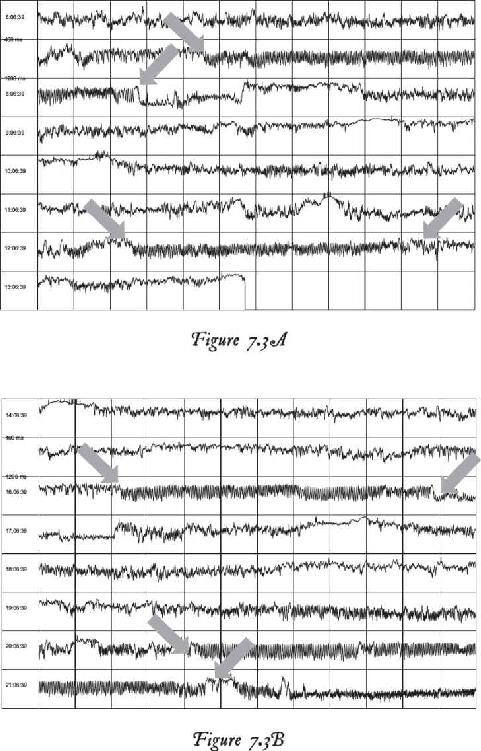
In Figures 7.3A and 7.3B you will see an HRV analysis from one of our students taken at an advanced workshop. She’s having a pretty amazing day. The first chart, in Figure 7.3A, represents two meditations, one in the morning and one right before lunch, and each block represents five minutes of elapsed time. Where you see the first gray arrow on the top of the scan pointing down to the right is when she went into (and sustained) heart coherence. During our 7 A.M. meditation, she maintained this state for more than 50 minutes, until you see the second arrow pointing down to the left. At the bottom of the scan, where you see the second gray arrow pointing down to the right, is when she again went into heart coherence for 38 minutes during a meditation just before lunch, ending with the second gray arrow pointing down to the left. You can see she is developing the skill.
Each set of gray arrows pointing inward in both figures represent a student going into heart coherence by sustaining an elevated emotional state. Every square block represents a five-minute time interval. From both Figures 7.3A and 7.3B, you can tell she’s developing the skill to regulate her internal states.
In Figure 7.3B, at the bottom where the two arrows are pointing inward, the student spontaneously goes into heart coherence for over an hour. Her body is being conditioned to a new mind.
Now look at Figure 7.3B. In the next meditation later that afternoon, if you glance between the two gray arrows at the top of the figure, you can see that she goes into heart coherence again for almost 45 minutes. What makes this reading so fascinating, however, is what happens later that evening around 8 P.M. (see the second set of gray arrows pointing inward). Since there was no meditation taking place at the time, we asked her later what she had experienced. Her heart went into “super coherence” for more than hour while she was in her normal level of wakefulness.
She told us she’d been getting ready for bed when suddenly she felt an overwhelming feeling of love. It was so strong that she had to lie down and surrender to it. Her heart spontaneously went into heart coherence, and for an hour and 10 minutes while she lay on her bed, she fell deeply in love with her life. She sustained a change in her ANS. Where you see the last arrow is where she said she rolled over on her side and fell asleep. Not a bad way to end a day, wouldn’t you agree?
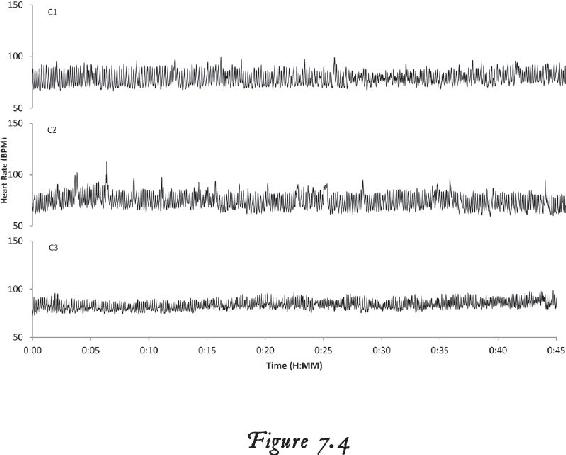
An example of three students sustaining heart-centered emotions for 45 minutes.
So ponder this: You know how easy it is to think a fearful or anxious thought about a future event that hasn’t happened—and in your mind emotionally embrace this fictional outcome over and over? And you know how the more energy you feed the thought, the more you ruminate over other possible outcomes, and eventually those thoughts deliver you to a worst-case scenario? It’s the emotions that are driving those thoughts. You’ve conditioned your body to be the mind in fear and anxiety. If this continues over a long period of time, your body may have a panic attack—an autonomic, spontaneous bodily function that your conscious mind can’t control.
But what if instead of conditioning the body to the mind of fear and anxiety, you experienced sustained elevated emotions and conditioned your body to the mind of love and coherence? Instead of being afraid and dreading that a panic attack is going to happen again, you’d get excited and look forward to the prospect of having an autonomic love attack.
Figure 7.4 shows three more examples of students who are able to sustain heart coherence for extended periods of time. If you look closely, you’ll see their hearts are all responding to a consistent state of elevated emotions for at least 45 minutes—that is, their bodies are responding to a new mind. I’d say that’s pretty supernatural.
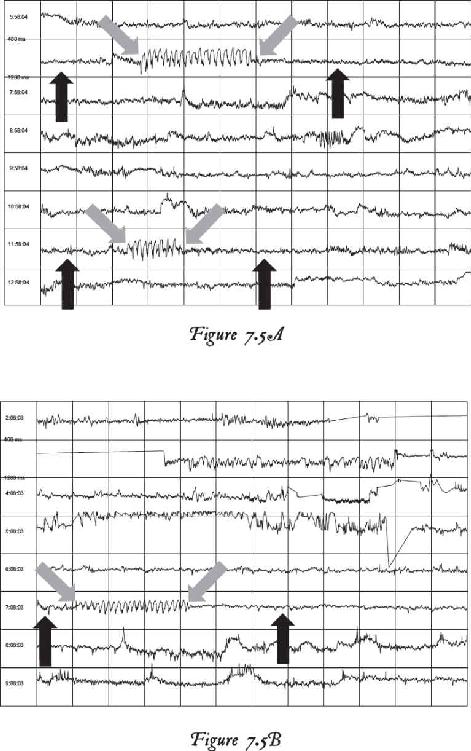
Figures 7.5A and 7.5B demonstrate two examples of people with very poor heart rate variability (noted with two sets of black arrows pointing upward) in the natural waking state. Take a look at the changes in heart rate variability when they practice heart coherence shown in the area between the gray arrows pointing inward. Even if it is only for 8 to 15 minutes, these students are changing their biology.
Heart Coherence Meditation
This meditation is based on the Heart Lock-In Technique developed by HMI. Close your eyes, allow your body to relax, and bring your attention to your heart. Start breathing in and out from the heart center, and continue to do this more slowly and deeply. When your mind wanders, keep returning your attention and awareness to your chest, your heart, and your breath.
Next, while you rest your attention in your fourth center, bring up some elevated emotions while continuing to breathe in and out of your heart center. Once you feel these heartfelt emotions in your chest area, send that energy out beyond your body and marry it with your intention. Continue to broadcast that energy and intention all around you. Start with 10 minutes and try to extend the time you practice every day.
In both figures, you can see two different students who have very little heart rate variability (demonstrated by the black arrows pointing upward). However, when it comes time to open their hearts, if you look between the two gray arrows, you will see a significant change. Even if it is just for 8 to 15 minutes, they are changing their physiology.
Eventually, when you come to know what it feels like in your body to experience these elevated emotions, you can practice throughout your day with your eyes open (you’ll learn more about how to do this in Chapter 9, Walking Meditation). You might even set a reminder on your phone for four times a day, and when it goes off, take a minute or two to feel those elevated emotions.