Information to Transformation: Proof That You Are the Placebo
This book is about making your mind matter. You now understand that the placebo works because a person accepts and believes in a known remedy—a fake pill, injection, or procedure substituted for its real counterpart—and then surrenders to the outcome without overanalyzing how it’s going to happen. We could say that a person associates her future experience of a particular known person (say, a doctor) or thing (a medication or procedure) at a specific time and place in her external environment with a change in her internal environment—and in doing so, she alters her state of being. After a few consistent experiences, the person will expect her future to be exactly like her past. Once that link is in place, the process becomes highly effective. It’s about a known stimulus automatically producing a known response.
The bottom line is this: In the classic placebo effect, our belief lies in something outside of us. We give our power away to the material world, where our senses define reality. But can the placebo work by creating from the immaterial world of thought and making that unknown possibility a new reality? That would be a more prudent use of the quantum model.
The three workshop participants you read about in the last chapter accomplished this feat. They all chose to believe in themselves more than they believed in anything else. They changed from the inside and moved into the same state of being as someone who’d taken a placebo—without any material thing causing the phenomenon. That’s what many students continue to do to get better. Once they know how the placebo really works, the pill, injection, or procedure can be taken away, and the same outcome unfolds.
Because of the research in these workshops, as well as the constant testimonials I’ve received from people around the world, I now know that you are the placebo. My students demonstrate that instead of investing their belief in the known, they can place their belief in the unknown and make the unknown known.
Think about this for a moment. The idea of verifiable healing exists as an unknown potential reality in the quantum field, until it is observed and realized, and has materialized. It lives as a possibility in an infinite field of information defined as nothing physically but all material possibilities combined. So the potential future of experiencing a spontaneous remission from a disease exists as an unknown located beyond space and time, until it’s personally experienced and made known in this space and time. Once the unknown beyond the senses becomes a known experience with your senses, you’re on the path of evolution.
So if you can experience a healing over and over again in the inner world of thoughts and feelings, then in time, that healing should finally manifest as an outer experience. And if you make a thought as real as the experience in the external environment, shouldn’t there be evidence in your body and brain sooner or later? In other words, if you mentally rehearse that unknown future with a clear intention and an elevated emotion, and do it repeatedly, then based on what you’ve learned, you should have real neuroplastic changes in your brain and epigenetic changes in your body.
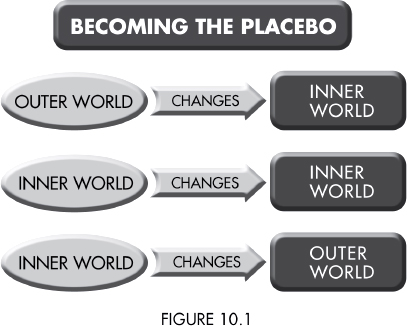
And if you keep moving into a new state of being each day by reminding your brain and conditioning your body to that same mind, then you should see the same structural and functional changes within you as if you took the placebo. Figure 10.1 gives a simple graphic showing how this process unfolds.
Most change starts with the simple process of something outside of us altering something inside of us. If you begin the inward journey and start to change your inner world of thoughts and feelings, it should create an improved state of well-being. If you keep repeating the process in meditation, then in time, epigenetic changes should begin to alter your outer presentation—and you become your own placebo.
So instead of aligning your faith (which I define as believing in a thought more than anything else) and your belief in something known, can you place your attention on an unknown possibility and then, by the principles discussed in this book, make that unknown reality known? By emotionally embracing the experience in your mind enough times, can you move from the immaterial to the material—from thought to reality?
By now, you should understand that you don’t need any fake pills, holy shrines, ancient symbols, witch doctors (whether of the modern-day or traditional variety), sham surgery, or sacred ground in order to heal you. This chapter introduces the scientific evidence showing how our students did just that. They changed their biology by thought alone. It wasn’t just in their minds—it was in their brains.
All of the supporting evidence in this chapter is provided to inspire you to see, firsthand, the power of meditation. It’s my desire that once you see proof of what’s possible, you’ll apply the same principles to your own personal transformation and reap the benefits in all areas of your life. After you read these stories, by the time you get to Part II of the book, you’ll have more intention behind your inward journey, because you’ll assign more meaning to what you’re doing—and therefore you’ll get better results.
From Knowledge to Experience
I’ve learned something very important in teaching this work. I’ve come to the realization that everyone secretly believes in his or her greatness. When you get right down to it, on some level, everyone—whether you’re a corporate CEO, a janitor at an elementary school, a single mother of three, or a prison inmate—innately believes in him- or herself.
We all believe in possibility. We all imagine a better future for ourselves than the reality where we currently reside. So I thought that if I could offer sincere individuals vital scientific information and then provide them with the necessary instruction on how to apply that information, they could experience varying degrees of personal transformation. Science is, after all, the contemporary language of mysticism. It transcends religion, culture, and tradition. It demystifies the mystical and unifies a community. I’ve seen it occur time and time again in my seminars around the world.
In my advanced workshops where my colleagues and I measure biological as well as energetic changes in participants, individually and in the group as a whole, I use several principles outlined in this book (and many additional ones as well) to teach people the scientific model of transformation. The model continues to progress as students evolve their skill sets. I constantly tie in more quantum physics to help people understand possibility. I then combine it with the latest information in neuroscience, neuroendocrinology, epigenetics, cellular biology, brain-wave science, energy psychology, and psychoneuroimmunology. We see new possibilities manifest as a result of learning new information.
Once our students learn and embrace this information, they can assign more meaning to their meditations and contemplative practices. But it’s not enough for the students to merely understand the information intellectually or conceptually. They must be able to repeat what they’ve learned on command. Once they can explain the advancing knowledge, the progressing model will become more wired in their brains—and they can then install the neurological hardware. By then repeating what they’ve learned enough times, they create a hardwired software program. If they apply this new knowledge correctly, it can then serve as the forerunner to a new experience.
That is, once they align their minds and bodies, they’ll gain wisdom from a novel experience by embracing the associated new emotion. Now they’ll start to embody the information, because they are chemically instructing their bodies to emotionally understand what their minds intellectually understand. At this point, they’ll begin to believe and know that it’s the truth. But my desire is that instead of just doing it once, my students repeat the experience over and over again at will, until it becomes a new skill, habit, or state of being.
Once we achieve consistency, we’re on the precipice of a new scientific paradigm—because anything that’s repeatable is science. When you and I arrive at the level of competence where we can change our internal states by thought alone, and this is repeatedly observed, measured, and documented, we’re on the verge of a new scientific law. Now we can contribute new knowledge about the nature of reality to the overall scientific model that the world presently embraces so that we can empower more people. This has been my ambition for years.
I’ve gone to great lengths to teach our workshop participants the specifics of how inward practices biologically change the brain and body so that they understand explicitly what they are doing. When nothing is left to conjecture, dogma, or supposition, we’re more suggestible to a quantum possibility. And great strides result from great efforts. Nevertheless, the measurements are only as good as the students’ abilities.
So in my workshops, the students retreat from their lives for three to five days to help them no longer define themselves by their present-past personal reality. They practice moving into new states of being. By no longer reaffirming aspects of their old-personality self that don’t belong to their future and by pretending to be someone else—or by reinventing a new-personality self—they become the new self they envision, so they should produce epigenetic changes, just as did the older men in Chapter 4 who pretended they were 22 years younger.
It’s my desire that workshop participants get beyond themselves—and their identities—in their meditations to become no body, no one, no thing, and to be in no place and in no time—so that they become pure consciousness. Once this occurs, I’ve seen them change their brains and bodies ahead of their environments (their familiar lives) so that when they return to their lives after the workshop is over, they’re no longer the victims of unconscious conditioning from the external world. This is the domain where the uncommon and the miraculous happen.
Because I want to give students the right kind of instruction and provide them with opportunities to personalize all of the novel information they’re learning so that they can ultimately produce some type of personal transformation, I created a new kind of event in 2013. If you remember, I discussed the evolution of this idea in the Preface. In this new workshop offering (held first in February of that year in Carefree, Arizona, and again in July in Englewood, Colorado), I wanted to measure the transformation as it was happening in real time.
My intention was that once these measurements were obtained, the data would then become more information that I could use to teach participants about the transformation they’d just experienced. And with that information, they could have another transformation, which could be measured, and on it would go as people began to close the gap between the two worlds of knowledge and experience. I call these workshops “Information to Transformation.” It’s where my passion lies.
Measuring Change
When I began the journey, I discovered a brilliant and talented neuroscientist named Jeffrey Fannin, Ph.D., who selflessly helped me measure what students’ brains were doing. Dr. Fannin, the founder and executive director of the Center for Cognitive Enhancement in Glendale, Arizona, has worked in the field of neuroscience for more than 15 years and has extensive experience in training the brain for optimal performance. He specializes in head trauma, stroke, chronic pain, attention deficit disorder (ADD) and attention deficit hyperactivity disorder (ADHD), anxiety disorders, depression, and trauma recovery, as well as high-performance training that includes brain mapping for sports, enhancing leadership skills through brain-wave entrainment, improving brain function, enhancing mental and emotional dexterity, and personal transformation.
Over the years, he has been involved in cutting-edge research using electroencephalograph (EEG) technology (which measures the electrical activity of neurons) to accurately assess how balanced a person’s brain-wave energy is, a measurement he calls the person’s whole-brain state. His research focuses on subconscious belief patterns and merging personal success with balanced brain performance.
Dr. Fannin has also worked as part of a research team at Arizona State University, studying neuroscience and leadership using data gathered at the United States Military Academy at West Point. This research allowed him to co-develop and co-teach a unique course at Arizona State University called “The Neuroscience of Leadership.” He also served for several years on the faculty at Walden University near Phoenix, teaching cognitive neuroscience at the master’s and doctoral levels.
I invited Dr. Fannin and his whole team to both of these new workshop events, where we measured specific brain qualities and elements like coherence versus incoherence (the orderliness or disorderliness of brain waves), amplitude (the energy of the brain waves), phase organization (the degree to which the different parts of the brain are working together in harmony), the relative time it takes for a person to enter deep meditation (how long it takes to change brain waves and move into a more suggestible state), the theta/alpha ratio (the degree to which the brain functions in a holistic state and how different brain compartments communicate with each other across entire regions—the front with the back and the left side with the right side), the delta/theta ratio (the ability to regulate and control mind chatter and intrusive thoughts), and sustainability (the brain’s ability to consistently maintain a state of meditation over time).
We also created four brain-scan stations equipped with EEG machines to measure participants both before and after the workshop so that we could observe how students’ brain-wave patterns changed. We scanned more than a hundred participants in each of the two events. I also randomly selected four participants to measure during each of three meditation sessions per day, scanning their brains in real time. Altogether, in both 2013 workshops, we recorded a total of 402 EEGs. This is a safe, noninvasive procedure that takes measurements from 20 locations on the outside of the head. Those brain-wave measurements provide a host of information regarding the brain’s current ability to perform.
The EEGs were then converted into quantitative EEGs (QEEGs), which is a mathematical and statistical analysis of EEG activity that’s depicted as a brain-map graphic. This graphic features color gradations indicating how the activity recorded from the EEG compares to normal baseline activity. The various colors and patterns depicted at different frequencies offer greater information about how the brain-wave patterns affect a person’s thoughts, feelings, emotions, and behaviors.
For starters, our overall data demonstrated that 91 percent of the individuals whose EEGs we recorded presented a significantly improved state of brain function. The majority of our students moved from a less coherent (or less orderly) state to a more coherent state by the end of the transformational meditation sessions. Furthermore, more than 82 percent of the QEEG brain maps we recorded in both events demonstrated that participants were functioning within the healthy normal range of brain activity.
I learned that when your brain works right, you work right. When your brain is more coherent, you’re more coherent. When your brain is more whole and balanced, you’re more whole and balanced. When you can regulate your negative and intrusive thoughts every day, you’re less negative and intrusive. And that’s exactly what we witnessed with the students at these events.
The national average for someone to move into and sustain a meditative state is a little over one and a half minutes.1 That is, it takes that long for most people to change their brain waves and move into a meditative state. The average time for our students to enter and sustain a meditative state in the 402 cases that we measured was only 59 seconds. That’s under a minute. Some of our students were able to alter their brain waves (and their state of being) in as few as four, five, and nine seconds each.
To be clear, I’m not interested in making this a competition (which would defeat our purpose). However, this data does illustrate two important points. First, moving beyond the analytical mind of beta brain waves and entering into a more suggestible state is a skill that you can improve if you keep practicing it. Second, students are able to use the methods my colleagues and I are teaching to get beyond their thinking brains and enter into the operating system of the subconscious mind relatively easily.
Interestingly, our research also shows a noticeable, consistent patterning in the way our students’ brains work holistically. We see significant alternating alpha/theta patterns (how different brain compartments communicate with each other) in the frontal lobes when a person meditates. That means the two halves of the brain are talking in a more balanced and unified fashion. The dual frontal-lobe ratio patterns we repeatedly observe seem to produce the experience of high-level thankfulness and gratitude, which appear over and over again in a rhythmic, wavelike manner. So when students are in this heightened state of gratitude during mental rehearsal, this data suggests that their inner experience is so real that they believe that the events are happening to them in real time—or that the events have already happened. They’re thankful, because that’s the emotion we feel when what we want happens.
Experienced meditators also showed an increase in theta and lower-range alpha brain-wave ratios, which means that they can spend quite a bit of time in altered states. Of particular significance was the increase in slow-wave regulation; these students, while in a theta brain-wave state, have higher-than-normal coherence, or brain-wave orderliness, between the activity in the front of the brain and the regions in the back of the brain. We saw the left-frontal region, which is associated with positive emotion, get activated repeatedly, which is consistent with inducing a state of meditative bliss.
In other words, when these students enter a meditation, they produce slower, more coherent brain waves that suggest they’re in deep states of relaxation and heightened awareness. In addition, the unification between the front and the back of the brain, as well as between the left and right sides of the brain, indicates that they’re feeling happier and more whole.
I Have a Brainstorm
Finally, while I was observing a student who was being brain mapped in real time during a meditation at the first of the two events, I understood something quite remarkable. As I was watching her brain on the scan, I saw how hard she was working and how her brain was moving further and further away from balance and from the deeper meditative states of alpha and theta. I saw how she was analyzing and judging herself and her life within the emotion she was experiencing at that time—as evidenced by the higher, more incoherent brain waves associated with a high-range beta state (indicating high stress, high anxiety, high arousal, high emergency, and general imbalance).
I witnessed how she was futilely trying to use her brain to change her brain—and it wasn’t working. I knew that she was also using her ego to try to change her ego, which also wasn’t working. In using one program to try to change another program, she was only endorsing her program, not rewriting it. She was still in her conscious mind, trying to change her subconscious mind, so she was keeping herself separate from the operating system, where true change resides. I approached her afterward, and when we spoke for a few minutes, she admitted to me that she was having a difficult time. The lights went on for me in that moment, and I knew exactly what I had to teach next.
She had to become detached and move beyond her body in order to change her body, move beyond the ego in order to change the ego, move beyond the program in order to change the program, and move beyond the conscious mind in order to change the subconscious mind. She had to become the unknown in order to create the unknown. She had to become an immaterial new thought in nothing materially in order to create a new experience materially. She had to move beyond space and time in order to change space and time.
The student had to become pure consciousness. She had to get beyond her associations with an identity that was associated with her known environment (her home, her job, her spouse, her kids, her problems), beyond her body (her face, her gender, her age, her weight, and her looks), and beyond time (the predictable habit of living in the past or the future, always missing the present moment). She had to get beyond her current self to create a new self. She had to get out of her own way so that something greater could take over.
When we are matter trying to change matter, it never works. When we are the particle trying to change the particle, nothing will happen, because we’re vibrating at the same speed as matter and so can’t have any significant effect on it. It’s our consciousness (our intentional thought) and our energy (our elevated emotion) that influences matter. Only when we are consciousness can we alter our brains, our bodies, and our lives and create a new future in time.
And because it’s consciousness that gives form to all things and that uses the brain and body to produce different levels of mind, once you arrive in the place where you are pure consciousness, you’re free. So I began to let students linger for extended periods of time in their meditations and become no one, no body, no thing, and be in no place and in no time, until they were comfortable in the infinite field of possibilities.
I wanted students’ subjective consciousness to merge with the objective consciousness of the field for long periods of time. They had to find the sweet spot of the present moment and invest their energy and awareness in a void that is not really empty space but is actually filled with an infinite number of possibilities, until they were comfortable in the unknown. Only once they were truly present in this potent place beyond space and time—the place from where all things materially come—could they start to create. This was when the real changes during the workshops began to happen.
A Quick Overview of the Brain Scans Used
I want to introduce you to two types of brain-scan readings so that you can see and understand the changes I’m about to show you. Let’s make it simple. The first type of scan we used measures degrees of activity between brain areas (see Figure 10.2, located along with the rest of the figures for this chapter in the full-color insert pages). The scans map two relative types of this activity. Hyperactivity (or overregulation) is depicted by red lines connecting different locations in the brain. Imagine telephone lines connecting one place to another in order to establish communication between those areas. Having too many red lines at any one time indicates too much action taking place within the brain. Hypoactivity (lack of regulation) is depicted by blue lines indicating that minimal information is being communicated between the different brain areas.
The thickness of the lines represents the standard deviation, or how much dysregulation (or abnormal regulation) exists between the two locations the line connects. For example, the thin red lines indicate that the level of activity between those locations is 1.96 standard deviations (SD) above normal. The thin blue lines indicate that the level of activity between those locations is 1.96 SD below normal. The medium lines indicate 2.58 SD either above (red) or below (blue) normal. And the thick lines indicate 3.09 SD above or below normal. So when you see a lot of thick red lines in a scan, it means the brain is working too hard. When you see a lot of thick blue lines, it suggests there’s little communication between different areas of the brain and, therefore, the brain is underactive. Think of it like this: The thicker the red line, the higher the volume of data the brain is processing, and the thicker the blue line, the lower the volume of data the brain processing.
The second type of scan we used comes from the QEEG analysis and is called a Z-Score report. Z-Score is a statistical measure that tells us not only whether a point is above or below average, but also how far from normal the measurement is. The scale on this report ranges from -3 to +3 SD. The darker blue represents 3 or more SD below normal, while the lighter blues range from about 2.5 to 1 SD below normal. Blue-green is approximately 0 to 1 SD below normal, while green is baseline normal. Light green registers at the outer area of normal but is considered from 0 to 1 SD above normal, while yellow and light orange are approximately 1 to 2 SD above normal, darker orange is about 2 to 2.5 SD above normal, and red is 3 or more SD above normal. (See Figure 10.3.)
The Z-Score report that will be used is called relative power, and it shows information about the amount of energy in the brain at different frequencies. Because green, as explained previously, indicates the normal range, the more green there is in a scan, the more the person is conforming to normal brain-wave activity. Each colored circle (resembling a person’s head when viewed from the top)represents what one person’s brain is doing at each brain-wave frequency. The circle in the upper-left region of each scan shows the lowest brain-wave frequency (in delta brain waves), and each circle after that depicts a higher and higher brain-wave state, moving progressively up to the highest beta brain waves at the bottom-right region. A cycle per second in brain-wave frequency is known as hertz, or Hz. From left to right and from top to bottom, it progresses from 1 to 4 cycles per second (delta) to 4 to 8 cycles per second (theta) to 8 to 13 cycles per second (alpha) to 13 to 30-plus cycles per second (low mid-range and high-range beta). The beta activity can be broken down into different frequency bands, such as 12 to 15 Hz, 15 to 18 Hz, 18 to 25 Hz, and 25 to 30 Hz.
Therefore, the relative colors in each area show what’s happening in each different brain-wave state. For example, a lot of blue in a majority of the brain in 1 cycle per second of delta suggests that there’s little activity of the brain in that delta range. And if there’s a lot of red in 14 Hz alpha in the frontal lobe, it means that there’s heightened alpha activity in that area of the brain.
It should also be understood that these measurements could be interpreted differently depending on what the subject is doing when the scan is taken. For example, if 1 Hz delta were depicted in blue, that would suggest that the energy in the brain at that frequency is 3 SD below normal. In a clinical sense, that might be interpreted as being abnormally low. But because it was recorded when the subject was meditating, such a scan would actually suggest that the 1 Hz delta had opened the door to a stronger connection to the collective conscious energy field. In other words, as the energy in the neocortex is turned way down, the autonomic nervous system is more readily accessed. In just a bit, you’ll see several examples that will make all of this clear. In the meantime, glance at Figure 10.3 again. It will give you an overview to illustrate what I’ve just explained.
Coherence vs. Incoherence
Now look at Figure 10.4. The image to the left (labeled “before meditation”) represents a brain that has a lot of chatter. It’s functioning in a high level of arousal (high-range beta) and is quite incoherent. The thickness of the red lines shows that this brain is 3 SD above normal (because the thicker the red line, the more revved up and imbalanced the brain is). By looking at the red lines, you can see excessive incoherent activity happening throughout the entire brain. The blue in the front of the brain represents hypoactivity (2 to 3 SD below normal) in the frontal lobes, showing that the frontal lobes are shut down or turned off and so aren’t restraining the hyperactivity in the rest of the brain.
This is a brain with attention problems; it’s so overloaded that it has no leader to control the chatter. It’s like a TV satellite system with 50 channels where the volume is turned up really loud and the channels are changing every second. Too many quick shifts in attention span occur from one thought process to the next, so the brain is overly vigilant, highly aroused, overworked, and overregulated. We call this an incoherent brain pattern, because the different parts of the brain are not working together at all.
Now take a look at the second image (labeled “after meditation”). You don’t have to be a neuroscientist to see the difference between the first image and this one. Here, you see hardly any red or blue lines, demonstrating normal brain activity—with very little hyperactivity or hypoactivity. The chatter has stopped, and the brain is working more holistically. This person’s brain is now in balance, so we can say that this brain demonstrates a more coherent pattern. (The remaining activity in blue and red, as indicated by the arrow, represents sensory-motor activity, which probably means the person is twitching or blinking and in a state of rapid eye movement, or REM, which typically happens in very light sleep.) This change took place in one of the students after only one meditation.
Now let’s explore some more case studies of students from the workshops. For each, I’ll first give you a bit of background so that you can see what state of being students were in when they began the workshop, then I’ll explain what their scans showed, and finally I’ll describe the new state of being each student created.
Healing Parkinson’s Disease Without a Placebo or Drug
Michelle’s old self: Michelle is in her 60s and was diagnosed with Parkinson’s disease in 2011, after she noticed progressive involuntary shaking of her left arm, left hand, and left foot. In November 2012, she became a patient at Barrow Neurological Institute in Phoenix. Her attending physician told her that she’d probably had Parkinson’s for 10 to 15 years already and that she’d have to live with the symptoms. Her plan was to cope with the progression of the bodily limitations as she aged. She began taking Azilect (rasagiline mesylate), a medication used for Parkinson’s disease that stops the uptake of dopamine at the receptor-site level, slowing its breakdown in the body. The drug produced very few noticeable changes.
Michelle became a student in November 2012. The month of December was outstanding. Her daily meditation routine brought a feeling of peace and joy, which began to reduce her symptoms to a noticeable degree. Michelle was certain that this course of action would assist her in overcoming Parkinson’s.
She continued experiencing great meditation sessions through early February 2013. In mid-February, however, Michelle’s mother was admitted to intensive care in Sarasota, Florida, so Michelle flew to Florida to be with her. The day Michelle flew back to Arizona for our February 2013 workshop, her mother was placed in hospice care. Michelle’s plane landed in Phoenix about an hour and a half before her first brain scan. Needless to say, she was both physically and emotionally exhausted at the time of the brain scan, which indeed showed the extreme stress she was experiencing.
By the end of that workshop, she was certainly in a calmer, more positive state of being, with barely noticeable Parkinson’s symptoms. Following the workshop, Michelle returned to Florida to be with her mother again. Although she and her mother always had a difficult relationship, as a result of her efforts in the workshop, Michelle felt sufficiently strengthened to be supportive, loving, and totally free of any old issues that could have interfered with the love she felt for her mother.
Nevertheless, because of her mother’s illness and eventual passing, as well as her sister in Texas having a major stroke, Michelle was forced to fly back and forth to Florida and Texas to deal with her family challenges. Her routine was greatly affected, and by June, she stopped doing her meditations. Life had gotten in the way, and she had too many responsibilities. Stopping her meditations was like stopping taking the placebo. When she noticed her symptoms returning, she started meditating again and made significant strides.
Michelle’s scans: Because Michelle lives close to Dr. Fannin’s clinic in Arizona, we were able to track her progress for more than five months, by taking a series of six periodic brain scans. I want to explain her evolution during that time.
Take a look at the “before meditation” part of Figure 10.5. This is her scan at the February 2013 event after she came home from Florida, stressed and exhausted from her mother’s illness. The thick red lines indicate her brain in all areas is 3 SD from normal. She’s displaying too much brain activity, hyperincoherence, and overregulation. In Parkinson’s disease, this is quite common. The lack of the proper neurotransmitters (specifically dopamine) causes the neurons to display an erratic communication system between each region of the brain, with neural networks firing out of control. The result is a type of spastic or hyperactive neuronal firing, which affects the brain and the body. As a result, involuntary motor functions interfere with normal movement.
Now review the “after meditation” part of the same figure. This is Michelle’s brain after four days of changing her state of being during meditation. This is very close to a normal brain, with very little hyperactivity, incoherence, or overregulation. At the end of our event, she was experiencing no involuntary tremors, twitches, or motor problems—and her brain scan confirms this change.
Now let’s look at the QEEG readings in Figure 10.6A, labeled “before meditation.” If you look from the middle of the second row all the way to the last row—the images in blue—you’ll see that Michelle’s brain is showing no alpha or beta brain-wave functioning. Remember that blue means cooled-off brain activity. With Parkinson’s, this is typically represented by lessened cognitive activity, compromised learning, and a loss of engagement. Here, you can see that Michelle can’t consolidate new information. She has no ability to sustain an internal picture, because she’s not producing alpha brain waves. Her very low-range beta patterns also show that she is having difficulty with sustaining levels of awareness. All of the energy in her brain is going toward dealing with her hyperincoherence, so it’s like a lightbulb going from 50 watts to 10 watts. The volume of energy in the brain is turned down.
If you look at the “after-meditation” part of the graphic, you’ll see what looks like a much-improved and balanced brain. All of those green areas in most of the images indicated with arrows represent normal and balanced brain activity. Her brain can now function in alpha, and she can move into internal states more easily, cope with stress better, and enter into the subconscious operating system to influence autonomic functions. Even her beta activity returned back to normal (green), indicating that she is more conscious, alert, and attentive. The balanced activity resulted in very few motor problems.
The red areas circled at the bottom in higher-range beta signify anxiety. This is the attitude that Michelle struggles with and is working on changing from an internal perspective. Coincidentally, anxiety is exactly what has amplified her Parkinson’s symptoms in the past. As she lowers her anxiety, she lowers the symptoms of Parkinson’s. To Michelle, her tremors now represent when she’s out of balance in her life. When she regulates her internal states, she produces changes in her external reality.
Three months later, Michelle again had her brain scanned at Dr. Fannin’s office. The May 9, 2013, scan in Figure 10.6B still shows her brain improving, which is exactly what Michelle reported. She’s still getting better in the midst of all of the different stresses in her life. Because she does her meditations every day (think of it as taking her placebo daily), Michelle is continually changing her brain and body to be greater than the conditions in her environment. The scan shows that she’s dropped almost another standard deviation from her previous scan at the bottom of the graph. You can clearly see that her anxiety is still getting better, and as a result, so is her condition. Less anxiety means fewer tremors. She’s sustaining and thus memorizing that state of being for a longer period of time—and her brain is showing the changes.
If you look at Michelle’s brain scan from June 3, 2013, in Figure 10.6C, you’ll see a slight regression of her progress—although she’s still better than when she started. Here, she’d stopped doing her meditation (and therefore stopped taking the placebo), so her brain slightly regressed to what it knew before. The brain with the arrow at the blue area of 13 Hz means she’s hypoactive in the sensory-motor area and, thus, has less ability to control her involuntary tremors. In this brain-wave pattern, Michelle has less energy to control her body. You can also see the red areas circled again in the bottom of the scan returning in higher-range beta, which correlate with her anxiety.
By her June 27, 2013, scan shown in Figure 10.6D, Michelle had gone back to her meditations at the beginning of that month, and her brain scan showed a significantly better brain. She had less overall anxiety, as demonstrated in red at the bottom row at 17 to 20 Hz. Now compare that scan to her next one, on July 13, 2013, after our workshop, as depicted in Figure 10.6E. There’s even less red, and the blue that showed up in her first scan in February during alpha (indicating hypoactivity) is completely gone. Michelle continues to improve, and her changes are becoming more consistent.
Michelle’s new self: Today, Michelle hardly ever has any of the involuntary motor symptoms associated with Parkinson’s disease. Very minor twitches do present themselves when she gets stressed or overtired at times, but for the most part, she’s high functioning and normal. When Michelle is balanced and joyful, doing her meditations daily, her brain is working well—and so is she. From both our continued scans and her own reports, Michelle isn’t merely maintaining her condition; she continues to get better and better. She keeps meditating, because she understands that she has to be the placebo every day.
Changing Traumatic Brain and Spinal-Cord Injury by Thought Alone
John’s old self: In November 2006, John broke his neck at the seventh cervical and first thoracic vertebrae while he was a passenger in a car that spun out of control and rolled at high speed. Due to the impact, he suffered a severe head injury as well. The doctors were quick and sure about his prognosis. He would be a quadriplegic for the rest of his life. He would never walk again and would have very limited use of his arms and hands. His vertebrae were 100 percent dislocated, resulting in spinal-cord damage. It wasn’t until John had surgery that his doctors saw the exact extent of his injuries. Two days later, the neurologist told John’s wife that his spinal cord was somewhat “intact” but that his type of injury could have the same outcome as a complete cord severing. It would be, as with all spinal-cord injuries, a waiting game.
When you’re caught up in the day-to-day reality of living in the intensive care unit, and later a rehab center, it can be extremely difficult not to get swept away by conventional thinking. When John and his family asked about his possible recovery, the doctors said that given the injury and the lack of return to any kind of normal functioning up to that point, they should begin accepting the inevitable. John would be physically handicapped for the rest of his life. His doctors hammered this message home over and over, as a necessary part of “moving on.” But somehow, both John and his wife couldn’t accept it.
I met John while he was in his wheelchair in 2009, along with his wife and family and an amazing physical therapist who understands neuroplasticity. They are some of the most energetic and optimistic people I’ve ever met, and we eagerly began our journey together.
John’s scans: Take a look at John’s “before meditation” brain scan in Figure 10.7. His first picture demonstrates quite a bit of hypoactivity. It’s more than 3 SD below normal. John’s coherence measurement, with such significant thick blue lines, is the opposite of our study of Michelle’s Parkinson’s condition, which showed thick red lines. This scan reveals a diminished capacity for different parts of the brain working well together. His brain here is on idle and has no energy, and he has limited ability to respond to anything for any length of time. He couldn’t sustain attention, and his awareness was limited. Because of his traumatic brain injury, his brain was in a state of super-low arousal, and it showed a high degree of incoherence.
Now look at his brain scan after four days of meditation. In the first image on the upper-left margin at 1 Hz delta, he has some more activity demonstrated in red. In this case, it’s a good sign, because more coherence is happening in delta in both hemispheres. Here, John is starting to show more balanced dual-brain processing. Because his traumatic brain injury is most visible in delta and theta, the hyperactivity in delta suggests that his brain is waking up. The rest of his brain in alpha and beta is showing more balanced activity and better cognitive function. This shows he has more access to control his mind and body.
Now view Figure 10.8. The blue color starting from about the middle of the second row until the end of the bottom row once again indicates that John has no alpha or beta brain waves. This blue color distributed throughout the alpha and beta realms in the left and right hemispheres suggests that he’s vegetating and working on limited resources. The blue shows less cognitive ability and less capacity to control his body. John’s mind is just not there.
After four days of meditation, 90 percent of John’s brain has returned back to normal, as shown by all the green. That’s pretty good! He still has some hypoactivity in his left hemisphere, where the arrows are pointing, indicating some problems with verbal skills and expressing himself, but it’s still so much better than his first scan. John continues to do his meditations, and his brain continues to show more energy, more balance, and more coherence. John has regained access to the latent neuropathways that were there before. His brain woke up, remembered how to work again, and now has the energy to work better.
John’s new self: John stood up at the end of our February 2013 event. He has regained full control of his bowels and his bladder. To date, he is now standing in a more normal and integrated posture. His movements are more coordinated. The frequency, intensity, and duration of his spastic tremors have diminished considerably. He’s even doing a total gym workout on a regular basis, thanks to the help of his amazing therapist, B. Jill Runnion (director of Synapse—Center for Neuro Re-Activation in Driggs, Idaho), who also studies my work and has the skills and unlimited mind to challenge John by setting up the right conditions. His unassisted vertical-squat exercises have progressed from a 10-degree angle to a 45-degree angle.
John is now in complete control of lowering his body to a seated position. He can also perform a specific physical therapy exercise that involves loading his leg and torso muscles and pushing a sled away from his body with resistance. John is now going from lying facedown to supporting himself on all fours, completely under his own power, and he’s now starting to crawl.
Just months after the workshop, John astounded his medical team with all of his improvements in cognitive functioning. His advances exceeded anything any of the specialists had ever seen in a spinal-cord-injury patient. It was as if John finally woke up, and his scans show that he now has more access to his brain and body. John is still demonstrating more control over dormant areas of his brain and body, because he now has more capacity to regulate his body.
John’s overall integration and coordinated movement patterns progressed considerably, enabling him to sit up at a table unassisted, with his feet planted on the floor. John’s fine motor skills improved to the point where he can now hold a pen and sign his name, use a smartphone to send a text message, grip the steering wheel to drive, and hold a regular toothbrush. His cognitive changes demonstrate more self-confidence and greater inner joy. He has a much greater sense of humor and is more aware than ever.
During the summer of 2013, John was able to go on a white-water rafting trip, where he held himself unassisted in a raft for six hours a day and slept in a tent on the ground. He managed to live in the Idaho wilderness, away from contact with the outside world, for seven days and six nights. He couldn’t have done this a year ago. Every time John and I talk, he always says the same thing: “Dr. Joe, I have no idea what’s happening.”
I always give him the same response: “The moment you know what’s happening, John, it’s all over. The unknown is beyond our comprehension. Welcome it.”
I’d like to make one final point about John’s case. Everyone knows that a spinal-cord injury doesn’t heal with typical conventional approaches. I’m sure that it’s not matter that’s changing matter for John. That is, it’s not chemistry or molecules that are altering his damaged spinal cord. From a quantum perspective, he’d have to be in a coherent frequency of heightened energy that would have to consistently lift or entrain matter to a new mind. He’d have to display an elevated energy or wave that vibrates at a frequency faster than matter, combined with a clear intention, in order to alter the particles of matter. So it’s energy, which is the epiphenomenon of matter, that is rewriting the genetic program and healing his spinal cord.
Overcoming the Analytical Mind and Finding Joy
Kathy’s old self: Kathy is the CEO of a large company, an attorney, and a committed wife and mother. She has been trained to be highly analytical and rational. She uses her brain every day to anticipate outcomes and to be prepared for every possible forecasted scenario based on her experience. Before she was introduced to my work, she’d never actually meditated. In the beginning, Kathy became very aware of how much she was analyzing everything in her life. She had a huge daily to-do list and described her brain as never shutting off. In hindsight, she confesses that she was never in the present moment.
Kathy’s scans: Take a look at Kathy’s “before meditation” brain scan in Figure 10.9. These delta-to-theta ratio measurements represent her ability to maintain focus and concentration in order to process and deal with intrusive and extraneous thoughts. The first arrow in the back of her brain on the right side, where the larger red spot is located, shows that she is seeing pictures in her mind. The second arrow, near the smaller red area on the left side, indicates that Kathy is internally talking to herself about those pictures. The imagery and constant mind chatter are causing her brain to be stuck in a loop.
In the “after meditation” scan, taken at the end of the workshop, you can clearly see that Kathy’s brain is more balanced, more whole, and more normal. She no longer has any brain chatter, because her brain is integrating and processing information more efficiently. She’s in a state of coherence. And the change in her brain state is accompanied by much greater joy, clarity, and love.
Now let’s look at her coherence measurements in Figure 10.10. At the beginning of the workshop, Kathy’s brain was in high-range beta, a state of high arousal, high analysis, and high-emergency mode. The thick red lines in alpha and beta show that she’s three SD above normal. Her brain is hyperactive, out of balance, and highly incoherent—and she’s having trouble controlling her anxiety.
Now take a look at the “after meditation” scan, taken on the last day of the February event. You should, by now, be able to recognize a more normal and balanced brain, which has much fewer high-range beta brain waves and far more coherence.
Kathy still had some work to do, so we set up an experiment after the workshop, because she lives in the Phoenix area and could visit Dr. Fannin’s clinic. Dr. Fannin showed her a picture of a healthy, balanced, and normal brain on a QEEG scan (in green) and told her that this was where she needed to focus her attention. He suggested that when she moved into a new state of being every day in her meditation, she should select that potential outcome for the next 29 days. Since she then could assign more meaning to the placebo, she held a greater degree of intention about the benefits of the outcome.
It worked. If you look at Figure 10.11, which shows the scan dated April 8, 2013, about six weeks later, you’ll see an even more normal brain, with no evidence of anxiety (seen in red). In addition, check out Figure 10.12. Can you see the progression from February 20, 2013, where Kathy’s brain scan is red in the higher brain-wave frequencies (21 to 30 Hz), to the end of the February event, where her brain scan has changed to green in the second image (and so is much more normal)? The red areas represented show very high levels of anxiety (high-range beta) and over-analysis because her brain waves in the higher frequencies (21 to 30 Hz) are hyperactive—her brain was working too hard. By the beginning of April (shown in Figure 10.13), Kathy’s brain is balanced, coherent, and much more synchronized. Kathy has a much different brain today and reports truly feeling like a different person.
Kathy’s new self: Kathy reports that she has seen numerous positive changes in her career, her daily life, and her relationships. She meditates daily, and when she thinks she doesn’t have time to meditate, that’s when she makes sure to find the time to do it. She understands that the attitude that created her out-of-balance mind and brain is related to time and the conditions in her external environment. Kathy says that the answers to her questions come more easily and with far less of a struggle. She listens to her heart more often, and she catches herself before she moves into cycles of vigilance. She rarely gets caught up in those loops, and she finds herself acting in a kinder and more patient manner. Kathy is happier from the inside out.
Healing Fibroid Tumors by Changing Energy
Bonnie’s old self: In 2010, Bonnie developed significant pain and excessive bleeding during her menstrual cycle. She was diagnosed with excessive estrogen production and was encouraged to begin bioidentical hormones. At age 40, she found this solution to her diagnosis to be extreme.
Bonnie remembered that her mother had had the same symptoms at her age. Her mother had taken hormone pills and eventually died of bladder cancer. While there may be no specific connection between the hormone therapy and bladder cancer, what caught Bonnie’s attention was that she was having the same physical symptoms as her mother. She didn’t want to develop the same outcome.
Her vaginal bleeding began to last even longer (sometimes up to two weeks), and Bonnie became anemic and lethargic, and gained about 20 pounds. She would lose an average of two liters of blood each month during her menstrual cycle. A pelvic sonogram confirmed fibroid tumors. Bonnie went through myriad blood tests and was told she was perimenopausal and most likely had an ovarian cyst. Her specialist who recommended the hormone therapy told Bonnie that fibroids don’t go away and that the severe bleeding would continue for the rest of her life.
I randomly selected Bonnie for one of the extra brain maps during our Englewood, Colorado, event in July 2013; she was mortified when I pointed at her to indicate she was selected for the scan. Bonnie’s menstrual cycle had started the evening before the workshop, and she typically had to wear a large diaper to capture the amount of blood she lost during her period. When, after several meditations, I instructed the students to lie down, Bonnie was concerned that she would bleed all over herself and the floor.
Because of the extreme pain that accompanied Bonnie’s periods, even sitting was uncomfortable. Even so, she was determined to continue practicing the meditation techniques every day for her own peace of mind. During the first meditation in which she was being brain mapped, Bonnie had an experience that she can only describe as mystical. She felt her heart open and expand. Her head pushed back, and her breathing changed. Bonnie saw light flood into her body, and she experienced a tremendous sense of peace. She also heard the words: “I am loved, blessed, and not forgotten.” Bonnie burst into tears during the meditation, and her brain scan showed that she was in a state of bliss.
Bonnie’s scans: Take a look at Bonnie’s EEG scan in Figure 10.14. We were lucky enough to catch the whole experience in real time. The first graphic shows normal brain-wave activity. Everything is in balance and quiet. If you review Bonnie’s three scans in Figure 10.15, which capture what was happening to her at different times during her meditation, you can see elevated energy and amplitude in her frontal lobes, which represents her processing quite a bit of information and emotion. She’s in an expanded state of consciousness and is experiencing peak moments at different intervals. Most of the activity is happening in the theta brain waves, and it signifies that she is in her subconscious mind. The inner experience is very real to her in that moment. She’s so completely focused on the thought that it becomes the experience. The emotional quotient is represented by the amount of energy (amplitude) her brain is processing. Take a look at the vertical length of the lines where the arrows are pointing. That’s very coherent energy. Bonnie is in a heightened state of awareness.
Now glance at Figure 10.16. Bonnie’s QEEG scan in real time has an arrow pointing to 1 Hz in delta brain waves, illustrating her connection to the quantum field (shown in blue). Bonnie also has heightened energy in her frontal lobe in theta brain waves (demonstrated in red) to match exactly what was happening in her EEG scan. Look at the red circle that is highlighting her frontal lobes as well as the arrow pointing to a top view of the brain’s frontal lobe immediately below. The image you are seeing is a snapshot of a motion picture of Bonnie’s brain activity during her entire meditation. Because one of the functions of the frontal lobe is to make thoughts real, what she is experiencing in theta with her eyes closed is very real to her. We could say that Bonnie’s inner experience was like a very vivid, lucid dream. The red arrow at 12 Hz alpha—isolating the red spot in the center of her brain—shows Bonnie’s attempt to make sense of her inner experience and then process what she was seeing in her mind’s eye. The rest of her brain is healthy and balanced (shown in green).
Bonnie’s new self: Bonnie’s experience that day changed her for good. The amplitude of energy related to the inward experience was greater than any past experience from her external environment, and thus her past was biologically removed. The energy of the momentous peak of her meditation superseded the hardwired programs in her brain and the emotional conditioning in the body—and her body instantly responded to a new mind, to a new consciousness. Bonnie had changed her state of being. In less than 24 hours, her bleeding stopped completely. She had no symptoms of pain and instinctively knew that she was healed. In the months since the event, Bonnie has experienced only normal menstrual cycles. She hasn’t had any excessive bleeding or pain since the workshop.
Experiencing Ecstasy
Genevieve’s old self: Genevieve, a 45-year-old artist and musician, currently resides in Holland and travels quite a bit because of her vocation. During the February event, I was watching her brain scan with Dr. Fannin during her meditation. We started to notice some significant changes in her energy during the middle of her inward journey. When we both saw a particular reading on her scan at the same time, we looked at each other, knowing something was about to happen. Within moments, when we turned to look at her, we saw tears of joy running down her face. Genevieve was in ecstasy. She was in utter pleasure, and her body was responding quite readily. We’d never seen anything like this before.
Genevieve’s scans: If you look at Figure 10.17, you’ll see a relatively normal brain scan before Genevieve’s meditation. The areas of green spread throughout the brain signify a healthy, well-adjusted woman with a balanced brain. The blue areas of lessened sensory-motor activity before she begins, in alpha 13 to 14 Hz, where you see the arrows, probably indicate jetlag, because she’d just arrived from Europe that day. If you observe Genevieve’s brain during the meditation, you see an overall increase in balance. What happens next is off-the-chart amazing. When we saw her reach this peak moment at the end of her meditation, we knew from watching her scans that she had quite a bit of energy in her brain.
Now take a peek at Figure 10.18. This type of red activity, showing high amounts of energy in all brain-wave range frequencies, suggests that Genevieve is in a highly altered state. Someone who didn’t know that she was meditating and who just saw the brain scan would say that she was experiencing an extreme level of anxiety or psychosis. But because her personal testimonial described her being in sheer ecstasy, we know that all of the red represents a lot of energy in her brain. Her brain is at 3 SD above normal. It’s energy, in the form of emotion stored in her body as the mind, that is being released and is traveling back to her brain.
Figure 10.19, which shows her EEG reading, validates this position. If you review the purple lines where the arrow is, you’ll see that this part of the brain is processing ten times the normal amounts of energy. The area that’s circled in red tells us that the experience is so emotionally profound that it’s being stored in Genevieve’s long-term memory. At the same time, she is also trying to verbally understand and make sense of what’s happening to her in that moment. She might be saying something to herself like, Oh my God! This is amazing. I feel so great! What is this feeling? Her inner experience is as real as any outward event, and she’s not trying to make it happen—it’s just happening to her. She’s not visualizing; she’s experiencing a profound moment.
Interestingly, we scanned Genevieve again in July, at the event in Colorado, and she still displayed the same energy changes. When we handed her the microphone during both events, all she could say was that she was so in love with life that her heart was fully open and that she felt connected to something greater than herself. She was in a state of grace, and she felt so great that she wanted to stay in the present moment. If you look at Figure 10.20, you’ll see that her brain had the same patterns and effects at the July event as it had at the February event. The experience was still happening to her months later. She was truly altered from her personal transformation.
Genevieve’s new self: I spoke with Genevieve several weeks after the July event. She told me that she’s not the same person she was at the beginning of the year. Her mind has deepened, and she’s more present and much more creative. She feels profound love for all things, and most important, she feels so lifted that she no longer feels as if she needs or wants anything. She feels whole.
Bliss: Moving the Mind Out of the Body
Maria’s old self: Maria is a highly functional woman with normal brain activity. During the first meditation of the day, a 45-minute exercise, she experienced a significant change in her brain waves within moments.
Maria’s scans: Look at Figure 10.21 and notice the difference between Maria’s normal brain waves and her state of ecstasy. I watched her as she went into a heightened state of increased energy, and it appeared as though she were having an orgasm in her brain. Her scan shows a fully active brain having a full-on kundalini experience (kundalini is a latent energy stored in the body, which, when aroused, brings on higher states of consciousness and energy in the brain). If you look at Maria’s scans, you can see that all areas of her brain were experiencing a very heightened energy. When the kundalini energy is awakened, it can rise from the lower spine to reach the top of the brain, at which point it can produce an extremely profound mystical experience. Many students in the workshops have these brain orgasms. In Maria’s scan, all areas of the brain are fully engaged with energy, and her brain waves show three to four times the normal amplitude. Her brain is coherent and very synchronized. If you look at the scans, you’ll see that the ecstasy comes in waves, just like an orgasm. She was not trying to do any of this. It was actually just happening to her. Her entire brain was engaged in the inner event, and as a result, she was filled with profound energy.
Maria’s new self: Today, Maria continues to have similar mystical experiences. Each time they occur, she reports feeling more relaxed, more conscious, more aware, and more whole. She welcomes the next unknown moment.
Now It’s Your Turn
These few examples (out of many that were documented) prove that it is indeed possible to teach the placebo effect. Now that you’ve received all of the information, stories, and proof of what’s possible, it’s time for you to learn the “how-to” so that you can experience your own transformation. The next two chapters will outline the steps you can take to begin your personal meditation process. It’s my desire for you to put into practice all of the knowledge you’ve learned so far so that you experience the truth of your efforts. Once you receive the tools that you need to cross the river of change, I hope to see you on the other side.

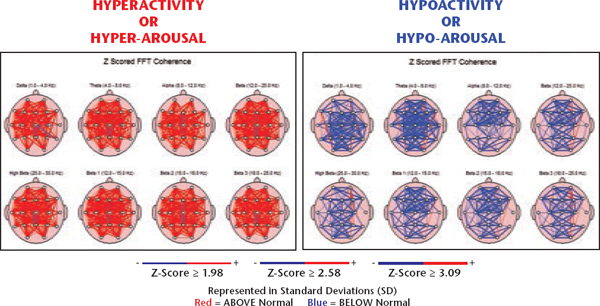
Figure 10.2
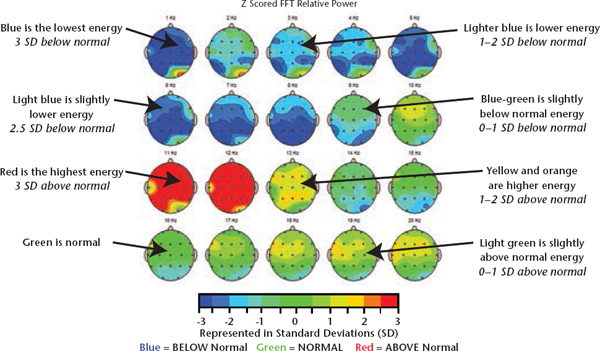
Figure 10.3
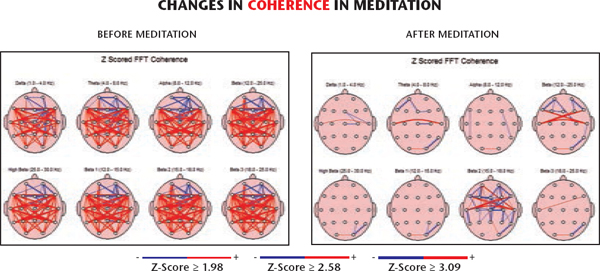
Figure 10.4
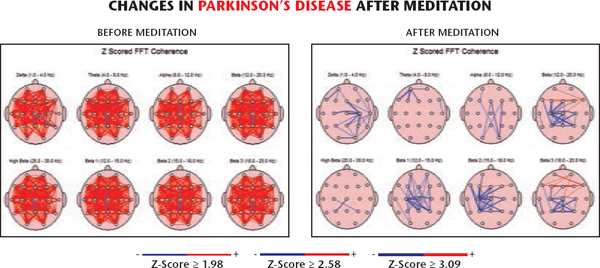
Figure 10.5
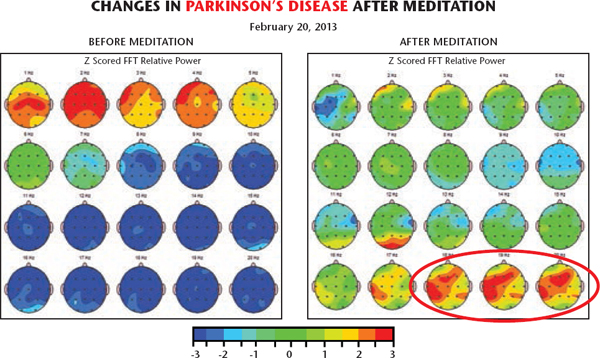
Figure 10.6A
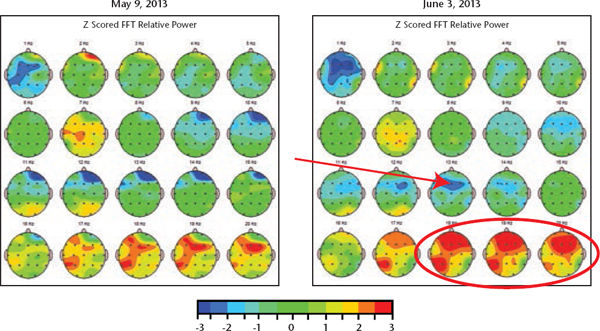
Figure 10.6B Figure 10.6C
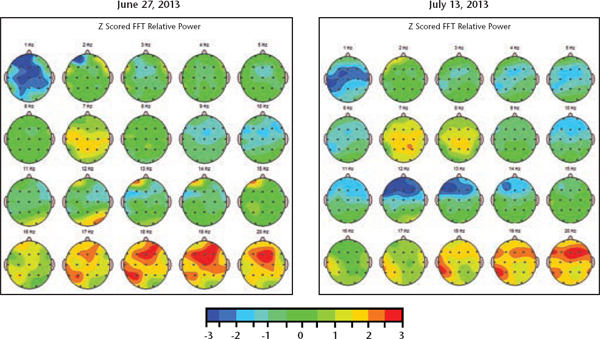
Figure 10.6D Figure 10.6E
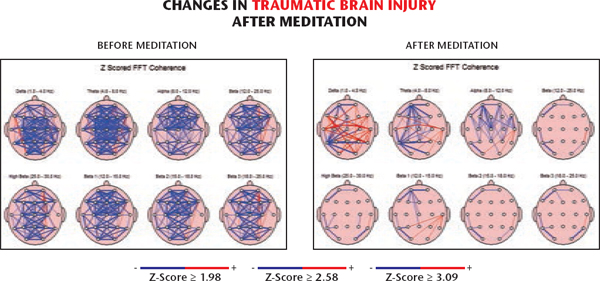
Figure 10.7
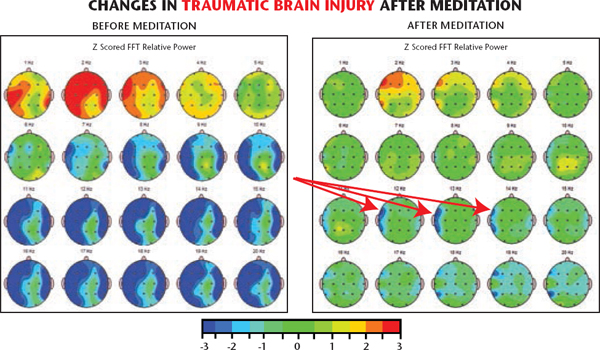
Figure 10.8
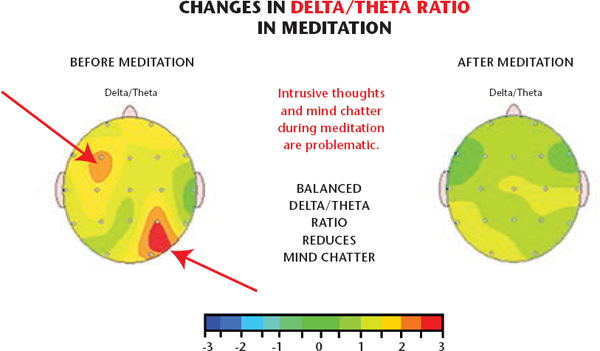
Figure 10.9
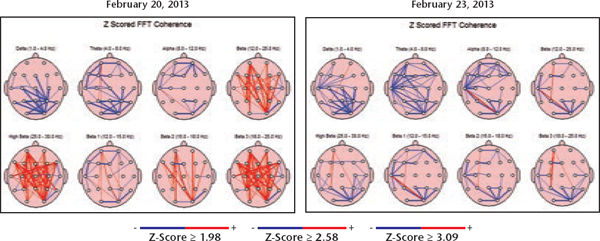
Figure 10.10
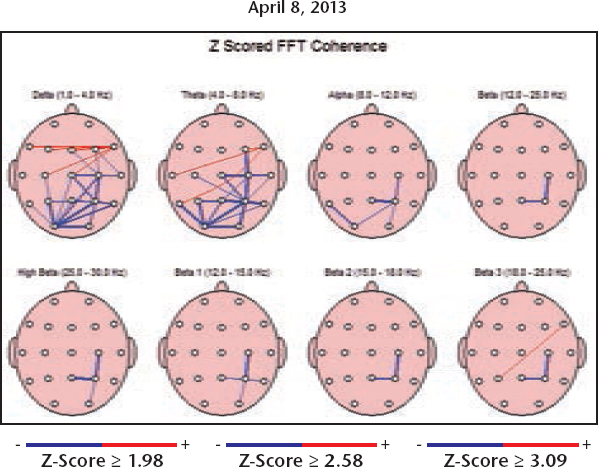
Figure 10.11
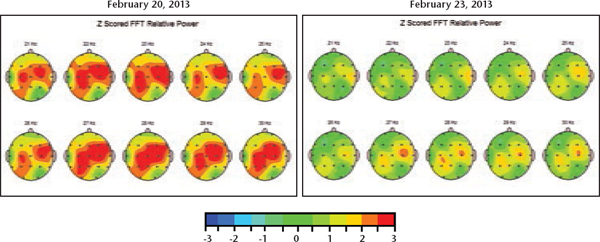
Figure 10.12
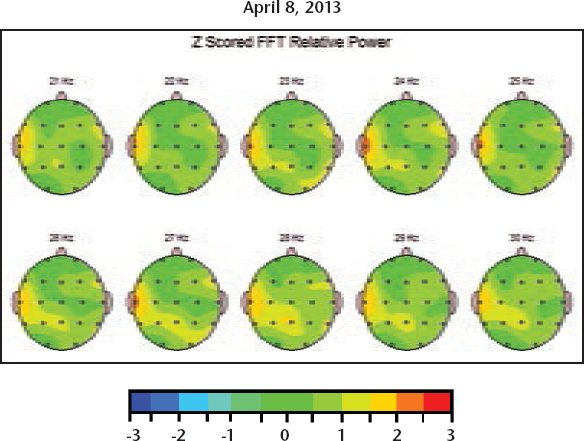
Figure 10.13
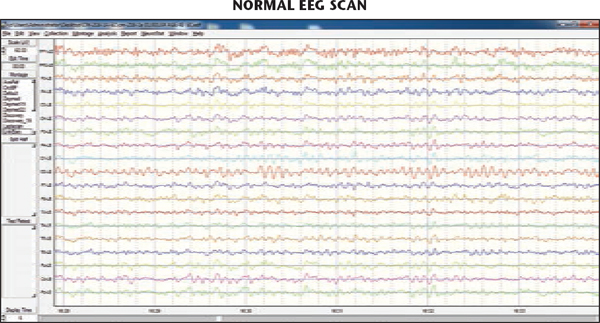
Figure 10.14
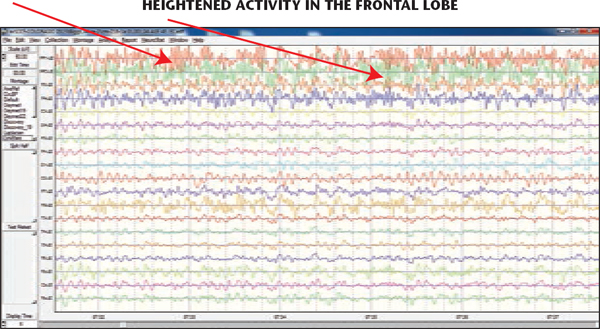
Figure 10.15A
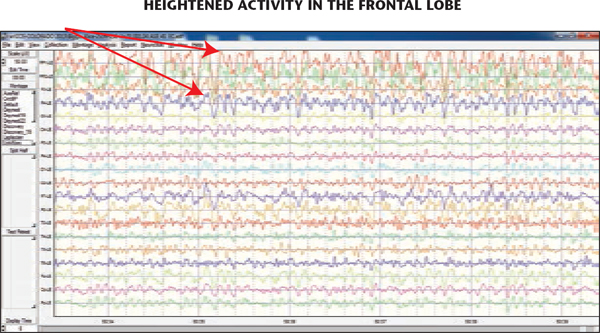
Figure 10.15B
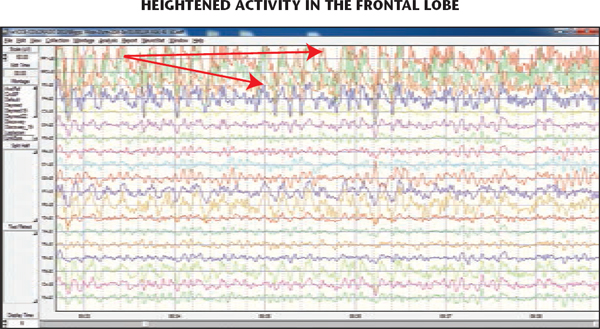
Figure 10.15C
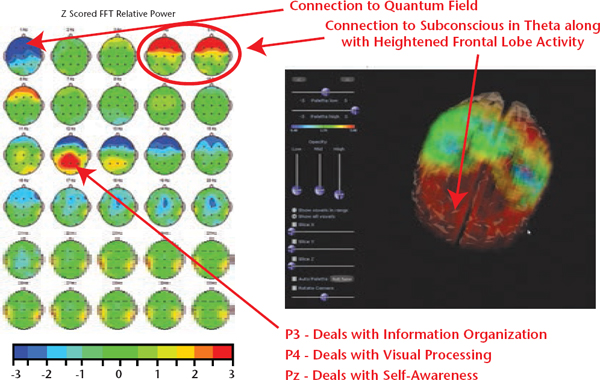
Figure 10.16
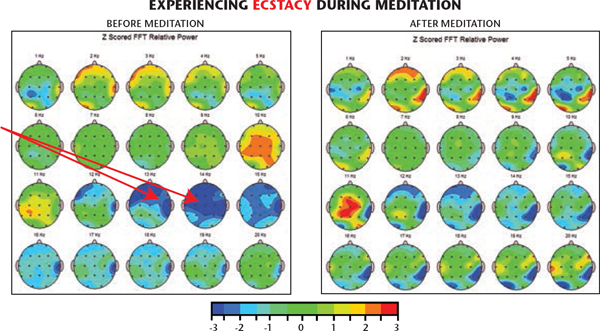
Figure 10.17
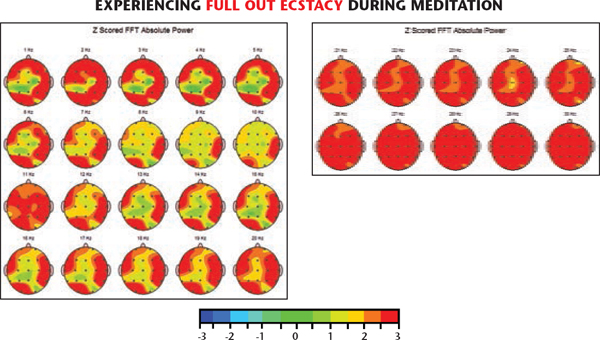
Figure 10.18
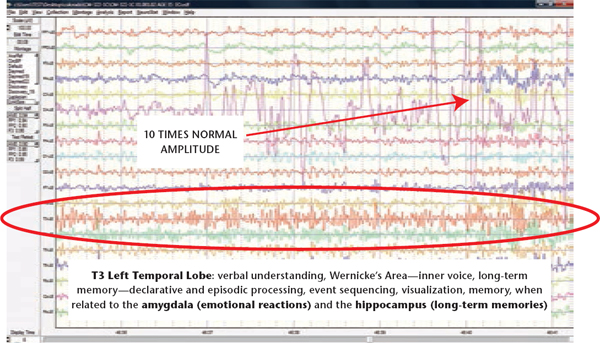
Figure 10.19
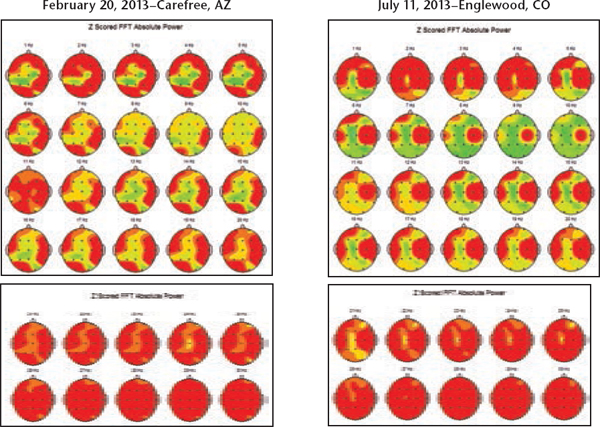
Figure 10.20
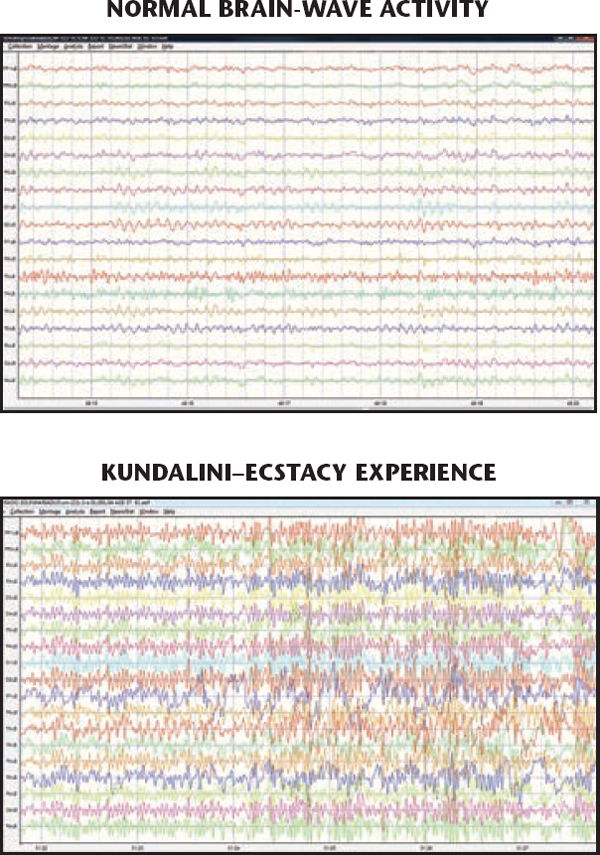
Figure 10.21