The Placebo Effect in the Body
On a crisp September day in 1981, a group of eight men in their 70s and 80s climbed into a few vans headed two hours north of Boston to a monastery in Peterborough, New Hampshire. The men were about to take part in a five-day retreat where they were asked to pretend that they were young again—or at least 22 years younger than they were at the time. The retreat was organized by a team of researchers, headed by Harvard psychologist Ellen Langer, Ph.D., who would take another group of eight elderly men to the same place the following week. The men in the second group, the control group, were asked to actively reminisce about being 22 years younger but not to pretend that they weren’t their current age.
When the first group of men arrived at the monastery, they found themselves surrounded by all sorts of environmental cues to help them re-create an earlier age. They flipped through old issues of Life and the Saturday Evening Post, they watched movies and television shows popular in 1959, and they listened to recordings of Perry Como and Nat King Cole on the radio. They also talked about “current” events, such as Fidel Castro’s rise to power in Cuba, Russian premier Nikita Khrushchev’s visit to the United States, and even the feats of baseball star Mickey Mantle and boxing great Floyd Patterson. All of these elements were cleverly designed to help the men imagine that they were really 22 years younger.
After each five-day retreat, the researchers took several measurements and compared them to those they’d taken before the start of the study. The bodies of the men from both groups were physiologically younger, structurally as well as functionally, although those in the first study group (who pretended they were younger) improved significantly more than the control group, who’d merely reminisced.1
The researchers discovered improvements in height, weight, and gait. The men grew taller as their posture straightened, and their joints became more flexible and their fingers lengthened as their arthritis diminished. Their eyesight and hearing got better. Their grip strength improved. Their memory sharpened, and they scored better on tests of mental cognition (with the first group improving their score by 63 percent compared to 44 percent for the control group). The men literally became younger in those five days, right in front of the researchers’ eyes.
Langer reported, “At the end of the study, I was playing football—touch, but still football—with these men, some of whom gave up their canes.”2
How did that happen? Clearly, the men were able to turn on the circuits in their brains that reminded them of who they had been 22 years ago, and then their body chemistry somehow magically responded. They didn’t just feel younger; they physically became younger, as evidenced by measurement after measurement. The change wasn’t just in their minds; it was in their bodies.
But what happened in their bodies to produce such striking physical transformations? What could be responsible for all of these measurable changes in physical structure and function? The answer is their genes—which aren’t as immutable as you might think. So let’s take some time to look at what exactly genes are and how they operate.
Demystifying DNA
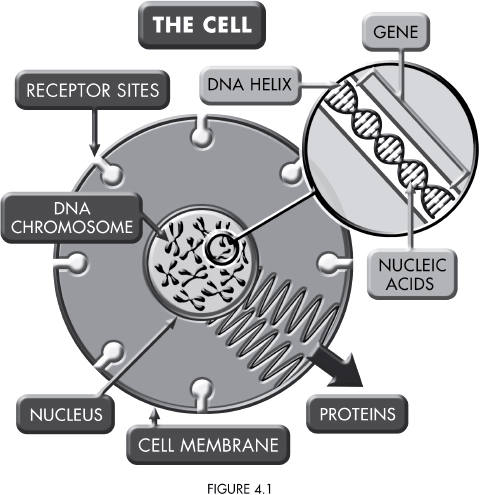
Imagine a ladder or a zipper twisted into a spiral, and you’ll have a pretty good picture of what deoxyribonucleic acid (better known as DNA) looks like. Stored in the nucleus of every living cell in our bodies, DNA contains the raw information, or instructions, that makes us who and what we are (although as we’ll soon see, those instructions are not an unchangeable blueprint that our cells must follow for our entire lives). Each half of that DNA zipper contains corresponding nucleic acids that, together, are called base pairs, numbering about three billion per cell. Groups of long sequences of these nucleic acids are called genes.
Genes are unique little structures. If you were to take the DNA out of the nucleus of just one cell in your body and stretch it out from end to end, it would be six feet long. If you took all the DNA out of your entire body and stretched it out from end to end, it would go to the sun and back 150 times.3 But if you took all the DNA out of the almost seven billion people on the planet and scrunched it together, it would fit in a space as small as a grain of rice.
Our DNA uses the instructions imprinted within its individual sequences to produce proteins. The word protein is derived from the Greek protas, meaning “of primary importance.” Proteins are the raw materials our bodies use to construct not only coherent three-dimensional structures (our physical anatomy), but also the intricate functions and complex interactions that make up our physiology. Our bodies are, in fact, protein-producing machines. Muscle cells make actin and myosin; skin cells make collagen and elastin; immune cells make antibodies; thyroid cells make thyroxine; certain eye cells make keratin; bone-marrow cells make hemoglobin; and pancreatic cells make enzymes like protease, lipase, and amylase.
All of the elements that these cells manufacture are proteins. Proteins control our immune system, digest our food, heal our wounds, catalyze chemical reactions, support the structural integrity of our bodies, provide elegant molecules to communicate between cells, and much more. In short, proteins are the expression of life (and the health of our bodies). Take a look at Figure 4.1 and review a simplistic understanding of genes.
This is a very simplistic representation of a cell with DNA housed within the cell nucleus. The genetic material once stretched out into individual strands looks like a twisted zipper or ladder called a DNA helix. The rungs of the ladder are the nucleic acids that are paired together, which act as codes to make proteins. A different length and sequence of the DNA strand is called a gene. A gene is expressed when it makes a protein. Various cells of the body make different proteins for both structure and function.
For the 60 years since James Watson, Ph.D., and Francis Crick, Ph.D., discovered the double helix of DNA, what Watson proclaimed in a 1970 issue of Nature4 as the “central dogma,” that one’s genes determine all, has held fast. As contradictory evidence popped up here and there, researchers tended to dismiss it as a mere anomaly within a complex system.5
Some 40-odd years later, the genetic-determinism concept still reigns in the general public’s mind. Most people believe the common misconception that our genetic destiny is predetermined and that if we have inherited the genes for certain cancers, heart disease, diabetes, or any number of other conditions, we have no more control over that than we do our eye color or the shapes of our noses (notwithstanding contact lenses and plastic surgery).
The news media reinforce this by repeatedly suggesting that specific genes cause this condition or that disease. They’ve programmed us into believing that we’re victims of our biology and that our genes have the ultimate power over our health, our well-being, and our personalities—and even that our genes dictate our human affairs, determine our interpersonal relationships, and forecast our future. But are we who we are, and do we do what we do, because we’re born that way? This concept implies that genetic determinism is deeply entrenched in our culture and that there are genes for schizophrenia, genes for homosexuality, genes for leadership, and so on.
These are all dated beliefs built on yesterday’s news. First of all, there’s no gene for dyslexia or ADD or alcoholism, for example, so not every health condition or physical variation is associated with a gene. And fewer than 5 percent of people on the planet are born with some genetic condition—like type 1 diabetes, Down syndrome, or sickle-cell anemia. The other 95 percent of us who develop such a condition acquire it through lifestyle and behaviors.6 The flip side is also true: Not everyone born with the genes associated with a condition (say, Alzheimer’s or breast cancer) ends up getting that. It’s not as though our genes are eggs that will ultimately hatch someday. That’s just not the way it works. The real questions are whether or not any gene we might be carrying has been expressed yet and what we’re doing that might signal that gene to turn either on or off.
A huge shift in the way we look at genes came when scientists finally mapped the human genome. In 1990, at the beginning of the project, the researchers expected they’d eventually discover that we have 140,000 different genes. They came up with that number because genes manufacture (and supervise the production of) proteins—and the human body manufactures 100,000 different proteins, plus 40,000 regulatory proteins needed to make other proteins. So the scientists mapping the human genome were anticipating that they’d find one gene per protein, but by the end of the project, in 2003, they were shocked to discover that, in fact, humans have only 23,688 genes.
From the perspective of Watson’s central dogma, that’s not only not enough genes to create our complex bodies and keep them running, but also not even enough genes to keep the brain functioning. So if it’s not contained in the genes, where does all of the information come from that’s required to create so many proteins and sustain life?
The Genius of Your Genes
The answer to that question led to a new idea: Genes must work together in systemic cooperation with one another so that many are expressed (turned on) or suppressed (turned off) at the same time within the cell; it’s the combination of the genes that are turned on at any one time that produces all the different proteins we depend on for life. Picture a string of blinking Christmas-tree lights, with some flashing on together while others flash off. Or imagine a city skyline at night—with the lights in the individual rooms in each building flipping on or off as the night progresses.
This doesn’t happen randomly, of course. The entire genome or DNA strand knows what every other part is doing in an interconnected fashion that’s intimately choreographed. Every atom, molecule, cell, tissue, and system of the body functions at a level of energetic coherence equal to the intentional or unintentional (conscious or unconscious) state of being of the individual personality.7 So it makes sense that genes can be activated (turned on) or deactivated (turned off) by the environment outside the cell, which sometimes means the environment inside the body (the emotional, biological, neurological, mental, energetic, and even spiritual states of being) and at other times means the environment outside the body (trauma, temperature, altitude, toxins, bacteria, viruses, food, alcohol, and so on).
Genes are, in fact, classified by the type of stimulus that turns them on and off. For example, experience-dependent or activity-dependent genes are activated when we’re having novel experiences, learning new information, and healing. These genes generate protein synthesis and chemical messengers to instruct stem cells to morph into whatever types of cells are needed at the time for healing (more about stem cells and their role in healing will be coming up soon).
Behavioral-state-dependent genes are activated during periods of high emotional arousal, stress, or different levels of awareness (including dreaming). They provide a link between our thoughts and our bodies—that is, they’re the mind-body connection. These genes offer an understanding of how we can influence our health in states of mind and body that promote well-being, physical resilience, and healing.
Scientists now believe it’s even possible that our genetic expression fluctuates on a moment-to-moment basis. The research is revealing that our thoughts and feelings, as well as our activities—that is, our choices, behaviors, and experiences—have profound healing and regenerative effects on our bodies, as the men in the monastery study discovered. Thus your genes are being affected by your interactions with your family, friends, co-workers, and spiritual practices, as well as your sexual habits, your exercise levels, and the types of detergents you use. The latest research shows that approximately 90 percent of genes are engaged in cooperation with signals from the environment.8 And if our experience is what activates a good number of our genes, then our nature is influenced by nurturing. So why not harness the power of these ideas so that we can do everything possible to maximize our health and minimize our dependence on the prescription pad?
As Ernest Rossi, Ph.D., writes in The Psychobiology of Gene Expression, “Our subjective states of mind, consciously motivated behavior, and our perception of free will can modulate gene expression to optimize health.”9 Individuals can alter their genes during a single generation, according to the latest scientific thinking. While the process of genetic evolution can take thousands of years, a gene can successfully alter its expression through a behavior change or a novel experience within minutes, and then it may be passed on to the next generation.
It helps to think of our genes less like stone tablets onto which our fate has been ceremoniously carved and more like storehouses of an enormous amount of coded information or even massive libraries of possibilities for the expression of proteins. But we can’t just call the stored information up to make use of it the way a company might order something from its warehouse. It’s as if we don’t know what’s in storage or how to access it, so we end up using just a small portion of what’s truly available. In fact, we actually express only about 1.5 percent of our DNA, while the other 98.5 percent lies dormant in the body. (Scientists called it “junk DNA,” but it’s not really junk—they just don’t know how all of that material is used yet, although they do know that at least some of it is responsible for making regulatory proteins.)
“In reality, genes contribute to our characteristics but do not determine them,” writes Dawson Church, Ph.D., in his book The Genie in Your Genes. “The tools of our consciousness—including our beliefs, prayers, thoughts, intentions, and faith—often correlate much more strongly with our health, longevity, and happiness than our genes do.”10 The fact is, just as there’s more to our bodies than a sack of bones and flesh, there’s more to our genes than just stored information.
The Biology of Gene Expression
Now let’s take a closer look at how genes are switched on. (Several different factors can be responsible, actually, but for the sake of our discussion here about the mind-body connection, we’ll keep it simple.)
Once a chemical messenger (for example, a neuropeptide) from outside of the cell (from the environment) locks into the cell’s docking station and passes through the cell membrane, it travels to the nucleus, where it encounters the DNA. The chemical messenger modifies or creates a new protein, and then the signal it was carrying is translated to information now inside the cell. Then it enters the nucleus of the cell through a small window, and depending on the content of the protein message, it looks for a specific chromosome (a single piece of coiled DNA that contains many genes) within the nucleus—just as you might look for a specific book on the shelf in the library.
Each of these strands is covered in a protein sleeve that acts as a filter between the information contained in the DNA strand and the rest of the intracellular environment of the nucleus. In order for the DNA code to be selected, the sleeve must be removed or unwrapped so that the DNA can be exposed (just as a book chosen from a library shelf then has to be opened before anyone can read it). The genetic code of DNA contains information waiting to be read and activated to create a particular protein. Until that information is exposed in the gene by unwrapping that protein sleeve, the DNA is latent. It’s a potential storehouse of encoded information just waiting to be unlocked or opened. You could think of the DNA as a parts list of potentials that are awaiting instructions to construct proteins, which regulate and maintain every aspect of life.
Once the protein selects the chromosome, it opens it up by removing the outer covering around the DNA. Another protein then regulates and readies an entire gene sequence within the chromosome (think of it as a chapter within a book) to be read, all the way from the start of the sequence to its end. Once the gene is exposed and the protein sleeve is removed and read, another nucleic acid, called ribonucleic acid (RNA), is produced from the regulatory protein reading the gene.
Now the gene is expressed or activated. The RNA exits the nucleus of the cell to be assembled into a new protein from the code the RNA carries. It has gone from being a blueprint of latent potential to being an active expression. The protein the gene creates can now construct, assemble, interact with, restore, maintain, and influence many different aspects of life both within the cell and outside of it. Figure 4.2 gives an overview of the process.
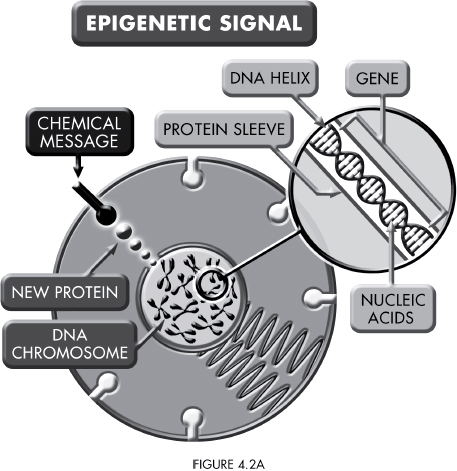
Figure 4.2A shows the epigenetic signal entering the cell receptor site. Once the chemical messenger interacts at the level of the cell membrane, another signal in the form of a new protein is sent to the nucleus of the cell to select a gene sequence. The gene still has a protein covering protecting it from its outer environment, and that covering has to be removed in order for it to be read.
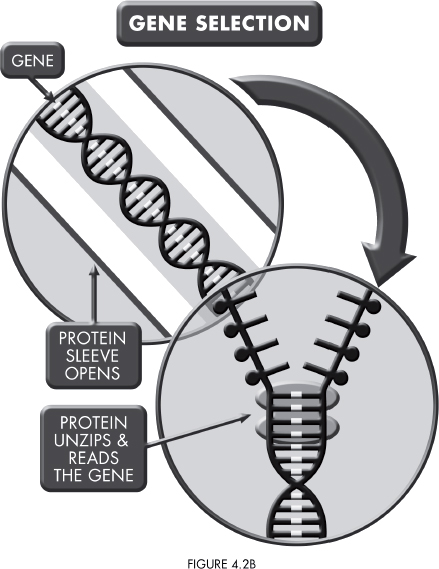
Figure 4.2B illustrates how the protein sleeve around the gene sequence of the DNA is opened so that another protein, called a regulatory protein, can unzip and read the gene at a precise location.
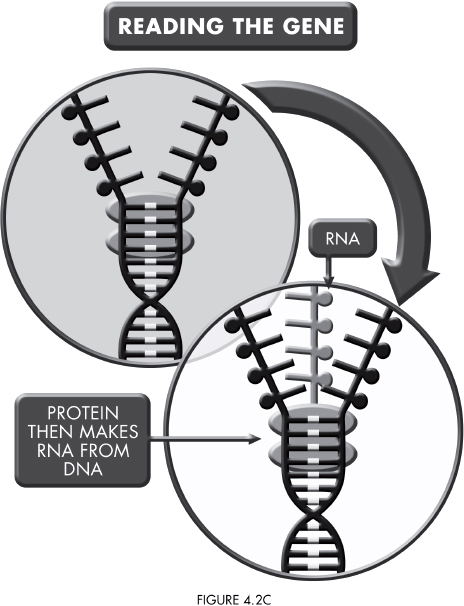
Figure 4.2C demonstrates how the regulatory protein creates another molecule, called RNA, which organizes the translation and the transcription of the genetically coded material into a protein.
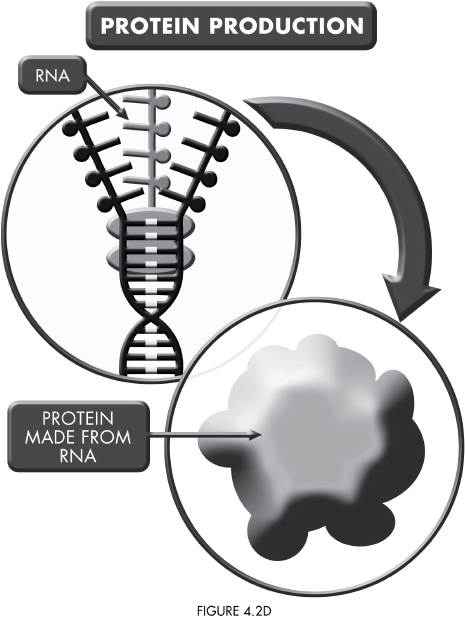
Figure 4.2D shows protein production. RNA assembles a new protein from the individual building blocks of proteins called amino acids.
Just as an architect gets all of the information that’s necessary to build a structure from a blueprint, the body gets all the instructions it needs to create complex molecules that keep us alive and operating from the chromosomes of our DNA. But before the architect reads the blueprint, it has to be pulled out of its cardboard tube and unrolled. Until then, it’s just latent information waiting to be read. The cell is the same way: The gene is inert until its protein sheathing is removed and the cell chooses to read the gene sequence.
Scientists used to believe all the body needed was the information itself (the blueprint) to start construction, so that’s what most of them focused on. They paid little attention to the fact that the whole cascade of events starts with the signal outside of the cell, which is, in fact, responsible for what genes within its library the cell chooses to read. That signal, as we now know, includes thoughts, choices, behaviors, experiences, and feelings. So it makes sense that if you can change these elements, you can also determine your genetic expression.
Epigenetics: How We Mere Mortals Get to Play God
If our genes don’t seal our fate and if they actually contain an enormous library of possibilities just waiting to be taken off the shelf and read, then what gives us access to those potentials—potentials that could have a huge effect on our health and well-being? The men in the monastery study surely gained such access, but how did they do it? The answer lies in a relatively new field of study called epigenetics.
The word epigenetics literally means “above the gene.” It refers to the control of genes not from within the DNA itself but from messages coming from outside the cell—in other words, from the environment. These signals cause a methyl group (one carbon atom attached to three hydrogen atoms) to attach to a specific spot on a gene, and this process (called DNA methylation) is one of the main processes that turns the gene off or on. (Two other processes, covalent histone modification and noncoding RNA, also turn genes on and off, but the details of those processes are more than we need for this discussion.)
Epigenetics teaches that we, indeed, are not doomed by our genes and that a change in human consciousness can produce physical changes, both in structure and function, in the human body. We can modify our genetic destiny by turning on the genes we want and turning off the ones we don’t want through working with the various factors in the environment that program our genes. Some of those signals come from within the body, such as feelings and thoughts, while others come from the body’s response to the external environment, such as pollution or sunlight.
Epigenetics studies all of these external signals that tell the cell what to do and when to do it, looking at both the sources that activate, or turn on, gene expression (upregulating) and those that suppress, or turn off, gene expression (downregulating)—as well as the dynamics of energy that adjust the process of cellular function on a moment-to-moment basis. Epigenetics suggests that even though our DNA code never changes, thousands of combinations, sequences, and patterned variations in a single gene are possible (just as thousands of combinations, sequences, and patterns of neural networks are possible in the brain).
Looking at the entire human genome, so many millions of possible epigenetic variations exist that scientists find their heads spinning just thinking about it. The Human Epigenome Project, begun in 2003 as the Human Genome Project drew to a close, is under way in Europe,11 and some researchers have said that when it’s completed, it “will make the Human Genome Project look like homework that 15th century kids did with an abacus.”12 Going back to the blueprint model, we can change the color of what we build, the type of materials we use, the scale of the construction, and even the positioning of the structure—making an almost infinite number of variations—all without ever changing the actual blueprint.
A great example of epigenetics at work involves identical twins, who share exactly the same DNA. If we embrace the idea of genetic predeterminism—the idea that all diseases are genetic—then identical twins should have exactly the same gene expression. However, they don’t always manifest the same illnesses in the same way, and sometimes one will manifest a genetic disease that the other doesn’t manifest at all. Twins can have the same genes, but different outcomes.
A Spanish study illustrates this perfectly. Researchers at the Cancer Epigenetics Laboratory at the Spanish National Cancer Center in Madrid studied 40 pairs of identical twins, ranging in age from 3 to 74. They found that younger twins who had similar lifestyles and spent more years together had similar epigenetic patterns, while older twins, in particular those with dissimilar lifestyles who spent fewer years together, had very different epigenetic patterns.13 For example, researchers found four times as many differentially expressed genes between one pair of 50-year-old twins as they did between a pair of 3-year-old twins.
The twins were born with exactly the same DNA, but those with different lifestyles (and different lives) ended up expressing their genes very differently—especially as time went on. To use another analogy, the older twin pairs were like exact copies of the same model of a computer. The computers came loaded with some similar starter software, but as time went on, each downloaded very different additional software programs. The computer (the DNA) stays the same, but depending on what software a person has downloaded (the epigenetic variations), what the computer does and the way it operates can be quite different. So when we think our thoughts and feel our feelings, our bodies respond in a complex formula of biological shifts and alterations, and each experience pushes the buttons of real genetic changes within our cells.
The speed of these changes can be truly remarkable. In just three months, a group of 31 men with low-risk prostate cancer were able to upregulate 48 genes (mostly dealing with tumor suppression) and downregulate 453 genes (mostly dealing with tumor promotion) by following an intensive nutrition and lifestyle regimen.14 The men, enrolled in a study by Dean Ornish, M.D., at the University of California at San Francisco, lost weight and reduced their abdominal obesity, blood pressure, and lipid profile over the course of the study. Ornish noted, “It is not really so much about risk-factor reduction or preventing something bad from happening. These changes can occur so quickly you don’t have to wait years to see the benefits.”15
Even more impressive are the number of epigenetic changes made over a six-month period in a Swedish study of 23 slightly overweight, healthy men who went from being relatively sedentary to attending spinning and aerobics classes an average of just under twice per week. Researchers at Lund University discovered that the men had epigenetically altered 7,000 genes—almost 30 percent of all the genes in the entire human genome!16
These epigenetic variations may even be inherited by our children and then passed on to our grandchildren.17 The first researcher to show this was Michael Skinner, Ph.D., who was director of the Center for Reproductive Biology at Washington State University. In 2005, Skinner led a study that exposed pregnant rats to pesticides.18 The male pups of the exposed mother rats had higher rates of infertility and decreased sperm production, with epigenetic changes in two genes. These changes were also present in about 90 percent of the males in each of the four generations that followed, even though none of these other rats were exposed to any pesticides.
Our experiences from our external environment are only part of the story, however. As we’ve been learning, how we assign meaning to those experiences includes a barrage of physical, mental, emotional, and chemical responses that also activate genes. How we perceive and interpret the data we receive from our senses as factual information—whether that information is actually true or not—and the meaning we give it produce significant biological changes on a genetic level. Thus, our genes interact with our conscious awareness in complex relationships. We could say that meaning is continually affecting the neural structures that influence who we are on the microscopic level, which then influences who we are on the macroscopic level.
The study of epigenetics also raises the question: What if nothing is changing in your external environment? What if you do the same things with the same people at exactly the same time every day—things leading to the same experiences that produce the same emotions that signal the same genes in the same way?
We could say that as long as you perceive your life through the lens of the past and react to the conditions with the same neural architecture and from the same level of mind, you’re headed toward a very specific, predetermined genetic destiny. In addition, what you believe about yourself, your life, and the choices you make as a result of those beliefs also keeps sending the same messages to the same genes.
Only when the cell is ignited in a new way, by new information, can it create thousands of variations of the same gene to rewrite a new expression of proteins—which changes your body. You may not be able to control all the elements in your outer world, but you can manage many aspects of your inner world. Your beliefs, your perceptions, and how you interact with your external environment have an influence on your internal environment, which is still the external environment of the cell. This means that you—not your preprogrammed biology—hold the keys to your genetic destiny. It’s just a matter of finding the right key that fits into the right lock to unleash your potential. So why not see your genes for what they really are? Providers of possibility, resources of unlimited potential, a code system of personal commands—in truth, they’re nothing short of tools for transformation, which literally means “changing form.”
Stress Keeps Us Living in Survival Mode
Stress is one of the biggest causes of epigenetic change, because it knocks your body out of balance. It comes in three forms: physical stress (trauma), chemical stress (toxins), and emotional stress (fear, worry, being overwhelmed, and so on). Each type can set off more than 1,400 chemical reactions and produce more than 30 hormones and neurotransmitters. When that chemical cascade of stress hormones is triggered, your mind influences your body through the autonomic nervous system and you experience the ultimate mind-body connection.
Ironically, feeling stressed was designed to be adaptive. All organisms in nature, including humans, are programmed to deal with short-term stress so that they’ll have the resources they need for emergency situations. When you sense a threat in your external environment, the fight-or-flight response in your sympathetic nervous system (a subsystem of your autonomic nervous system) is activated, and your heart rate and blood pressure increase, your muscles tense, and hormones like adrenaline and cortisol shoot through your body to prepare you to either flee or face your foe in battle.
If you’re being chased by a pack of wild, hungry wolves or a party of violent warriors, and you outrun them, your body will return to homeostasis (its normal, balanced state) soon after you reach safety. That’s the way our bodies were designed to operate when we’re living in survival mode. The body is out of balance—but only for a short period of time, until the danger passes. At least, that’s how it was meant to be.
The same thing happens in our modern world, although the setting is usually a little different. If someone cuts you off when you’re driving on the highway, you might be momentarily frightened, but once you realize that you’re okay and you let go of the fear of having an accident, your body returns to normal—unless that was only one of countless stressful situations you stumbled into that day.
If you’re like most people, a string of nerve-racking incidents keeps you in fight-or-flight response—and out of homeostasis—a large part of the time. Maybe the car cutting you off is the only actual life-threatening situation you encounter all day, but the traffic on the way to work, the pressure of preparing for a big presentation, the argument you had with your spouse, the credit-card bill that came in the mail, the crashing of your computer hard drive, and the new gray hair you noticed in the mirror keep the stress hormones circulating in your body on a near-constant basis.
Between remembering stressful experiences from the past and anticipating stressful situations coming up in your future, all these repetitive short-term stresses blur together into long-term stress. Welcome to the 21st-century version of living in survival mode.
In fight-or-flight mode, life-sustaining energy is mobilized so that the body can either run or fight. But when there isn’t a return to homeostasis (because you keep perceiving a threat), vital energy is lost in the system. You have less energy in your internal environment for cell growth and repair, long-term building projects on a cellular level, and healing when that energy is being channeled elsewhere. The cells shut down, they no longer communicate with one another, and they become “selfish.” It’s not time for routine maintenance (let alone for making improvements); it’s time for defense. It’s every cell for itself, so the collective community of cells working together becomes fractured. The immune and endocrine systems (among others) become weakened as genes in those related cells are compromised when informational signals from outside the cells are turned off.
It’s like living in a country where 98 percent of the resources go toward defense, and nothing is left for schools, libraries, road building and repair, communication systems, growing of food, and so on. Roads develop potholes that aren’t fixed. Schools suffer budget cuts, so students wind up learning less. Social welfare programs that took care of the poor and the elderly have to close down. And there’s not enough food to feed the masses.
Not surprisingly, then, long-term stress has been linked to anxiety, depression, digestive problems, memory loss, insomnia, hypertension, heart disease, strokes, cancer, ulcers, rheumatoid arthritis, colds, flu, aging acceleration, allergies, body pain, chronic fatigue, infertility, impotence, asthma, hormonal issues, skin rashes, hair loss, muscle spasms, and diabetes, to name just a few conditions (all of which, by the way, are the result of epigenetic changes). No organism in nature is designed to withstand the effects of long-term stress.
Several studies give strong evidence to show how epigenetic instructions for healing shut down during emergencies. For example, researchers at the Ohio State University Medical Center found that more than 170 genes were affected by stress, with 100 of them shutting off completely (including many that directly make proteins to facilitate the proper type of wound healing). The researchers reported that wounds of stressed patients took 40 percent longer to heal and that “stress tilted the genomic balance towards genes [that were] encoding proteins responsible for cell-cycle arrest, death, and inflammation.”19 Another study examining the genes of 100 citizens of Detroit zeroed in on 23 subjects who were suffering from post-traumatic stress disorder.20 These people had six to seven times more epigenetic variations, most of which involved compromising the immune system.
Researchers at the UCLA AIDS Institute found that not only did HIV spread faster in patients who were the most stressed, but also the higher a patient’s stress level, the less he or she responded to the antiretroviral drugs. The drugs worked four times better for those patients who were relatively calm, compared to those whose blood pressure, skin moisture, and resting heart rate indicated they were feeling the most stress.21 Based on these findings, researchers concluded that the nervous system has a direct effect on viral replication.
Although the fight-or-flight response was originally highly adaptive (because it kept early humans alive), it’s now clear that the longer that survival system is constantly activated, the longer your body shunts its resources for creating optimal health, so the system becomes maladaptive.
The Legacy of Negative Emotions
As we keep making stress hormones, we create a host of highly addictive negative emotions, including anger, hostility, aggression, competition, hatred, frustration, fear, anxiety, jealousy, insecurity, guilt, shame, sadness, depression, hopelessness, and powerlessness, just to name a few. When we focus on thoughts about bitter past memories or imagined dreadful futures to the exclusion of everything else, we prevent the body from regaining homeostasis. In truth, we’re capable of turning on the stress response by thought alone. If we turn it on and then can’t turn it off, we’re surely headed for some type of illness or disease—be it a cold or cancer—as more and more genes get downregulated in a domino effect, until we eventually arrive at our genetic destiny.
For example, if we can anticipate a possible known future scenario and then focus on that thought to the exclusion of everything else even for just one moment, the body will physiologically begin to change in order to prepare itself for that future event. The body is now living in that known future in the present moment. As a consequence of this phenomenon, the conditioning process begins to activate the autonomic nervous system, and it creates the corresponding stress chemicals automatically. This is how the mind-body connection can work against us.
When this happens, we are demonstrating the three elements of the placebo effect in perfect symmetry. First, we start to condition the body to the rush of adrenal chemistry in order to feel a boost of energy. If we can associate a person, thing, or experience at a particular time and place in our outer reality with that rush of chemistry within us, we’ll begin to condition the body to turn on the response just by thinking about that stimulus. In time, we’ll be able to simply condition the body to be put in mind of that emotionally aroused state by thought alone—the thought of a potential experience with someone and something at some time and some place. If we can expect the future outcome based on the past experience, then the expectation of the event, when we emotionally embrace it, will change the body’s physiology. And if we assign meaning to the behaviors and experiences, we’re putting our conscious intention behind the outcome so that our bodies will change or not change equal to what we think we know about our reality and ourselves.
But whether or not you believe that the stress in your life is justified or valid, the effect of that stress on the body is never advantageous or health enhancing. Your body believes that it is being chased by a lion, is standing perched on a perilous cliff, or is fighting off a pack of angry cannibals. Here are a few examples from scientific studies demonstrating the effects of stress on the body.
Researchers at the Ohio State University College of Medicine confirmed that stressful emotions trigger hormonal and genetic responses, by measuring how stress affects the speed of healing minor skin wounds—a significant marker of gene activation.22 A group of 42 married couples were given small suction blisters, and then their level of three proteins commonly expressed in wound healing was monitored for a total of three weeks. The couples were asked to have a neutral discussion for half an hour as a baseline and then, later, to talk about a previous marital argument.
The researchers found that after the couples discussed a previous disagreement, their level of healing-linked proteins was mildly suppressed (showing that the genes were downregulated). The suppression rose to an even greater degree—about 40 percent—in couples whose discussion ballooned into a significant conflict, peppered with sarcastic comments, criticism, and put-downs.
Research also supports the reverse effect—that reducing stress with positive emotions triggers epigenetic changes that improve health. Two key studies by researchers at the Benson-Henry Institute for Mind Body Medicine at Massachusetts General Hospital in Boston looked at the effects of meditation, which is known for eliciting peaceful and even blissful states, on gene expression. In the first study, conducted in 2008, 20 volunteers received eight weeks of training in various mind-body practices (including several types of meditation, yoga, and repetitive prayer) known to induce the relaxation response, a physiological state of deep rest (discussed in Chapter 2).23 The researchers also followed 19 long-term daily practitioners of the same techniques.
At the end of the study period, the novices showed a change in 1,561 genes (874 upregulated for health and 687 downregulated for stress), as well as reduced blood pressure and reduced heart and respiration rates, while the experienced practitioners expressed 2,209 new genes. Most of the genetic changes involved improving the body’s response to chronic psychological stress.
The second study, conducted in 2013, found that eliciting the relaxation response produces changes in gene expression after just one session of meditation among both novices and experienced practitioners alike (with the long-term practitioners, not surprisingly, deriving more benefit).24 Genes that were upregulated included those involved in immune function, energy metabolism, and insulin secretion, while genes that were downregulated included those linked to inflammation and stress.
Studies like these underscore just how quickly it’s possible to change your own genes. That’s why the placebo response can produce physical changes in a matter of moments. In my workshops around the world, my colleagues and I have witnessed significant and immediate changes in our participants’ health after only one session of meditation. They transformed themselves and activated new genes in new ways by thought alone. (You’ll be introduced to some of them soon.)
When we’re living in survival mode, with our stress response turned on all the time, we can really focus on only three things: our physical bodies (Am I okay?), the environment (Where is it safe?), and time (How long will this threat be hanging over me?). Constantly focusing on these three things makes us less spiritual, less aware, and less mindful, because it trains us to become more self-absorbed and more focused on our bodies, as well as on other material things (such as what we own, where we live, how much money we have, and so on), in addition to all of the problems we experience in our external world. This focus also trains us to obsess about time—to constantly brace ourselves for the worst-case future scenarios based on our traumatic past experiences—because there’s never enough time and everything always takes too much time.
So we could say that just as stress hormones cause the cells of the body to become selfish to ensure that we survive, they endorse our ego to become more selfish, too—and we become materialists defining reality with our senses. We end up feeling separate from any new possibilities, because when we never leave that state of chronic emergency, that me-first mentality that pervades all our thinking strengthens and endures, leading us to become self-indulgent, self-serving, and self-important. Ultimately, the self becomes defined as a body living in the environment and in time.
As you have just read and now more fully understand, the reality is that you do indeed have some degree of control over your own genetic engineering—by way of your thoughts, choices, behaviors, experiences, and emotions. Like Dorothy in The Wizard of Oz, who had the power she sought all along but didn’t know it, you also possess a power that you may not have previously realized was yours—the keys that can set you free of being chained to the limitations of your own genetic expression.
