

You do not think in a vacuum. Every time you have a thought, there is a biochemical reaction in the brain—you make a chemical. And as you’ll learn, the brain then releases specific chemical signals to the body, where they act as messengers of the thought. When the body gets these chemical messages from the brain, it complies instantly by initiating a matching set of reactions directly in alignment with what the brain is thinking. Then the body immediately sends a confirming message back up to the brain that it’s now feeling exactly the way the brain is thinking.
To understand this process—how you typically think equal to your body, and how to form a new mind—you first need to appreciate the role that your brain and its chemistry plays in your life. In the last few decades, we’ve discovered that the brain and the rest of the body interact via powerful electrochemical signals. There is an extensive chemical factory between our ears that orchestrates a myriad of bodily functions. But relax, this is going to be “Brain Chemistry 101,” and a few terms are all that you need to know.
All cells have receptor sites on their exterior surface that receive information from outside their boundaries. When there is a match in chemistry, frequency, and electrical charge between a receptor site and an incoming signal from the outside, the cell gets “turned on” to perform certain tasks.
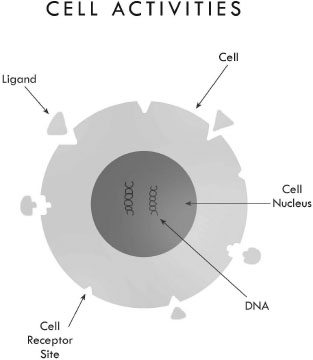
Figure 3A. A cell with receptor sites that receive vital incoming information from outside the cell. The signal can influence the cell to perform myriad biological function.
Neurotransmitters, neuropeptides, and hormones are the cause-and-effect chemicals for brain activity and bodily functioning. These three different types of chemicals, called ligands (the word ligare means “to bind” in Latin), connect to, interact with, or influence the cell in a matter of milliseconds.
— Neurotransmitters are chemical messengers that primarily send signals between nerve cells, allowing the brain and nervous system to communicate. There are different types of neurotransmitters, and each is responsible for a particular activity. Some excite the brain, others slow it down, while still others make us sleepy or awake. They can tell a neuron to unhook from its current connection or make it stick better to its present connection. They can even change the message as it is being sent to a neuron, rewriting it so that a different message is delivered to all the connected nerve cells.
— Neuropeptides, the second type of ligand, make up the majority of these messengers. Most are manufactured in a structure of the brain called the hypothalamus (recent studies show that our immune system also makes them). These chemicals are passed through the pituitary gland, which then releases a chemical message to the body with specific instructions.
— As neuropeptides make their way through the bloodstream, they attach to the cells of various tissues (primarily glands) and then turn on the third type of ligand, hormones, which further influence us to feel certain ways. Neuropeptides and hormones are the chemicals responsible for our feelings.
For our purposes, think of neurotransmitters as chemical messengers primarily from the brain and mind, neuropeptides as chemical signalers that serve as a bridge between the brain and the body to make us feel the way we think, and hormones as the chemicals related to feelings primarily in the body.
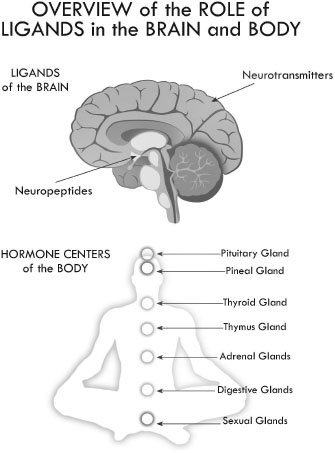
Figure 3B. Neurotransmitters are diverse chemical massengers between neurons. Neuropeptides are chemical couriers that signal different glands of the body to make hormones.
For example, when you have a sexual fantasy, all three of these factors are called to action. First, as you start to think a few thoughts, your brain whips up some neurotransmitters that turn on a network of neurons, which creates pictures in your mind. These chemicals then stimulate the release of specific neuropeptides into your bloodstream. Once they reach your sexual glands, those peptides bind to the cells of those tissues; they turn on your hormonal system, and—presto—things start happening. You’ve made your fantasy thoughts so real in your mind that your body starts to get prepared for an actual sexual experience (ahead of the event). That’s how powerfully mind and body are related.
By the same means, if you start to think about confronting your teenager over the new dent in the car, your neurotransmitters would start the thought process in your brain to produce a specific level of mind, your neuropeptides would chemically signal your body in a specific way, and you would begin to feel a bit riled up. As the peptides find their way to your adrenal glands, they would then be prompted to release the hormones adrenaline and cortisol—and now you are definitely feeling fired up. Chemically, your body is ready for battle.
The Thinking and Feeling Loop
As you think different thoughts, your brain circuits fire in corresponding sequences, patterns, and combinations, which then produce levels of mind equal to those thoughts. Once these specific networks of neurons are activated, the brain produces specific chemicals with the exact signature to match those thoughts so that you can feel the way you were just thinking.
Therefore, when you have great thoughts or loving thoughts or joyous thoughts, you produce chemicals that make you feel great or loving or joyful. The same holds true if you have negative, fearful, or impatient thoughts. In a matter of seconds, you begin to feel negative or anxious or impatient.
There’s a certain synchronicity that takes place moment by moment between the brain and the body. In fact, as we begin to feel the way we are thinking—because the brain is in constant communication with the body—we begin to think the way we are feeling. The brain constantly monitors the way the body is feeling. Based on the chemical feedback it receives, it will generate more thoughts that produce chemicals corresponding to the way the body is feeling, so that we first begin to feel the way we think and then to think the way we feel.
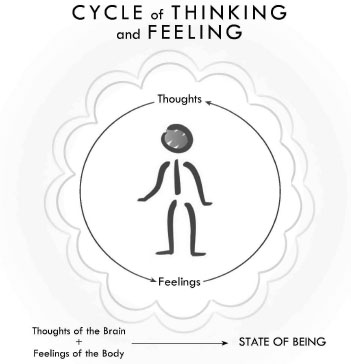
Figure 3C. The neurochemical relationship between the brain and the body. As you think certain thoughts, the brain produces chemicals that cause you to feel exactly the way you were thinking. Once you feel the way you think, you begin to think the way you feel. This continuous cycle creates a feedback loop called a “state of being”
We will delve deeper into this idea throughout the book, but consider that thoughts are primarily related to the mind (and the brain), and feelings are connected to the body. Therefore, as the feelings of the body align to thoughts from a particular state of mind, mind and body are now working together as one. And as you’ll recall, when the mind and body are in unison, the end product is called a “state of being.” We could also say that the process of continuously thinking and feeling and feeling and thinking creates a state of being, which produces effects on our reality.
A state of being means we have become familiar with a mental-emotional state, a way of thinking and a way of feeling, which has become an integral part of our self-identity. And so we describe who we are by how we are thinking (and thus feeling) or being in the present moment. I am angry; I am suffering; I am inspired; I am insecure; I am negative….
But years of thinking certain thoughts, and then feeling the same way, and then thinking equal to those feelings (the hamster in the wheel) creates a memorized state of being in which we can emphatically declare our I am statement as an absolute. That means we’re now at the point when we define ourselves as this state of being. Our thoughts and feelings have merged.
For example, we say: I have always been lazy; I am an anxious person; I am typically uncertain of myself; I have worthiness issues; I am short-tempered and impatient; I am really not that smart; and so on. And those particular memorized feelings contribute to all our personality traits.
Warning: when feelings become the means of thinking, or if we cannot think greater than how we feel, we can never change. To change is to think greater than how we feel. To change is to act greater than the familiar feelings of the memorized self.
As a practical example, let’s say you’re driving to work this morning and you begin to think about the heated encounter you had a few days ago with a co-worker. As you think the thoughts associated with that person and that particular experience, your brain starts releasing chemicals that circulate through your body. Very quickly, you begin to feel exactly the way you were thinking. You probably become angry.
Your body sends a message back to your brain, saying, Yup, I’m feeling really ticked off. Of course, your brain, which constantly communicates with the body and monitors its internal chemical order, is influenced by the sudden change in the way you’re feeling. As a result, you begin to think differently. (The moment you begin to feel the way you think, you begin to think the way you feel.) You unconsciously reinforce the same feeling by continuing to think angry and frustrated thoughts, which then make you feel more angry and frustrated. In effect, your feelings are now controlling your thinking. Your body is now driving your mind.
As the cycle goes on, your angry thoughts produce more chemical signals to your body, which activate the adrenal chemicals associated with your angry feelings. Now you become enraged and aggressive. You feel flushed, your stomach is twisted into a knot, your head pounds, and your muscles start to clench. As all those heightened feelings flood the body and change its physiology, this chemical cocktail fires up a set of circuits in the brain, causing you to think equal to those emotions.
Now you’re telling your associate off ten different ways in the privacy of your own mind. You indignantly conjure up a litany of past events that validate your present upset, brainstorming through a letter recounting all those complaints you’ve always wanted to lodge. In your mind, you’ve already forwarded it to your boss before you even arrive at work. You exit the car dazed and crazed and a breath away from homicidal. Hello, walking, talking model of an angry person … and all of this started with a single thought. In this moment, it seems impossible to think greater than you feel—and that’s why it’s so hard to change.
The result of this cyclic communication between your brain and body is that you tend to react predictably to these kinds of situations. You create patterns of the same familiar thoughts and feelings, you unconsciously behave in automatic ways, and you are mired in these routines. This is how the chemical “you” functions.
Does Your Mind Control Your Body?
Or Does Your Body Control Your Mind?
Why is it so hard to change?
Imagine that your mother loved to suffer, and through long observation, you unconsciously saw that this behavior pattern enabled her to get what she wanted in life. Let’s also say that you’ve had a few tough experiences in your own life, which created quite a bit of suffering for you. Those memories still elicit an emotional reaction, centered around a specific person at a particular place at a certain time in your life. You’ve thought about the past often enough, and somehow, those memories are easy to recall, even automatic. Now imagine that for more than 20 years, you’ve practiced thinking and feeling, feeling and thinking, about suffering.
Actually, you no longer need to think about the past event to create the feeling. You can’t seem to think or act any other way than how you always feel. You’ve memorized suffering by your recurrent thoughts and feelings—those related to that incident, as well as other events in your life. Your thoughts about yourself and your life tend to be colored by feelings of victimization and self-pity. Repeating the same thoughts and feelings you’ve courted for more than 20 years has conditioned your body to remember the feeling of suffering without much conscious thought. This seems so natural and normal now. It’s who you are. And anytime you try to change anything about yourself, it’s like the road turns back on you. You’re right back to your old self.
What most people don’t know is that when they think about a highly charged emotional experience, they make the brain fire in the exact sequences and patterns as before; they are firing and wiring their brains to the past by reinforcing those circuits into ever more hardwired networks. They also duplicate the same chemicals in the brain and body (in varying degrees) as if they were experiencing the event again in that moment. Those chemicals begin to train the body to further memorize that emotion. Both the chemical results of thinking and feeling, feeling and thinking, as well as the neurons firing and wiring together, condition the mind and the body into a finite set of automatic programs.
We are capable of reliving a past event over and over, perhaps thousands of times in one lifetime. It is this unconscious repetition that trains the body to remember that emotional state, equal to or better than the conscious mind does. When the body remembers better than the conscious mind—that is, when the body is the mind—that’s called a habit.
Psychologists tell us that by the time we’re in our mid-30s, our identity or personality will be completely formed. This means that for those of us over 35, we have memorized a select set of behaviors, attitudes, beliefs, emotional reactions, habits, skills, associative memories, conditioned responses, and perceptions that are now subconsciously programmed within us. Those programs are running us, because the body has become the mind.
This means that we will think the same thoughts, feel the same feelings, react in identical ways, behave in the same manner, believe the same dogmas, and perceive reality the same ways. About 95 percent of who we are by midlife1 is a series of subconscious programs that have become automatic—driving a car, brushing our teeth, overeating when we’re stressed, worrying about our future, judging our friends, complaining about our lives, blaming our parents, not believing in ourselves, and insisting on being chronically unhappy, just to name a few.
Often We Only Appear to Be Awake
Since the body becomes the subconscious mind, it’s easy to see that in situations when the body becomes the mind, the conscious mind no longer has much to do with our behavior. The instant we have a thought, feeling, or reaction, the body runs on automatic pilot. We go unconscious.
Take, for example, a mother driving a minivan to drop her kids off at school. How is she able to navigate traffic, break up arguments, drink her coffee, shift gears, and help her son blow his nose … all at once? Much like a computer program, these actions have become automatic functions that can run very fluidly and easily. Mom’s body is skillfully doing everything because it has memorized how to do all these deeds through much repetition. She no longer has any conscious thought about how she does them; they are habitual.
Think about that: 5 percent of the mind is conscious, struggling against the 95 percent that is running subconscious automatic programs. We’ve memorized a set of behaviors so well that we have become an automatic, habitual body-mind. In fact, when the body has memorized a thought, action, or feeling to the extent that the body is the mind—when mind and body are one—we are (in a state of) being the memory of ourselves. And if 95 percent of who we are by age 35 is a set of involuntary programs, memorized behaviors, and habitual emotional reactions, it follows that 95 percent of our day, we are unconscious. We only appear to be awake. Yikes!
So a person may consciously want to be happy, healthy, or free, but the experience of hosting 20 years of suffering and the repeated cycling of those chemicals of pain and pity have subconsciously conditioned the body to be in a habitual state. We live by habit when we’re no longer aware of what we’re thinking, doing, or feeling; we become unconscious.
The greatest habit we must break is the habit of being ourselves.

When the Body Is Running the Show
Here are some practical illustrations of the body being in a habitual state. Have you ever been unable to consciously remember a phone number? Try as you may, you can’t even recall three digits out of the string of numbers required to make the call. And yet, you can pick up the phone and watch as your fingers dial the number. Your conscious, thinking brain can’t remember the number, but you’ve practiced this action so many times with your fingers that your body now knows and remembers better than your brain. (That example was for those of us who grew up before speed dial or cell phones came along; perhaps you’ve had the same experience with typing your PIN into an ATM or entering a password online.)
Similarly, I can recall times when I worked out at a gym and had a locker with a combination lock. I was so tired after the workout that I couldn’t remember the combination. I’d stare at that dial, trying to recall the sequence of three numbers, and they wouldn’t surface. However, when I started to twirl the dial, the combination would come back to me, almost as if by magic. Again, this happens because we practiced something so many times that our bodies know better than our conscious minds. The body subconsciously has become the mind.
Remember that 95 percent of who we are by age 35 sits in the same subconscious memory system, in which the body automatically runs a programmed set of behaviors and emotional reactions. In other words, the body is running the show.
When the Servant Becomes the Master
In truth, the body is the servant of the mind. It follows that if the body has become the mind, the servant has become the master. And the former master (the conscious mind) has gone to sleep. The mind might think it’s still in charge, but the body is influencing decisions equal to its memorized emotions.
Now, let’s say the mind wants to get back in control. What do you think the body is going to say?
Where have you been? Go back to sleep. I’ve got it together here. You don’t have the will, the persistence, or the awareness to do what I have been doing all this time while you were unconsciously following my orders. I even modified my receptor sites over the years in order to serve you better. You thought you were running things, while I have been influencing you all along and urging you to make all of your decisions equal to what feels right and familiar.
And when the 5 percent that is conscious is going against 95 percent that is running subconscious automatic programs, the 95 percent is so reflexive that it only takes one stray thought or a single stimulus from the environment to turn on the automatic program again. Then we’re back to same old, same old—thinking the same thoughts, performing the same actions, but expecting something different to happen in our lives.
When we try to regain control, this is when the body signals the brain to begin talking us out of our conscious goals. Our internal chatter comes up with a battery of reasons why we should not attempt to do anything out of the ordinary, not break out of the habituated state of being that we’re used to. It will pick up all of our weaknesses, which it knows and fosters, and hurl them at us one by one.
We create worst-case scenarios in our minds so that we don’t have to rise above those familiar feelings. Because when we try to break the internal chemical order we have made so second nature, the body goes into chaos. Its internal badgering feels nearly irresistible—and plenty of times, we succumb.
Enter into the Subconscious to Change It
The subconscious mind only knows what you have programmed it to do. Have you ever been typing along on your laptop, and all of a sudden your computer starts running automatic programs that you have no control over? When you try to use the conscious mind to stop the automatic, subconscious programs stored in your body, it’s like yelling at a computer that’s gone rogue, with several programs running while windows are popping up and showing more than you can handle. Hey! Stop that! The computer isn’t even going to register that. It’s going to keep doing what it does until there is some sort of intervention—until you get into its operating system and change some settings.
In this book, you will learn how to get into the subconscious, and reprogram it with a new set of strategies. In effect, you have to unlearn, or unwire, your old thinking and feeling patterns and then relearn, or rewire, your brain with new patterns of thinking and feeling, based on who you want to be instead. When you condition the body with a new mind, the two can no longer work in opposition, but must be in harmony. This is the point of change … of self-creation.
Guilty Until Proven Innocent
Let’s use a real-life situation to illustrate what happens when we decide to break from some memorized emotional state and change our minds. I think we can all relate to one common state of being: guilt. So I’m going to use that to illustrate in practical terms how this cycle of thinking and feeling works against us. Then we’ll identify some of the efforts the brain-body system is going to make to remain in control and preserve that negative state of being.
Imagine that you frequently feel guilty about one thing or another. If something goes wrong in a relationship—a simple miscommunication, someone unreasonably misplacing his or her anger on you, or whatever—you wind up taking the blame and feeling bad. Picture yourself as one of those people who repeatedly say or think, It was my fault.
After 20 years of doing this to yourself, you feel guilty and think guilty thoughts automatically. You have created an environment of guilt for yourself. Other factors have contributed to this, but for now, let’s stay with this notion of how your thinking and feeling have created your state of being and your environment.
Every time you think a guilty thought, you’ve signaled your body to produce the specific chemicals that make up the feeling of guilt. You’ve done this so often that your cells are swimming in a sea of guilt chemicals.
The receptor sites on your cells adapt so that they can better take in and process this particular chemical expression, that of guilt. The enormous amount of guilt bathing the cells begins to feel normal to them, and eventually, what the body perceives as normal starts to be interpreted as pleasurable. It’s like living for years near an airport. You get so used to the noise that you no longer hear it consciously, unless one jet flies lower than usual and the roar of its engines is so much louder that it gets your attention. The same thing happens to your cells. As a result, they literally become desensitized to the chemical feeling of guilt; they will require a stronger, more powerful emotion from you—a higher threshold of stimuli—to turn on the next time. And when that stronger “hit” of guilt chemicals gets the body’s attention, your cells “perk up” at that stimulation, much like that first cup of java feels to a coffee drinker.
And when each cell divides at the end of its life and makes a daughter cell, the receptor sites on the outside of the new cell will require a higher threshold of guilt to turn them on. Now the body demands a stronger emotional rush of feeling bad in order to feel alive. You become addicted to guilt by your own doing.
When anything goes wrong or is awry in your life, you automatically assume that you’re the guilty party. But that seems normal to you now. You don’t even have to think about feeling guilty—you just are that way. Not only is your mind not conscious of how you express your guilty state by way of the things you say and do, but your body wants to feel its accustomed level of guilt, because that’s what you have trained it to do. You have become unconsciously guilty most of the time—your body has become the mind of guilt.
Only when, say, a friend points out that you needn’t have apologized to the store clerk for giving you the wrong change do you realize how pervasive this aspect of your personality has become. Let’s say that this triggers one of those moments of enlightenment—an epiphany—and you think, She’s right. Why do I apologize all the time? Why do I take responsibility for everyone else’s missteps? After you reflect on your history of constantly “pleading guilty,” you say to yourself, Today I’m going to stop blaming myself and making excuses for other people’s bad behavior. I’m going to change.
Because of your decision, you’re no longer going to think the same thoughts that produce the same feelings, and vice versa. And if you falter, you’ve made a deal with yourself that you’re going to stop and remember your intention. Two hours go by and you feel really good about yourself. You think, Wow, this is actually working.
Unfortunately, your body’s cells aren’t feeling so good. Over the years, you’ve trained them to demand more molecules of emotion (guilt, in this case) in order to fulfill their chemical needs. You had trained your body to live as a memorized chemical continuity, but now you’re interrupting that, denying it its chemical needs and going contrary to its subconscious programs.
The body becomes addicted to guilt or any emotion in the same way that it would get addicted to drugs.2 At first you only need a little of the emotion/drug in order to feel it; then your body becomes desensitized, and your cells require more and more of it just to feel the same again. Trying to change your emotional pattern is like going through drug withdrawal.
Once your cells are no longer getting the usual signals from the brain about feeling guilty, they begin to express concern. Before, the body and the mind were working together to produce this state of being called guilt; now you are no longer thinking and feeling, feeling and thinking, in the same way. Your intention is to produce more positive thoughts, but the body is still all revved up to produce feelings of guilt based on guilty thoughts.
Think of this as a kind of highly specialized assembly line. Your brain has programmed the body to expect one part that will fit into this larger assembly. All of a sudden, you’ve sent it another part that doesn’t fit into the space where the old “guilty” part once did. An alarm goes off, and the whole operation comes to a standstill.
Your cells are always spying on what is happening in the brain and the mind; your body is the best mind reader ever. So they all stop what they are doing, look up toward the brain, and think:
What are you doing up there? You insisted on being guilty, and we loyally followed your commands for years! We subconsciously memorized a program of guilt from your repetitive thoughts and feelings. We changed our receptor sites to reflect your mind—modified our chemistry so that you could automatically feel guilty. We have maintained your internal chemical order, independent of any external circumstances in your life. We are so used to the same chemical order that your new state of being feels uncomfortable, unfamiliar. We want the familiar, the predictable, and what feels natural. All of a sudden you’re going to change? We can’t have that!
So the cells huddle up and say: Let’s send a protest message to the brain. But we have to be sneaky, because we want her to think that she’s actually responsible for these thoughts. We don’t want her to know they came from us. So now the cells send a message marked URGENT right up the spinal cord to the surface of the thinking brain. I call that the “fast track,” because the message goes straight up the central nervous system in a matter of seconds.
At the same time this is happening, the chemistry of the body—the chemistry of guilt—is now at a lower level, because you’re not thinking and feeling the same way. But this drop does not go unnoticed. A thermostat in the brain called the hypothalamus also sends out an alarm that says: Chemical values are going down. We’ve got to make more!
So the hypothalamus signals the thinking brain to revert back to its old habitual ways. This is the “slow track,” because it takes longer for the chemicals to circulate through the bloodstream. The body wants you to return to your memorized chemical self, so it influences you to think in familiar, routine ways.
These “fast track” and “slow track” cellular responses occur simultaneously. And the next thing you know, you start to hear the chatter of thoughts like these in your head: You’re too tired today. You can start tomorrow. Tomorrow’s a better day. Really, you can do it later. And my favorite: This doesn’t feel right.
If that doesn’t work, a second sneak attack occurs. The body-mind wants to be in control again, so it starts picking on you a bit: It’s okay for you to feel a little bad right now. It’s your father’s fault. Don’t you feel bad about what you did in your past? In fact, let’s take a look at your past so we can remember why you are this way. Look at you—you’re a mess, a loser. You’re pathetic and weak. Your life is a failure. You’ll never change. You’re too much like your mother. Why don’t you just quit. As you continue this “awfulizing,” the body is tempting the mind to return to the state it has unconsciously memorized. On a rational level, that is absurd. But obviously, on some level it feels good to feel bad.
The moment we listen to those subvocalizations, believe those thoughts, and respond by feeling the same familiar feelings, mental amnesia sets in and we forget our original aim. The funny thing is that we actually begin to believe what the body is telling the brain to say to us. We immerse ourselves back into that automatic program and return to being our old self.
Most of us can relate to this little scenario. It’s no different from any habit we’ve tried to break. Whether we’re addicted to cigarettes, chocolate, alcohol, shopping, gambling, or biting our nails, the moment we cease the habitual action, chaos rages between the body and the mind. The thoughts we embrace are intimately identified with the feelings of what it would be like to experience the indulgence. When we give in to the cravings, we will keep producing the same outcomes in our lives, because the mind and body are in opposition. Our thoughts and feelings are working against each other, and if the body has become the mind, we will always fall prey to how we feel.
As long as we use familiar feelings as a barometer, as feedback on our efforts to change, we’ll always talk ourselves out of greatness. We will never be able to think greater than our internal environment. We will never be able to see a world of possible outcomes other than the negative ones from our past. Our thoughts and feelings have that much power over us.
Help Is Only a Thought Away
The next step in breaking the habit of being ourselves is understanding how important it is to get the mind and body working together and to break the chemical continuity of our guilty, ashamed, angry, depressed state of being. Resisting the body’s demand to restore that old unhealthy order isn’t easy, but help is only a thought away.
You will learn in the following pages that for true change to occur, it is essential to “unmemorize” an emotion that has become part of your personality, and then to recondition the body to a new mind.
It’s easy to feel hopeless when we realize that the chemistry of our emotions has habituated our bodies to a state of being that is too often a product of anger, jealousy, resentment, sadness, and so forth. After all, I’ve said that these programs, these propensities, are buried in our subconscious.
The good news is that we can become consciously aware of these tendencies. I’ll deal more with this concept in the pages ahead. For now, I hope you can accept that to change your personality, you need to change your state of being, which is intimately connected to feelings that you’ve memorized. Just as negative emotions can become embedded in the operating system of your subconscious, so can positive ones.
By Itself, Conscious Positive Thinking Cannot
Overcome Subconscious Negative Feelings
At one time or another, we’ve all consciously declared: I want to be happy. But until the body is instructed otherwise, it’s going to continue expressing those programs of guilt or sadness or anxiety. The conscious, intellectual mind may reason that it wants joy, but the body has been programmed to feel otherwise for years. We stand on a soapbox proclaiming change to be in our best interests, but on a visceral level we can’t seem to bring up the feeling of true happiness. That’s because mind and body aren’t working together. The conscious mind wants one thing, but the body wants another.
If you’ve been devoted to feeling negatively for years, those feelings have created an automatic state of being. We could say that you are subconsciously unhappy, right? Your body has been conditioned to be negative; it knows how to be unhappy better than your conscious mind knows otherwise. You don’t even have to think about how to be negative. You just know that it’s how you are. How can your conscious mind control this attitude in the subconscious body-mind?
Some maintain that “positive thinking” is the answer. I want to be clear that by itself, positive thinking never works. Many so-called positive thinkers have felt negative most of their lives, and now they’re trying to think positively. They are in a polarized state in which they are trying to think one way in order to override how they feel inside of them. They consciously think one way, but they are being the opposite. When the mind and body are in opposition, change will never happen.
Memorized Feelings Limit Us to Re-creating the Past
By definition, emotions are the end products of past experiences in life.
When you’re in the midst of an experience, the brain receives vital information from the external environment through five different sensory pathways (sight, smell, sound, taste, and touch). As that cumulative sensory data reaches the brain and is processed, networks of neurons arrange themselves into specific patterns reflecting the external event. The moment those nerve cells string into place, the brain releases chemicals. Those chemicals are called an “emotion” or a “feeling.” (In this book, I use the words feelings and emotions interchangeably because they are close enough for our understanding.)
When those emotions begin to chemically flood your body, you detect a change in your internal order (you’re thinking and feeling differently than you were moments before). Naturally, when you notice this change in your internal state, you’ll pay attention to whoever or whatever in your external environment caused that change. When you can identify whatever it was in your outer world that caused your internal change, that event in and of itself is called a memory. Neurologically and chemically, you encode that environmental information into your brain and body. Thus you can remember experiences better because you recall how they felt at the time they happened—feelings and emotions are a chemical record of past experiences.
For example, your boss arrives for your performance review. You notice immediately that he looks red faced, even irritated. As he starts speaking in a loud voice, you smell garlic on his breath. He accuses you of undermining him in front of other employees, and says he has passed you over for a promotion. In this moment you feel jittery, weak in the knees, and queasy; and your heart is racing. You feel fearful, betrayed, and angry. All of the cumulative sensory information—everything you’re smelling, seeing, feeling, and hearing—is changing your internal state. You associate that external experience with a change in how you’re feeling internally, and it brands you emotionally.
You go home and repeatedly review this experience in your mind. Every time you do, you remind yourself of the accusing, intimidating look on your employer’s face, how he yelled at you, what he said, and even how he smelled. Then you once again feel fearful and angry; you produce the same chemistry in your brain and body as if the performance review is still happening. Because your body believes it is experiencing the same event again and again, you are conditioning it to live in the past.
Let’s reason this a bit further. Think of your body as the unconscious mind, or as an objective servant that takes orders from your consciousness. It is so objective that it doesn’t know the difference between the emotions that are created from experiences in your external world and those you fabricate in your internal world by thought alone. To the body, they are the same.
What if this cycle of thinking and feeling that you were betrayed continues for years on end? If you keep dwelling on that experience with your boss or reliving those familiar feelings, day in and day out, you continually signal your body with chemical feelings that it associates with the past. This chemical continuity fools the body into believing that it is still reexperiencing the past, so the body keeps reliving the same emotional experience. When your memorized thoughts and feelings consistently force your body to “be in” the past, we could say that the body becomes the memory of the past.
If those memorized feelings of betrayal have been driving your thoughts for years, then your body has been living in the past 24 hours a day, 7 days a week, 52 weeks a year. In time, your body is anchored in the past.
You know that when you repeatedly re-create the same emotions until you cannot think any greater than how you feel, your feelings are now the means of your thinking. And since your feelings are a record of previous experiences, you’re thinking in the past. And by quantum law, you create more of the past.
Bottom line: Most of us live in the past and resist living in a new future. Why? The body is so habituated to memorizing the chemical records of our past experiences that it grows attached to these emotions. In a very real sense, we become addicted to those familiar feelings. So when we want to look to the future and dream of new vistas and bold landscapes in our not-too-distant reality, the body, whose currency is feelings, resists the sudden change in direction.
Accomplishing this about-face is the great labor of personal change. So many people struggle to create a new destiny, but find themselves unable to overcome the past memory of who they feel they are. Even if we crave unknown adventures and dream of new possibilities ahead in the future, we seem to be compelled to revisit the past.
Feelings and emotions are not bad. They are the end products of experience. But if we always relive the same ones, we can’t embrace any new experiences. Have you known people who always seem to talk about “the good old days”? What they’re really saying is: Nothing new is happening in my life to stimulate my feelings; therefore I’ll have to reaffirm myself from some glorious moments in the past. If we believe that our thoughts have something to do with our destiny, then as creators, most of us are only going in circles.
Controlling Our Inner Environment:
The Genetic Myth
So far, in discussing how the quantum model of reality relates to change, I’ve spent most of the time talking about our emotions, the brain, and the body. We’ve seen that overcoming the recurring thoughts and feelings that the body memorizes is a must if we are to break the habit of being ourselves.
Another major aspect of breaking this habit has to do with our physical health. Certainly, in the hierarchy of things that most of us want to change about our lives, health issues rank way up there. And when it comes to what we’d like to change about our health, there is one set of dogmas that we’re going to have to examine and dispel—the myth that genes create disease and the fallacy of genetic determinism. We will also look at a scientific understanding that may be new to you, called epigenetics: the control of genes from outside the cell, or more precisely, the study of changes in gene function that occur without a change in DNA sequence.3
Just as we can create new experiences for ourselves, like my daughter did, we can also gain control of a very important part of our lives—what we commonly think of as our genetic destiny. As we go along, you will see that knowing something about your genes and what signals them to be expressed or not is crucial to understanding why you have to change from the inside out.
Scientific dictum used to declare that our genes were responsible for most diseases. Then a couple of decades ago, the scientific community casually mentioned that they had been in error, and announced that the environment, by activating or deactivating particular genes, is the most causative factor in producing disease. We now know that less than 5 percent of all diseases today stem from single-gene disorders (such as Tay-Sachs and Huntington’s chorea), whereas around 95 percent of all illnesses are related to lifestyle choices, chronic stress, and toxic factors in the environment.4
Yet factors in the outer environment are only part of the picture. What explains why two people can be exposed to the same toxic environmental conditions and one gets sick or diseased while the other doesn’t? How is it that when someone has multiple personality disorder, one personality can demonstrate a severe allergy to something, while another personality in that same body can be immune to the same antigen or stimulus? Why, when most health-care providers are exposed to pathogens on a daily basis, aren’t doctors and others in the medical community continually ill?
There are also numerous case studies documenting identical twins (who share the same genes) who have had very different experiences when it came to their health and longevity. For example, if both shared a family history of a particular disease, that illness often manifested in one twin but not the other. Same genes, different outcomes.5
In all these cases, could the person who remains healthy have such a coherent, balanced, vital internal order that even when his or her body is exposed to the same hazardous environmental conditions, the external world does nothing to his or her gene expression, and so doesn’t signal the genes to create disease?
It’s true that the external environment influences our internal environment. However, by changing our internal state of being, can we overcome the effects of a stressful or toxic environment so that certain genes do not become activated? We may not be able to control all the conditions in our external environment, but we certainly have a choice in controlling our inner environment.
Genes: Memories of the Past Environment
To explain how we can control our inner environment, I need to talk a bit about the nature of genes, which are expressed in the body when cells manufacture specific proteins, the building blocks of life.
The body is a protein-producing factory. Muscle cells make muscle proteins that are called actin and myosin, skin cells make skin proteins called collagen and elastin, and stomach cells make stomach proteins called enzymes. Most of the cells of the body make proteins, and genes are the way we make them. We express particular genes via certain cells making particular proteins.
The way most organisms adapt to conditions in their environment is through gradual genetic modifications. For example, when an organism is faced with tough environmental conditions such as temperature extremes, dangerous predators, fast prey, destructive winds, strong currents, and so on, it is forced to overcome the adverse aspects of its world in order to survive. As organisms record those experiences, in the wiring in their brains and the emotions in their bodies, they will change over time. If lions are chasing prey that can outrun them, then by actively engaging the same experiences for generations, they will develop longer legs, sharper teeth, or bigger hearts. All of these changes are the result of genes making proteins that modify the body to adapt to its environment.
Let’s stay with the animal world to look at how this works in terms of adaptation or evolution. A hypothetical group of mammals migrated to an environment in which the temperature ranged from -15 to 40 degrees Fahrenheit. The genes in those mammals, over many generations of living under extremely cold conditions, would eventually be triggered to produce a new protein, which would produce thicker and greater amounts of fur (hair and fur are proteins).
Numerous insect species have evolved the ability to camouflage themselves. Some that live in trees or other foliage have adapted to look like twigs or thorns, enabling them to escape the notice of birds. The chameleon is probably the best known of the “camouflagers,” and it owes its color-changing abilities to the genetic expression of proteins. In these processes, genes encode the conditions of the external world. That’s evolution, right?
Epigenetics Suggests That We Can Signal
Our Genes to Rewrite Our Future
Our genes are as changeable as our brains. The latest research in genetics shows that different genes are activated at different times—they are always in flux and being influenced. There are experience-dependent genes that are activated when there is growth, healing, or learning; and there are behavioral-state-dependent genes that are influenced during stress, emotional arousal, or dreaming.6
One of the most active areas of research today is epigenetics (literally, “above genetics”), the study of how the environment controls gene activity. Epigenetics flies in the face of the conventional genetic model, which stated that DNA controls all of life and that all gene expression takes place inside the cell. This old understanding doomed us to a predictable future in which our destiny fell prey to our genetic inheritance, and all cellular life was predetermined, like an automatic “ghost in the machine.”
In fact, epigenetic changes in DNA expression can be passed on to future generations. But how do they get passed on if the DNA code stays the same?
While a scientific explanation is beyond the scope of this book, we can use an analogy. Let’s compare a genetic sequence to a blueprint. Imagine that you start with a blueprint for a house, and scan it into your computer. Then, using Photoshop, you could alter its appearance on the screen, changing a number of characteristics without changing the blueprint. For example, you could change the expression of variables such as color, size, scale, dimensions, materials, and so on. Thousands of people (representing environmental variables) could produce different images, but they would all be expressions of that same blueprint.
Epigenetics empowers us to think about change more profoundly. The epigenetic paradigm shift gives us free will to activate our own gene activity and modify our genetic destiny. For the sake of example and simplification, when I talk about activating a gene by expressing it in different ways, I will refer to “turning it on.” In reality, genes don’t turn on or off; they are activated by chemical signals, and they express themselves in specific ways by making various proteins.
Just by changing our thoughts, feelings, emotional reactions, and behaviors (for example, making healthier lifestyle choices with regard to nutrition and stress level), we send our cells new signals, and they express new proteins without changing the genetic blueprint. So while the DNA code stays the same, once a cell is activated in a new way by new information, the cell can create thousands of variations of the same gene. We can signal our genes to rewrite our future.
Perpetuating Old States of Being Sets Us
Up for an Undesirable Genetic Destiny
Just as certain areas of the brain are hardwired, whereas other areas are more plastic (able to be changed by learning and experience), I believe genes are the same way. There are certain parts of our genetics that are more easily turned on; while other genetic sequences are somewhat more hardwired, which means they are harder to activate, because they have been around longer in our genetic history. At least, that’s what science says right now.
How do we keep certain genes turned on and others turned off? If we stay in the same toxic state of anger, the same melancholy state of depression, the same vigilant state of anxiety, or the same low state of unworthiness, those redundant chemical signals we have talked about keep pushing the same genetic buttons, which ultimately cause the activation of certain diseases. Stressful emotions, as you will learn, actually pull the genetic trigger, dysregulating the cells (dysregulation refers to impairment of a physiological regulatory mechanism) and creating disease.
When we think and feel in the same ways for most of our lives and memorize familiar states of being, our internal chemical state keeps activating the same genes, meaning that we keep making the same proteins. But the body cannot adapt to these repeated demands, and it begins to break down. If we do that for 10 or 20 years, the genes begin to wear out, and they start making “cheaper” proteins. What do I mean? Think about what happens when we age. Our skin sags because its collagen and elastin come to be made of cheaper proteins. What happens to our muscles? They atrophy. Well, no surprise there—actin and myosin, too, are proteins.
Here’s an analogy. When a metal part for your car is manufactured, it is produced in a die or a mold. Each time that mold or die is used, it is subjected to certain forces, including heat and friction, which begin to wear it down. As you might guess, car parts are built to very close tolerances (referring to the permitted variation in a workpiece’s dimensions). Over time, that die or mold wears to the point that it produces parts that won’t fit properly to other parts. This is similar to what happens to the body. As a result of stress or a habit of being repeatedly and consistently angry, fearful, sad, and so on, the DNA that the peptides use to produce proteins will start to malfunction.
What is the genetic impact if we stay in routine, familiar conditions—creating the same emotional reactions by doing the same things, thinking the same thoughts, seeing the same people, and memorizing our lives into a predictable pattern? We are now headed for an undesirable genetic destiny; we are locked into the same patterns as generations before us, which confronted the same or similar situations. And if we are only reliving our emotional memories of the past, then we are headed for a predictable end—our bodies will begin to create the same genetic conditions that previous generations faced.
Thus, the body will stay the same as long as we are feeling the same way, day in and day out. And if science tells us that it is the environment that signals the genes involved in evolution, what if our environment never changes? What if we’ve memorized the same conditions in our outer world and we’re living by the same thoughts, behaviors, and feelings? What if everything in our lives stays the same?

You just learned that the external environment chemically signals genes through the emotions of an experience. So if the experiences in your life aren’t changing, the chemical signals going to your genes aren’t changing. No new information from the outer world is reaching your cells.
The quantum model asserts that we can signal the body emotionally and begin to alter a chain of genetic events without first having any actual physical experience that correlates to that emotion. We don’t need to win the race, the lottery, or the promotion before we experience the emotions of those events. Remember, we can create an emotion by thought alone. We can experience joy or gratitude ahead of the environment to such an extent that the body begins to believe that it is already “in” that event. As a result, we can signal our genes to make new proteins to change our bodies to be ahead of the present environment.
Can Elevated States of Mind Produce
Healthier Expression of Genes?
Here’s an example of how we can signal new genes in new ways when we begin to emotionally embrace an event in the future before it is made manifest.
In Japan, a study was conducted to find out what effect one’s state of mind might have on disease. The subjects were two groups of patients with type 2 diabetes, all of whom were dependent on insulin. Keep in mind that most diabetics medicate with insulin to remove sugar (glucose) out of the bloodstream and deposit it in the cells, where it can be used for energy. At the time of this study, the people involved were being treated with insulin pills or injections to help control their elevated blood-sugar levels.7
Each group had their fasting blood-sugar level tested to establish a baseline. Next, one set of subjects watched a comedy show for an hour, while the control group watched a boring lecture. The test subjects then ate a delicious meal, after which their blood-glucose levels were checked again.
There was a significant discrepancy between the subjects who enjoyed the comedy show and those who viewed the uneventful lecture. On average, those who watched the lecture had their blood-sugar levels rise 123 mg/dl—high enough that they would need to take insulin to keep themselves out of the danger zone. In the joyful group, who had laughed for one hour, their after-dinner blood-sugar values rose about half that amount (slightly outside of normal range).
Initially, the researchers who performed the experiment thought that the lighthearted subjects had lowered their sugar levels by contracting their abdominal and diaphragm muscles when they laughed. They reasoned that when a muscle contracts, it uses energy—and circulating energy is glucose.
But the research went further. They examined the gene sequences of the jovial individuals and discovered that these diabetics had altered 23 different gene expressions just by laughing at the comedy show they’d seen. Their elevated state of mind apparently triggered their brains to send new signals to their cells, which turned on those genetic variations that allowed their bodies to naturally begin to regulate the genes responsible for processing blood sugar.
Our emotions can turn on some gene sequences and turn off others, this study clearly showed. Just by signaling the body with a new emotion, the laughing subjects altered their internal chemistry to change the expression of their genes.
Sometimes a change in genetic expression can be sudden and dramatic. Have you ever heard of people, after being subjected to extremely stressful conditions, whose hair turned gray overnight? That’s an example of genes at work. They experienced such a strong emotional reaction that their altered body chemistry both turned on the gene for the expression of gray hair and shut off the genetic expression for their normal hair color, within a matter of hours. They signaled new genes in new ways by emotionally, and thus chemically, altering their internal environment.
As I discussed in the last chapter, when you’ve “experienced” an event numerous times by mentally rehearsing every aspect of it in your mind, you feel what that event would feel like, before it unfolds. Then as you change the circuitry in your brain by thinking in new ways, and you embrace the emotions of an event ahead of its physical manifestation, it’s possible that you can change your body genetically.
Can you pick a potential from the quantum field (every potential already exists, by the way) and emotionally embrace a future event before the actual experience? Can you do this so many times that you emotionally condition the body to a new mind, thus signaling new genes in new ways? If you can, it is highly possible that you will begin to shape and mold your brain and body into a new expression … so that they physically change before the desired potential reality is made manifest.
Changing Your Body: Why Lift a Finger?
We may believe that we can change our brains by thinking, but what effects, if any, will this have on the body? Through the simple process of mentally rehearsing an activity, we can derive great benefits without lifting a finger. Here’s an example of how that literally happened.
As described in an article published in the 1992 Journal of Neurophysiology,8 subjects were divided into three groups:
At the end of the study, the scientists compared the findings. The first set of participants had their finger strength tested against the control group. A no-brainer, right? The group who did the actual exercises exhibited 30 percent greater finger strength than those in the control group. We all know that if we repeatedly put a load on a muscle, we will increase the strength of that muscle. What we probably wouldn’t anticipate is that the group who mentally rehearsed the exercises demonstrated a 22 percent increase in muscle strength! The mind, then, produced a quantifiable physical effect on the body. In other words, the body changed without having an actual physical experience.
Just as researchers have worked with test subjects who mentally rehearsed finger exercises and others who imagined playing piano scales, experiments have compared practical experience versus mental rehearsal for individuals doing bicep curls. The results were the same. Whether the participants physically performed bicep curls or mentally rehearsed those activities, they all increased their bicep strength. The mental exercisers, though, demonstrated physiological changes without ever having the physical experience.9
When the body has changed physically/biologically to look like an experience has happened just by thought or mental efforts alone, then from a quantum perspective, this offers evidence that the event has already transpired in our reality. If the brain upgrades its hardware to look like the experience physically occurred and the body is changed genetically or biologically (it is showing evidence that it happened), and both are different without our “doing” anything in three dimensions, then the event has occurred both in the quantum world of consciousness and in the world of physical reality.
When you have thoughtfully rehearsed a future reality until your brain has physically changed to look like it has had the experience, and you have emotionally embraced a new intention so many times that your body is altered to reflect that it has had the experience, hang on … because this is the moment the event finds you! And it will arrive in a way that you least expect, which leaves no doubt that it came from your relationship to a greater consciousness—so that it inspires you to do it again and again.