
You cannot pour from an empty cup.
Self-care. Mind-body connection. Wholeness. All of these words are thrown around a lot in the health world. But sometimes the real message gets lost because, as the person craving better health, you might be misled to believe there is a right or wrong way of doing these things.
Self-care doesn’t have to be a luxury spa date or $30 exercise class. If trying to keep up appearances and posting validating images of all of your self-care stresses you out, then it’s working against you, not for you.
Self-care is anything that nourishes your soul and helps you become an even better version of yourself. You can also consider things like talking to a life coach, going to a therapist, or having a good long cry over the phone with a friend as self-care.
Self-care is an agreement with yourself to take time to replenish. It’s taking care of your wholeness, body, mind, and spirit. Getting a pedicure with toxic lotions and polish while listening to gossip TV filling your brain with other people’s problems may not be the best thing to nurture your whole self. On the other hand, taking a walk in nature, without any media in your ears, might give you the silence and space you need to hear yourself think.
A few years ago I was sitting with some friends on the last day of a business trip. One of the guys piped up and said, “Liz, this whole self-care thing that women keep talking about is completely selfish. They need to give more and be of service to people. That’s where the real purpose in life comes from.”
I paused for a moment and said, “Chris, what did you do this morning?” He replied, “Woke up, went for a run, then wrote my daily goals and got to work.” I had my answer: “Yes! You engaged in a healthy amount of self-care so you could take on your day and be of service to other people. Meanwhile, your wife woke up and immediately made the kids breakfast, then checked her e-mail to see if anyone in her circle of friends and family needed anything. She stuffed the classroom goodie bags, wrote out the grocery list, piled the kids into the car, and her day took off. By 2 P.M. she probably hadn’t even brushed her hair.”
After a minute, Chris said, “But that’s just how she is.” Then we had a real conversation, with the rest of the group joining in. How women tend to take care of everyone else before prioritizing themselves because they feel like they have to. How women feel like they need “permission” to do things for themselves.
I know that this is a gross generalization, and I’ll leave further dissection of men versus women for another book. But I’ve found it true that most women are wired to take care of everyone and everything around them before taking care of themselves, while men seem to know innately that they need to take care of themselves so that they can take care of other people.
This is where we women need to have the discipline to take care of ourselves so that we can take better care not only of our own minds and bodies, but of everyone else around us, too. You cannot give what you don’t have.
The discipline of your Health Habit isn’t about not eating a certain food, it’s about taking time to set yourself up to want to take better care of yourself. This is where self-care comes in. If you’re checking e-mails, catching up on work projects, planning Pinterest-worthy meals, cleaning the house, or doing other chores before you’ve taken care of you for the day, then you’re guilty of this, too. Self-care isn’t selfish, it allows you to be selfless.
Self-care is an agreement with yourself. It’s a commitment to take time to fill your mind and body with nourishing foods, thoughts, and deeds. Self-care can be as simple as a hot Epsom salt bath, reading a fantastic book, having a long chat to connect with a friend, or taking the time to prep some yummy (and healthy) food for dinner or the rest of the week.
Taking care of yourself sets you up to make better choices throughout the day, and it’s your daily routines that create your Health Habit. Your daily habits occur in cycles, which turn into both physical and emotional habits. When you don’t slow down to connect with yourself and feel an inner sense of peace, these cycles can become long bouts of eating away your feelings or sabotaging all of your good efforts with food or drugs that you know do not serve you. Self-care increases your self-awareness, and self-awareness is the first step to feeling free in all areas of your life. Remember when we talked about freedom way back in Chapter 1? Freedom comes from the self-awareness of the beliefs, habits, and circumstances that are holding you back.
When you have self-awareness, you have the key to begin to make positive change. As you engage in deeper levels of self-care and gain more self-awareness, you’ll become more aware of what’s triggering your feelings.
Remember, you are not your feelings. Feelings occur in a moment in time—but if you aren’t willing to pause and identify why you feel a certain way, it can become an automatic next step to use food to reverse a negative feeling. If you can identify why you feel bad (e.g., overwhelm, contempt, frustration, sadness), then you can consciously shift away from eating your feelings.
For instance, if you want to eat the entire pantry shortly after you’ve had dinner, it’s easy to both overconsume and berate yourself for doing so. Instead, if you can, get into the habit of pausing to check in with yourself and ask, Where is this stress coming from? What happened at work yesterday that is making me feel so overwhelmed? or, What underlying expectation do I have of my partner/child/friend that I don’t feel is being met right now?
Negative feelings and emotions aren’t bad—they are warning signals that you need to make a shift. This isn’t about being positive in a fake way, it’s about being mindful and learning to use food to fuel your cells and body instead of as a temporary distraction from negative feelings.
But, you may well ask, how do you do that? It’s way easier said than done, right? The first step is to refocus your daily habits on self-care, rather than your endless to-do list.
When you fill up your cup first, you can pour into others, and have enough left over to pour into yourself. You cannot pour from an empty cup. Eating your feelings away stems from running on empty. It’s like trying to shake that last drop of water—or, who am I kidding, coffee or wine—from the cup and feeling bummed that there’s nothing left. At that point, you know you have to fill it back up if you want more.
Yet, when it comes to what we can give, we constantly empty our cups but expect them to never run out. Just as important as defining your eating style, it’s absolutely critical to your well-being to consciously craft self-care practices that work for you. If your self-care goes by the wayside, your health goes by the wayside, too. And—trust me—that never-ending to-do checklist filled with showing up at social events, shopping for another wire basket for your pantry, or perfecting your kid’s Halloween costume isn’t as important as you think it is. None of that stuff really matters if you don’t feel well.
If you don’t have your health, everything feels hard. When you have your health, you can accomplish anything. This is how sustainable health works; when you finally surrender to self-care you’ll have more than enough to pour. Your cup will overfloweth and you’ll be strong enough to share yourself with others, too.
The most tangible way I’ve found to help women—and myself—engage in nourishing self-care is through a flexible and individual practice that I call The Bookend Method.
Bookending your day with self-care simply means that you have a morning ritual and evening ritual that fills up your body, mind, and spirit. It’s giving structure to your Health Habit by establishing non-negotiables tailored to creating the physical and mental environments for your health to flourish. When you start and end your day with these kinds of rituals, not just your health, but your life will flourish.
If you just rolled your eyes at me and thought, Who has time for this crap? then, honey, I suspect you’re one of the ones who needs it the most. Instead of resisting, try digging deep and believe that you are worth taking care of.
That’s the question: Do you feel worthy of taking better care of yourself? And yes, that’s a really big question. If I were asked that question in my 20s, my answer would have been, “Of course!” In my 30s, it’s more, “Um, I think so, but I’m not sure, but I think I can get back to that.” And if you’ve ignored that question for decades, you probably have a big stone in your throat right now. Because if you haven’t thought about it for a long time, the answer might be “I’m not sure” or even “No.” And that’s okay.
No matter where you’re at, you can get back to feeling worthy of filling up your cup so you can pour into others. Stick with me, and stick with this book. Together, we are going to make it happen, because if there is anything I know for sure, it’s that you deserve vibrant health.
Remember how we spoke about setting goals to achieve desired results? Once you identify vibrant health as your desired outcome, you can set the goals to make that happen. And once you make these actions into a ritual, you’re on your way to establishing your Health Habit.
It all starts with taking control of your day, so your day doesn’t control you. A morning self-care ritual will look different for everyone. I’m going to give you some great ideas, but only you know what will fill up your proverbial cup.
For example, my friend Jen is a success entrepreneur who journals and meditates for 90 minutes every single morning before doing anything else (yes, people like this exist!). When I told my working-mom-with-two-kids sister about Jen, she was like, “WTF, who has time for that?!”
For my sister, a morning self-care ritual is waking up 30 minutes before her children, committing to no phone time before 8 A.M., and doing 15 minutes of online workout videos followed by 5 minutes of breathing exercises to center herself before her day takes off. If she can do that five days a week, her days are calmer, more focused, and (no surprise here) she puts better food in her body.
Both morning rituals serve different women with different lives. The point is to create time and space for self-care at the beginning of your day, because how you start anything sets the tone for its outcome.
This is why you’ll see theater casts, football teams, and yoga classes have prayer and intention circles right before the big show (or game or class). It’s why people go to church on Sundays—be it an actual church, family Sunday Fun Day, or other form of devotion—and why Meal-Prep Sundays are so effective. It’s why we set resolutions and goals in January. And it’s why a morning ritual is critical to actually enjoying your healthy habits.
How you start your day influences how you will make decisions until the next cycle begins. And when you start by filling up your cup, the rest of your healthy habits will become actions you look forward to, not something you dread.
I think the perfect formula for a stellar morning self-care routine starts with the physical basics, such as tongue scraping, natural skincare, and hydration; moves on to a mental practice like journaling, meditation, or centering breathing; then adds something physical such as walking, stretching, or yoga; and ends with nourishing low-glycemic food and any supplements you take to start your day off right.
This, of course, is just a suggestion. There is no wrong way to do it, as long as your routine serves your highest good. I do have a warning, however: Don’t force every single self-care routine known to woman into your mornings and evenings, because obsessing about doing it all or, worse still, doing it all “right” will stress you out and defeat the point.
Also, it’s healthy to mix things up! If you’ve only been praying or meditating, try some journaling to uncover thoughts that want to be written. If you only stretch in the morning, try adding in a brisk walk to get your heart pumping and blood circulating.
If you don’t have a routine yet, start with the rituals that are the most appealing to you, and give them a chance to become habits. You don’t need to be rigid, you just need to be consistent about taking care of yourself.
Remember, consistency beats perfection every time. Feel free to see what works best and let your morning and evening rituals adapt with the seasons of the year and the seasons of your life.
What follows are some more examples of morning self-care rituals. Pick the ones that feel right for you:
Meditation is scientifically proven to improve your health. A general goal of meditation is not to have a blank mind, it’s to observe your thoughts without judgment. You don’t need any special equipment, just some time and quiet(ish) space.
Sit up in a comfortable position, usually on a cushion to allow your hips to be a little more open, and take long inhales and exhales as you clear the chatter from your mind and listen to what your body and spirit want to tell you. Start with 3 minutes, then increase to 5, 10, and up to 30 as needed and feasible.
Prayer is a personal preference. Prayer taps you into what you want in life and allows you to receive intuitive guidance. Even if you’re not religious, you can still pray. Your desire for something better for yourself, someone else, or the world is a prayer.
It’s impossible to pray incorrectly. You can pray to God, pray to your highest self, pray to our Universal Connection, pray to Mama Earth, or pray to the thought of something bigger than yourself. Prayer has been around since the dawn of time and was not invented by any particular religion (despite some of them making you feel that way).
No one has the corner on or claim to prayer. It’s your birthright and you can do it in any way that suits you.
Journaling is hands-down the simplest way to fast-track your growth. Plus, along with prayer and meditation, it’s free. Just like you can’t pour from an empty cup, you can’t allow more in your head without getting what’s already in there onto paper.
Journaling can be a form of self-therapy and allows your brain to uncover thoughts and feelings that don’t come out verbally. I suggest handwriting your journal as much as possible because the tactile connection of your mind to hand to paper allows for free-flowing thoughts. Let your journaling be stream-of-consciousness style. You can write in bullet points, paragraphs, notes, or sentences. Don’t overthink it, just get all of your thoughts onto paper no matter how messy it might seem. The more you do this, the easier it gets. I’ve included some journaling prompts in the 28-day kick-start at the end of this book to get you started.
Practicing gratitude can show up in meditation, journaling, and prayer, but I want to specifically call it out here.
Until two years ago, I didn’t get why people needed a gratitude ritual. I’m a grateful person by nature. I love people like crazy, let them know it, and don’t take the positive experiences in my life for granted. I already felt super grateful, so why did I need a ritual? It felt like another thing clamoring for space on my already-too-long to-do list.
Taking time to write out what I’m grateful for felt kind of pointless. But I was wrong. Dead wrong. I went through a low period when I felt something was lacking. I knew it had nothing to do with material goods, but the feeling was still there. I didn’t have enough time, and I had too many demands. My endless to-do list added to this feeling of lack no matter how many things I checked off. Then I carved out a little gratitude ritual, and it brought immediate relief! Like taking your bra off at the end of the day relief—it felt that good.
A gratitude ritual immediately shifts you from what you don’t have to what you do have. And when you feel stressed, a shift is exactly what you need.
A gratitude practice can be as simple as taking two minutes to handwrite 10 things you’re grateful for. Anything that comes to mind is fair game. The “big stuff” like health, spouse, family members, and the “small stuff” like almond milk lattes, the awesome new playlist for your workouts, that you could afford your dentist appointment this month, or the fresh air while you walk your dogs.
The most important thing in your gratitude ritual is to be as specific as you can. Instead of “I’m grateful for my sister,” try “I’m grateful my sister called me on my way to work and really listened while I told her about my disastrous date last night.”
Take it up a notch by focusing on feelings rather than events. Like, “It felt great to banter with my sister about dating in the modern world.” Write as many as you can in the allotted time (you may well find you want to keep going, and that’s okay too!). If you’re ever in a hot mess of a spot mentally, do this exercise for immediate relief.
Breathe. Yes, this is something you do already, but you can turn it into a mini self-care practice. Similar to a meditation, a breath practice calms your nervous system and increases oxygen in your body. Increased oxygen not only boosts your energy, but it also boosts your body’s ability to detox.
Begin by sitting comfortably while paying attention to each inhale and each exhale. Start with 2 minutes and increase to 5 or 10 as needed.
Read a positive or uplifting book for 5 to 15 minutes. The Alchemist by Paulo Coelho, You Can Heal Your Life by Louise Hay, Option B by Sheryl Sandberg, The Big Leap by Gay Hendricks, The Four Agreements by Don Miguel Ruiz, and The 5 AM Club by Robin Sharma are some of my favorites.
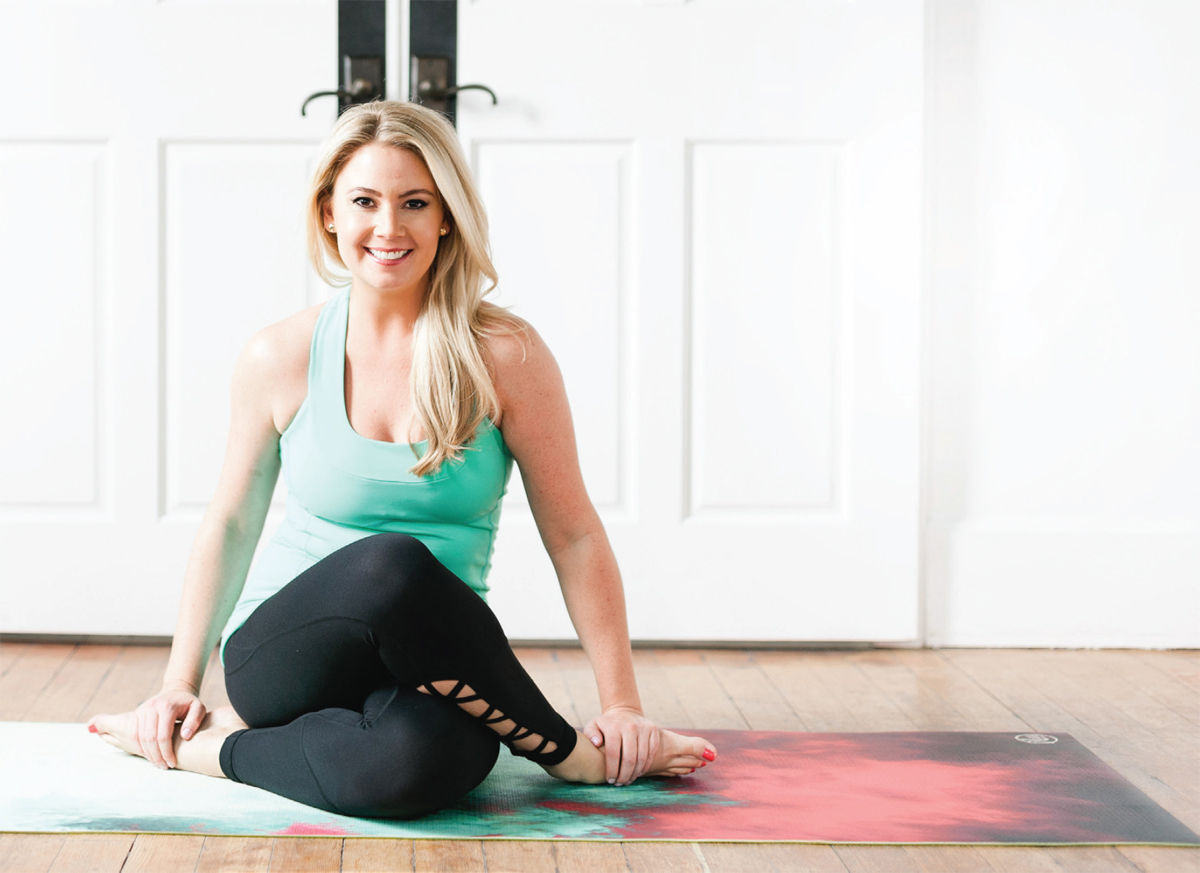
Gentle yoga or deep stretching not only keeps you mobile so your body can keep up with life, it doubles as a form of meditation or prayer. That is, after all, what yoga essentially is: a combination of physical poses (called asanas), with breathing techniques, moral disciplines, and mindfulness of self (in total, called the eight limbs of yoga).
Rehydrate your body with 20 ounces of filtered water. Your body functions miraculously on its own, pumping your heart, breathing, and maintaining 37 billion chemical reactions per second to keep things humming along. (Isn’t it amazing that we are even alive?) The one basic necessity it can’t do for itself is rehydrate.
Every cell in your body needs water to function, so keep up with your water intake so it can do its thing. (See Drink Like Your Life Depends On It for more information.)
Eat wholesome, natural, low-glycemic foods, which at breakfast time usually includes eggs, naturally raised meats, whole-rolled or steel-cut oats, high-quality protein powders, whole fruits (not fruit juices), low-sugar fermented foods, nuts, seeds, and vegetables or no-sugar-added green vegetable juice.
As a quick reminder, the most common high-glycemic food culprits include anything made with flour or processed grains; fruit juices; coffee creamers containing any amount of sugar; most other things with added sugars; and anything with artificial sweeteners. Ditching these high-glycemic foods in the morning is absolutely critical to your health.
Here are the things that stay constant in my morning routine—I’ve been doing them for so long that I’m on autopilot:
Apart from the exercise, all of this takes about 30 minutes to an hour, and sometimes less. I even do it while I’m traveling. I’m not perfect, so even if I can do three or four of those things I know I’ll have a good day.
You might already do a lot of these things in the morning and just need some tweaks to make it into a consistent routine with mindful choices, such as using nontoxic products and adding some mindful stretching or journaling to ground yourself. You might be able to squeeze your routine into 20 minutes, and you might include way more than I do. None of that matters.
What matters is that you consciously set yourself up for a good day. If you wake up, check Instagram the second your eyes open (hello, comparisons), down a blueberry muffin chased by orange juice (whoa, high blood sugar), then start e-mailing or working before taking time for yourself, mindfulness goes out the door and you’re going to be frazzled, reach for the quickest food possible (hey, fast-food drive-through!), and feel like you don’t have enough time to get anything accomplished. However, if you cultivate your morning in a way that both serves your psyche and nourishes your cells, you’ll more naturally stay more focused, act mindfully, and gravitate to those yummy veggie bowls, big entrée salads, and wholesome meals that you know are better for you.
Last year as I was unpacking in my new space, I started setting meaningful items on a little wood table in the corner of my office so they didn’t get lost or donated. When I was done, I realized I had a special little corner of my most sacred items. A crystal my middle sister gave me from her trip to Sedona, a “little sister” book from my eldest sister, a brass singing bowl that I found in a tiny shop in Bali, another crystal from my business mentor, a few other meaningful trinkets, and my very first Bible that my grandmother gave me when I was seven years old (pink, with my handwritten “my frist [sic] bible.” Turns out spellcheck is my saving grace as an author.).
I decided to leave it all there and dedicate that area as a sacred space where I can sit and center myself. I added a small cushion and find myself sitting there often to journal, pray, or to simply breathe in peace and collect my thoughts.
I don’t consider myself a particularly religious person; because my heart feels that every belief system has it mostly right, I don’t subscribe to just one of them. Just like my eating habits, my spirituality doesn’t need to fit in a labeled box. Dubbed my Spirit Corner, this has been one of the most joyful parts of my living space ever since.
Remember, how you start your day sets the tone for all the day’s choices. Commit to health in the morning and your mindfulness will blossom as your inner critic fades.
The second part of The Bookend Method is your evening routine. Benefits of a solid evening routine include better health, slowing the aging process, less anxiety, easier weight management, and a greater sense of inner peace.
While your morning routine sets you up to take control over your day so you make better choices as you go out into the world, your evening routine grounds your physical and mental energy and winds you down to do one of the most critical things your body needs to get and stay healthy: sleep. And not just any sleep, but a restful night’s sleep. Before we dive into a doable evening self-care routine, let’s talk about the glorious benefits that only sleep can give you. Sleep is the best drug on the planet. Seven hours of restful sleep every single night is the minimum your body needs to thrive.
In general, try to avoid screen time in your morning and evening rituals. Not only do we spend enough time on our devices, but the blue light jolts us awake. Trust me, I get sucked into cat videos on Facebook (why are they so cute?!) and a good Netflix binge myself—I’m in Season 3 of The Good Wife and I’m hooked—but just because a little mindless binge watching is fun doesn’t mean it fills up your cup.
We all have our ways of numbing a little, perhaps having glass of wine, zoning out on a crime drama, going down the Facebook rabbit hole, getting sucked into YouTube videos, or even eating something on the naughty list (treat yo’ self!).
I think it’s unreasonable as a health coach, and a citizen of the planet, to expect that you or I won’t ever do any of those things ever again. It’s human to want to check out a little bit. But it becomes troublesome when your go-to numbing mechanism becomes your only source of pleasure and self-care.
If you need to numb big time every day—be it with six fast-food tacos, an entire bottle of wine, or a dozen double-chocolate brownies—it’s no longer just a little deviation from your Health Habit, it’s an unhealthy reliance on numbing away your thoughts to ignore what’s really going on. As we’ve already discussed, when it comes to food, “eating your feelings” is generally a result of letting your self-care and mindfulness go.
A healthy self-care routine doesn’t tune you out, it tunes you in.
Getting enough sleep is not a luxury, it’s a necessity. It’s also free and something you can’t buy—although it’s worth a lot. Not getting enough sleep increases your risk for chronic diseases such as type 2 diabetes, heart disease, obesity, and depression.1
Even though your consciousness is in slumber while you sleep, your body is actually quite active. Sleep is how the body restores itself; think of it as all hands on deck for maintenance. Your skin is repairing—or not, if it doesn’t have the right nutrients—your brain is recharging, and your blood sugar is stabilizing. Without a good night’s sleep to give you energy the next day, you’ll have a hard time sticking to all of those healthy habits that you’ve been setting up so diligently.
If getting a good night’s sleep eludes you, you’re not alone. An overwhelming number of people—myself included—have trouble sleeping. Just like your morning routine sets the tone for your day, your evening routine sets the tone for your sleep.
Stick to a consistent sleep schedule. Get up at the same time each day, even on weekends and during vacations. This tip was the hardest for me in the beginning, but had the most impact on improving my sleep. It is one of the single best things you can do if you’re having a hard time sleeping.
Start your nighttime routine early enough to be in bed to get at least seven hours of sleep, and get up at the same time every morning. A little wiggle room is totally fine—you’re not a robot—but your body loves consistency and routine. I used to struggle to get up in the mornings, but I now get up between 6:00 and 6:30 A.M. daily and without an alarm.
Remember, consistency beats perfection, so if you sleep in a little one day, don’t fret, just get right back on schedule.
Establish an evening self-care routine in an environment that relaxes you and preps you for bed. Use your bed only for sleep and sex (unless your go-to sex spot is somewhere else, then just use your bed for sleep).
Work, phones, computers, or other devices do not belong in the bed and using them there creates a habit loop that works against good sleep. And yes, television is included as one of those devices. Sorry to those of you who love to fall asleep to your TV, but your mitochondria (the energy centers in every cell in your body) can even detect blue light through your skin! I know that sounds a little sci-fi, but it’s true. Even if your eyes are closed or covered and you can’t “see” the light, your body still knows it’s there and it disrupts your restful night’s sleep.
Remember, you get to choose if you control your devices or if they control you. I know, that sounds hard. But it’s not as hard as struggling through your day because you sabotaged your good night’s sleep.
Keep the room at a cool, comfortable temperature. You’ll sleep more soundly in a cool room because your body temperature naturally drops while you sleep. If you’ve ever tried to sleep on a blistering summer night without air conditioning then you know what I’m talking about.
A cool room between 60 and 70°F initiates better rest. Use blankets to stay comfortable—you shouldn’t feel freezing—but your body will more naturally adjust to the right temperature in a cool room. Depending on where you live this may or may not be difficult; just do your best. I set the thermostat to 64°F in the cold months (it might snow sideways overnight and I don’t want it too low), and use air conditioning or fans in hot months.
Limit exposure to bright light in the evenings, especially the blue light emitted from your computer, phones, TVs, and other screened devices. Blue light is scientifically proven to keep you up at night, but you may not notice it as it doesn’t even look blue.
Blue light looks like other light and is everywhere; it even comes from the sun. Light-emitting diodes (LEDs), used in energy-efficient bulbs and devices such as smartphone screens, also contain blue light. I promised to not overload you with science so I’ll just give you one quick fact: Blue light has a short wavelength and produces more energy than lights with longer wavelengths, like red lights. The problem is that LEDs and devices are mostly just blue light, and don’t contain the red, infrared, and violet light that the sun also emits.
Your brain can’t handle such an overload of blue light without the others, hence, the excess blue light is called “junk light.” Even your skin can sense blue light with your eyes closed like I mentioned before, which is why it’s crucial to sleep in a dark room; no TV, no streetlights shining in, and no digital clock or other random lights if possible.
I realize that not everyone can sleep in a pitch-black room; just do the best you can to eliminate or reduce any light in the room while you sleep. I put black electrical tape over the light on my fan and use an old-school analog alarm clock with no light if I need an alarm.
Eat dinner at least two hours before bed, and eat enough to fill you up. Active digestion right before you head to bed diverts your body’s energy to digestion instead of repair while you sleep, and takes away from your body’s natural healing process.
Eat enough at dinner so you don’t feel hungry before bed, and load up on good fats at dinnertime, as they satiate you and give your body slow-burning fuel. Salmon, eggs, grass-fed beef, bone broth, avocados, healthy oils, nuts, and seeds all contain good fats.
If you are hungry after dinner, eat a light, healthy, no-added-sugar snack such as nuts or a small low-glycemic meal. Popcorn, juice, toast, cookies, or muffins will only raise your blood sugar and prevent restorative sleep. Air-popped popcorn on a Friday night while you watch a family movie or people-watch downtown with friends? Not a problem after a wholesome dinner. Popcorn every night for dinner? You’ll have blood sugar issues that’ll keep you up and sabotage your health.
Try a nighttime elixir of raw honey with apple cider vinegar. An hour before bedtime, mix one tablespoon of raw honey with one to two tablespoons of apple cider vinegar in about one cup of hot (but not boiling) water.
Honey has been used for centuries as a sleep aid. Choose raw honey as it will have more enzymes and be less processed. Hot water will kill some of the enzymes in both the honey and apple cider vinegar, but it doesn’t ruin all of their nutritional benefits (this is why we use hot, not boiling, water). I boil water in my electric kettle and let it sit for 5 to 10 minutes before using it.
There aren’t any scientific studies as to why this nighttime drink works, but it does. Some nutrition experts hypothesize that raw honey replenishes liver glycogen more efficiently than anything else, which allows you to stay asleep longer. Try it and see if it works for you. (See recipe.)
In addition to the things listed above, exercising regularly, maintaining a healthy diet, avoiding caffeine after noon, and reducing your fluid intake right before bed (as that might cause you to wake up in the middle of the night to use the bathroom) will also help you maintain good sleep.
Along with a whole host of natural health benefits like more stable blood sugar, improved cognitive function, and increased longevity, sleep is also your most powerful natural beauty tool. Two weeks straight of a no-added-sugar eating plan and a good night’s sleep every night and your friends will think you got Botox, or extra Botox if you already get Botox.
Here is an example of an evening self-care routine that will set you up for success.
| 2 TO 3 HOURS BEFORE BEDTIME | Finish a healthy dinner rich in good fats. Sip on herbal tea—I like peppermint or lemon balm—before bed if you crave a treat. |
| 1 HOUR BEFORE BEDTIME | Turn off all screens and LEDs lights and dim all other lights. Turn your thermostat to a cool temperature if needed. |
| 55 MINUTES BEFORE BEDTIME | Prepare a hot Epsom salt bath with 2 cups of Epsom salts and a few drops of your favorite essential oil (I prefer lavender); the magnesium in the Epsom salts will help relax your system, and soaking in the hot water will help ground your energy; or read to your kids or connect with your partner. Or, do whatever fills up your self-care cup and calms your mind. If desired, take a melatonin or magnesium citrate supplement to aid your sleep even more. |
Melatonin is a naturally occurring hormone in your body that regulates your circadian rhythm; it’s also an antioxidant. As a supplement, it can help make you sleepy and fall asleep more quickly. This over-the-counter supplement is generally considered safe and non-habit forming when taken in small doses. Start with 0.5 milligrams and take up to 2 milligrams if needed according to the package instructions. I think melatonin is best used occasionally, but work with your health-care provider if you have questions.
Magnesium is a vital nutrient that every cell in your body needs to thrive. It also works as a light muscle relaxer and can aid in the feeling of relaxation by counteracting feelings of stress to give you a more restful night’s sleep. I especially appreciate how it calms my jittery leg muscles at night. But because it’s a muscle relaxer, it can cause a little too much relaxation in your colon, which can lead to many trips to the bathroom.
Just like melatonin, start with a low dose and add more as needed. Magnesium citrate is easy to find in powdered form at the natural foods store and easily mixes with water. There are other forms of magnesium, such as magnesium glycinate, that also work well. Try them out and see what works best for you. They are generally safe for everyone, but if you’re taking any prescription medicine be sure to check with your health-care professional before adding this or any other supplement to your diet. Even “natural” drugs are still drugs, and can interact poorly with other medication.
But what about sleep aids, you might ask? Well, short-term sleep aids—either over-the-counter or prescription—for emergency situations, like an acute injury or a once-in-a-decade awful sinus infection—are most likely not going to harm you if recommended by a health-care professional. But relying on over-the-counter or prescription sleep aids over the long haul is detrimental to your health.
Especially beware of taking antihistamines, such as Benadryl or NyQuil, for sleep. Antihistamines are indicated for short-term use for things like itching, severe allergic reactions, and allergies. While they might make you drowsy, the sleep quality is usually not great and, more important, they are habit-forming and come with serious side effects in the long term. Moreover, most over-the-counter sleep aids are antihistaminic drugs repackaged and labeled as something to help you achieve sleep, but they’re not any better.2
Just like everything else you have to swallow, your liver and other detoxification organs have to process these sleep aids, which can cause additional stress on the body. In lieu of pharmaceutical sleep aids, try a dialed-in evening self-care routine that contains a mindfulness meditation or potentially melatonin and the tips I mentioned above.
Kava and valerian root are two additional natural herbal sleep remedies you can try if needed, but they should be taken in the short term, as the safety of long-term use of them on the liver has not been established.
Your morning routine sets the tone for your healthy day, and your evening routine winds you down and preps you for sleep. Both can take just a few minutes or as long as 90 minutes—only you know what works best for your schedule. The most important thing to do here is mindfully incorporate both into your day.
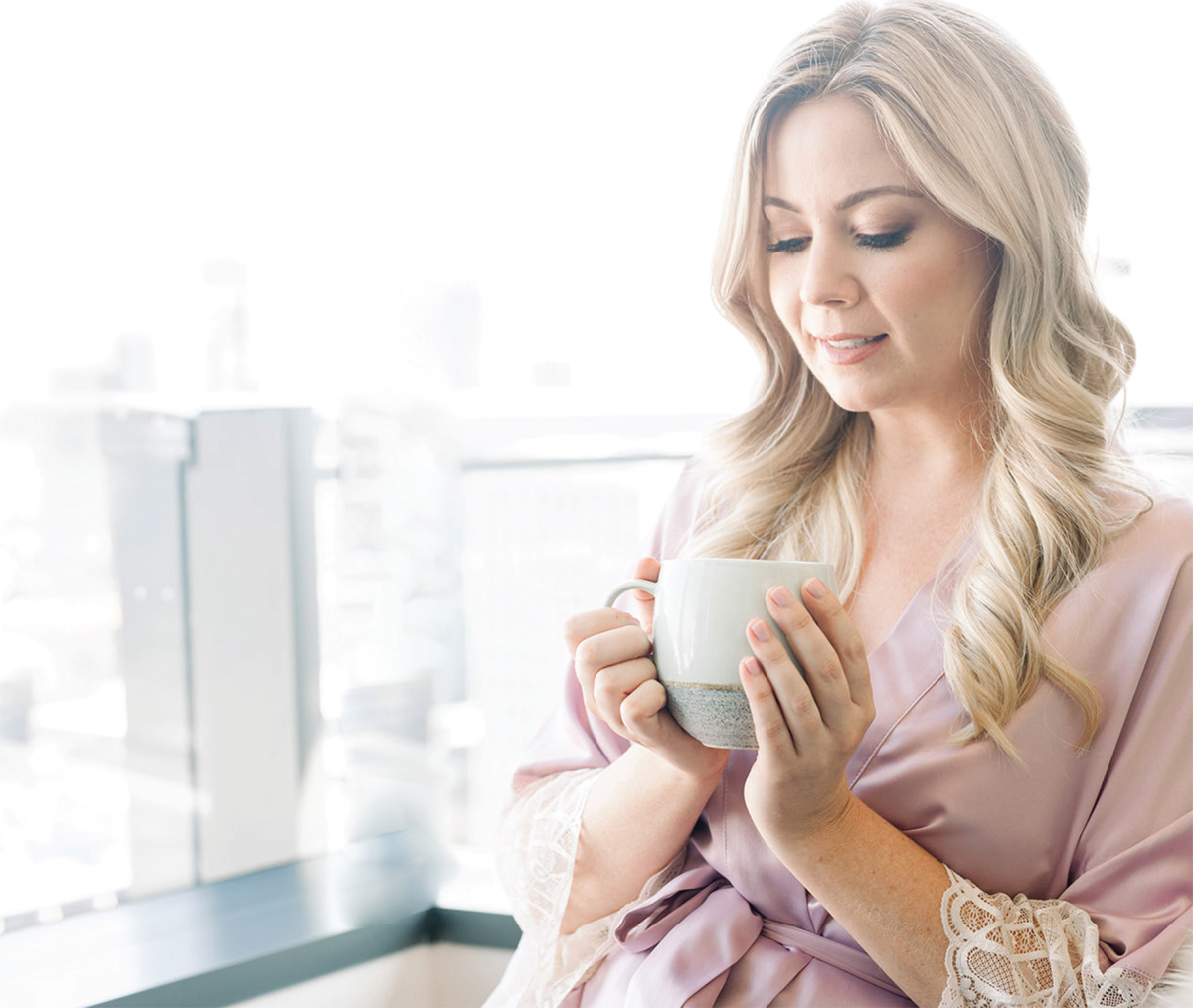
These new bookends will do wonders for your healthy habits, thus your overall health. When you start the day mindfully taking care of your health, you’re going to look forward to continuing to nourish your body. That spring greens salad is going to look way better on the menu than the highly processed preservative-laden bread. A cup of hot tea will sound way better than office-grade coffee with powdered creamer (what is in that stuff, anyway?!).
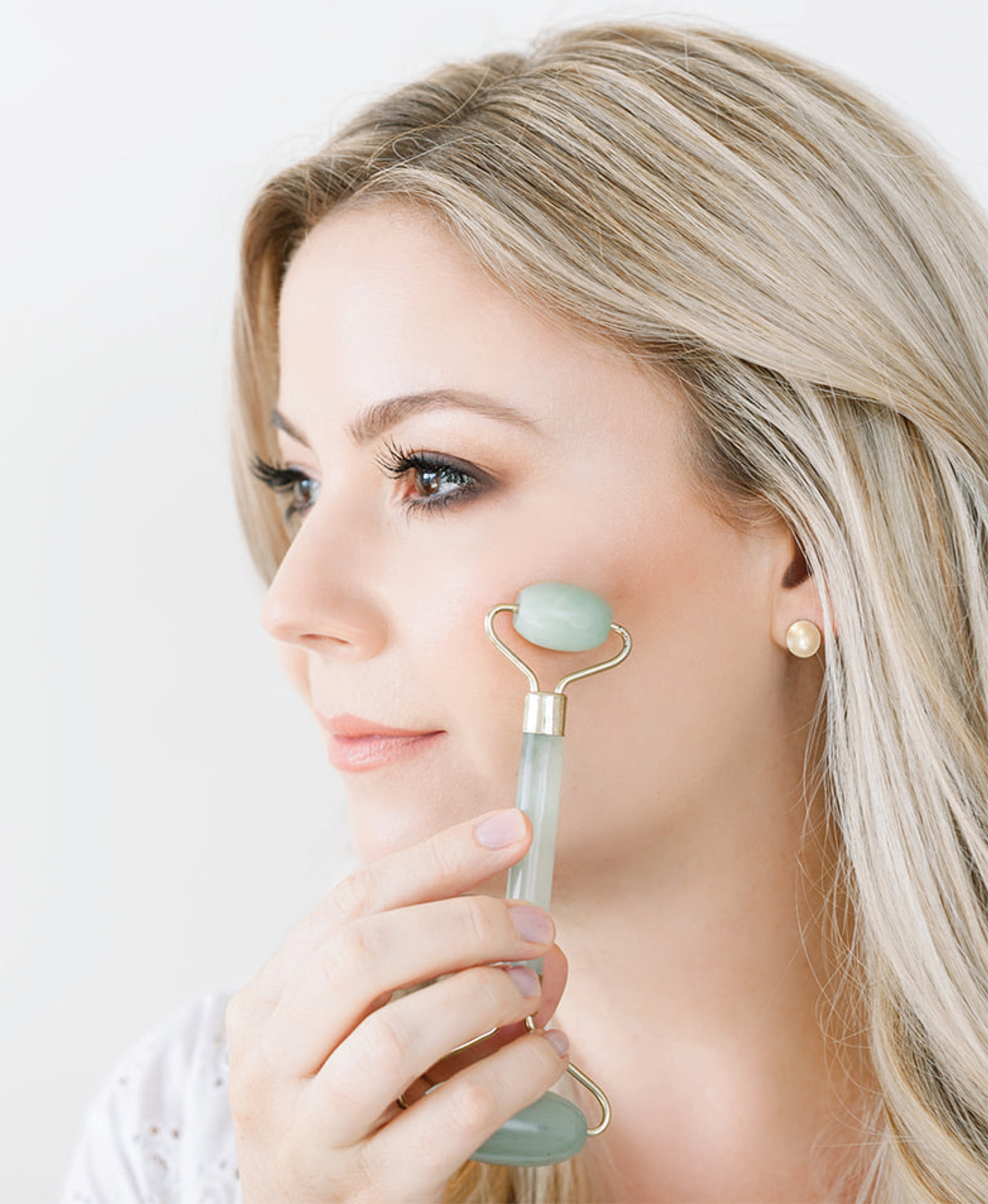
But the self-care doesn’t have to stop there. Once you get your bookends established, you’ll be ready for more. Self-care doesn’t have to be a broken record of doing the same thing over and over again, or a $15 Tibetan-yak-tear-infused bath bomb. As I mentioned before, it can be anything that tunes you in to becoming the healthiest, most content version of yourself.
Allow your self-care to shift and grow during the seasons of the year and the seasons of your life. Here are a few ideas to get you started:
You might be wondering where exercise fits in to all of this. After all, a gentle walk outside or light stretching is excellent for your body, but it doesn’t necessarily get your heart rate up or build muscle.
I left exercise routines as the final section in this chapter because I’ve noticed with my clients how a consistent exercise routine often becomes more manageable after the food and self-care pieces are in place. When someone comes to me and says she can’t lose weight despite “working out all the time” I’m never surprised.
Rushing around stressed all day and fitting in a stressful workout just for the sake of burning calories typically doesn’t lead to weight loss, it leads to . . . more stress. Moreover, exercise is usually the thing that gets left off the list if your day is running you, or you may be too tired to even think about a workout. Exercise isn’t any less important now that you know how to fill up your cup, and it is something you will look forward to when all of your other habits are in place.
You can add daily exercise into your morning routine, or fit it in where it works best in your schedule. The Mayo Clinic recommends 30 minutes of moderate physical activity every day, while the CDC and American Heart Association both recommend at least 30 minutes of moderate physical activity five days per week.
This means that at minimum, to maintain your health, you should get your heart pumping for at least a half hour most days. Remember, your goal is consistency, not perfection. You can even break your half hours of moderate activity into smaller or longer sessions.
I used to lie awake in bed as my mind would spin on every e-mail I forgot to send (did I ask my web designer to use the image with the blue shirt instead of the green shirt?), what I didn’t buy at the grocery store (crap, I’m out of oats and I forgot the crackers for the party tomorrow), or feeling guilty for not calling a friend back (ugh, I hope she knows I care).
Even worse, I’d wake up the next morning and check Instagram first thing, then read e-mails on my phone before even sitting up. My day started off with cortisol through the roof and feeling the weight of the world on my shoulders. It felt like I couldn’t make progress in anything. I couldn’t focus, no matter how much green juice I had during the day.
After implementing a diligent evening self-care routine, I started to fall asleep with peace.
And guess what? I still had the exact same amount of e-mails when I checked in an hour later than usual. And the feeling of missing out on Instagram went away. My days are easier, and my stress levels are dramatically lower. Aside from an inexpensive melatonin supplement and some yummy nontoxic face cream, my new routines didn’t cost me a dime.
My new life motto is good nights equal good mornings, and I’m sticking to it.
As the saying goes, the best exercise is the one you do, not the one you think about doing. So if you don’t love the thought of an intense 30-minute sweat session, the goal of walking 10,000 total steps per day also has dramatic health benefits. Studies have shown that hitting 10,000 steps per day can reduce blood pressure and increased sensitivity to glucose3 (which is a good thing and wards off diabetes).
Do what works for you, just make it a habit to move. Everyone has different body and physique goals. If you love weight training, specific sports like tennis or surfing, salsa dancing, or endurance training, then do those things. Do more of them! Just like creating meal plans, there isn’t just one best way. The amount and intensity of your exercise habits will change with your age and seasons of life.
There is a wide array of what can get your heart pumping, from a brisk walk or jog uphill, to swimming and surfing, to power yoga, to dance or Jazzercise (had to throw this in for the baby boomers). Studies show that 30 minutes of moderate exercise each day yields dramatic health benefits. Take note of the word moderate; you don’t have to kill yourself in a boot camp or run a marathon to reap the benefits of exercise.
It’s not an all-or-nothing kind of situation. Ten minutes of mild exercise strengthens connections and communication between memory-focused parts of the brain in healthy young adults.4 This means even a short period of mild exertion can yield considerable cognitive benefits, and the results showed immediately afterward.
Additionally, a study published in the American Journal of Hypertension found that 61 to 90 minutes of exercise a week was more effective at lowering systolic blood pressure than just 30 to 60 minutes a week.5
If you need ideas to get your heart pumping, look outside. Nature gives us incredible natural terrain in every corner of the world. Have an ocean or a lake? Go swimming (safely). Live by a hill or mountain? Take a walk uphill. Flat and snowy? Cross-country ski. Flat and warm? Go for a jog. Join a gym or find an exercise class that excites you.
Personally, I like the combination of two weight-training workouts, two high-intensity interval sessions (HIIT), and one yoga class per week. That schedule keeps my energy high and body lean. The two benefits you want to see from exercise are that it raises your heart rate and builds or maintains muscle. Raising your heart rate comes from moving fast, such as steady-state cardio, HIIT, or plyometric moves. Building or maintaining muscle comes from resistance training, either from your body weight through pushups and the like, bands used to create resistance, or lifting weights. Circuit training involves moving fast through exercises and uses weights or body-weight resistance that can double as cardio and strength training.
If you’re a yogi and the style of yoga you practice keeps your heart rate up and maintains muscle, then that’s a perfect choice for you. If you prefer hikes out in nature, your heart will pump in the fresh air and moving uphill will build muscle. If your walk involves mainly long flat stretches, perhaps add some lunges, squats, and pushups for some resistance.
If you’re curious about how much you need to exercise to lose weight, remember that exercise is about 10 to 20 percent of the weight-loss equation. The rest is food.
You can’t exercise away poor eating habits. If you’ve been spending hours in the gym but haven’t seen a change, the answer is changing the way you eat (and balancing your hormones through stress-reduction and potentially supplements), not exercising more.
Which leads me to some helpful guidelines about how to fuel yourself for exercise. If you’re simply walking or doing light exercise to get your heart rate up, just eat as normal. If you’re doing some type of intense athletic training, work with an expert in your field, as there may be specific sports-nutrition requirements.
If you’re performing an intense workout that includes weight training, HIIT, or endurance sports, the guidelines for eating around exercise don’t change a lot from general healthy guidelines discussed in the previous chapters. Eat a small meal that contains a good carb, a high-quality protein, and a small amount of good fat within 30 minutes of finishing your workout. You can also have a similar meal or snack before your workout if that feels best to you, however a meta-analysis of 46 studies suggests that your body burns more fat if you work out in a fasted state, provided that your workout is less than 60 minutes.7 If you’re endurance training for more than 60 minutes, a small pre-exercise meal or snack can enhance performance. In the same study, pre-exercise eating had no effect on HIIT.
Working out in a fasted state generally means that you exercise in the morning, before you’ve eaten anything. This works for some people, but if you feel light-headed, are too hungry, or exercising for more than 60 minutes, then eat before you work out. Regardless, save the majority of your healthy fats for the opposite time of day as your workout, not close to your workouts.
Fats are slow-burning and best kept for the meals that are not near your workout during the day. That doesn’t mean to skip the fat—every meal and snack should have a little—it just means to not overload on them right before or right after a workout.
The carbs are a better fuel source for your workout. For example, two scrambled egg whites with one whole egg and veggies, some overnight oats with a small handful of nuts, or a protein smoothie with half a banana and a half teaspoon of flaxseed oil are all great pre- and post-workout meals. A whole avocado, salmon, or grass-fed beef or other meals higher in fat are best left for another time of day not close to your workout if you want to dial-in on fat loss and exercise performance.
Now, you know how important exercise is, but how do you actually make it happen consistently? For me, I always think about the phrase, “I regret the hour I just spent exercising, said no one ever.” In all seriousness, the discipline of exercise doesn’t necessarily come from actually doing the workout, it comes from being willing to put on your exercise shoes and get out the door. That’s always the hardest part.
If you’ve been in a phase without exercising, first, be gentle on yourself. Then commit to getting your shoes on and getting out the door. Take those first steps—you won’t regret it.