
Your internal environment is deeply linked to your external environment.
Your health is so much more than what you eat. Sure, what you eat matters. The food you put in your mouth makes up the building blocks of your cells, which form not only your bones, tissue, and organs but also your hormones, the chemical pathways your brain uses to communicate, and all the other magic that keeps your body running.
You already know that what you eat influences your health, but did you know that the habits that govern how you operate in other areas of life, like how you create (or disregard) your home environment, and the routines you consciously (or unconsciously) follow each day, also dramatically affect your health?
These non-food factors are just as important as what you put in your mouth. In fact, your non-food lifestyle factors—from how you keep your home space, to how you set up your days, to whom you choose to interact with and how—are what create the mindset and subconscious cues that make you want to take better care of yourself.
Your internal environment is deeply linked to your external environment. Don’t worry, I’m not going to tell you to meditate for six hours a day or go do a self-help seminar (although those things can be great!). But I am going to ask you to take a good hard look at becoming more conscious about your environment and mindset, because how you spend your days is how you live your life.
Sure, milestones are important and should be celebrated. But the bulk of your life is lived in your daily routines and habits, which can be both healthy and enjoyable. If you don’t intentionally get in the habit of crafting a healthy home environment, healthy self-care routines, and healthy boundaries with other people’s actions and emotions, you might spend your days spinning your wheels or feeling stuck. And by stuck I mean that you know how to be healthier, you’re just not doing it. It’s time to pay attention to developing these habits.
A few years ago I sold my gorgeous 2,300-square-foot home, all of my leather and wood furniture, and donated more than half of my possessions to friends and various charities. All in all, I estimated that I got rid of about 85 percent of what I had owned in one fell swoop.
Now, this is an extreme case, and I don’t expect everyone do to it. It was a specific season of life for me. I had gone through a painful divorce a few years prior and took time for healing with local friends and family. Life became stable again, and I felt better than I’d ever felt before. I started to crave travel and more exploration.
Selling the house and furnishings was a no-brainer because I lived in a highly desirable area, didn’t know how long I wanted to roam, and the furniture was very big and specific to the lodge-y look of my Montana home. It made financial sense to sell instead of paying to store it (because, spoiler alert: How consciously you eat, how consciously you set up your home, and how consciously you care for your finances are all probably pretty similar).
I reveled in efficiency mode. I didn’t own a lot, and I didn’t have any recurring household bills anymore. I took my lightened self on a trip around the world, spending the fall in New York City with business friends, part of the winter in Central America on a dance and yoga retreat, then alone to the beach to write, back home for the holidays, then a month in Bali masterminding with business friends and indulging in daily $5 spa treatments.
Without my even intending it, a light, airy sense of wholeness extended into every facet of my life. I made quick new friends to laugh with and had long, soul-filling conversations with old ones. I talked to my sisters and parents almost every day, and had so much social time that I barely even spent one evening alone. I ate mostly vegan and walked almost six miles every day. My business flourished and my bank account grew. It was a glorious half year.
Before I took that leap, though, I was scared. I thought all of my “stuff” was useful and necessary. I had a happy life. My home was nice and I was comfortable there. I was close to family and friends. But once I worked up the courage to listen to that little voice inside my head telling me to play bigger and change my environment, I had the happiest, healthiest year of my life.
I knew that there was a connection between home and health, but I had no idea how much my physical space was influencing my habits or overall health.
Eventually, I felt the need to ground myself back into my own space. I found a permanent (for now) home and replenished what I needed. When it comes to decluttering, there are a variety of great resources and books (hi, Marie Kondo!) about decluttering your home and physical spaces. I highly recommend lightening up this way.
In this book—in the spirit of making a Health Habit you’ll keep—we’re going to talk more about how to set yourself up for success by creating morning and evening routines that allow you to thrive. So yes, do the decluttering. Here, I’m going to teach you how to look at the non-food factors that influence your health to help your healthy habits flow in harmony.
Never underestimate the power of your physical environment. It has been understood for centuries in systems such as feng shui that the space you inhabit influences your mood, thoughts, emotions, and habits.
Clutter and mess in your physical space creates clutter and mess in your mind. While you don’t have to go full minimalist, it’s important to keep the energy in your physical space open, harmonized, and de-chemicalized as much as possible. Your physical environment is one of the single biggest factors of whether or not you will achieve your health goals.
The right environment can make you more efficient, focused, and—perhaps most important—consistent. Environmental cues trigger certain behaviors, for better or worse. A hot-water kettle and beautiful bowl filled with herbal tea waiting to be brewed that has a permanent spot on your counter will result in a hot cup of tea when you crave something comforting, while store-bought jumbo muffins filled with sugar, white flour, and chemical preservatives in the same spot will also fill that need, with different effects on your health. Likewise, a pantry filled with expired food and nutritionally void chips and cookies will cue you to order takeout when you’re in need of a quick meal.
Your healthy—or unhealthy—habits build on each other. When you clean up the way you eat, you’ll naturally influence other habits in your daily life. Once you start reading the labels on food, you will naturally progress to reading the labels on things like laundry detergent, or vice versa.
Not only does detoxing your home environment alleviate mental clutter, but it also rids your home of physical toxins. Toxic ingredients in beauty products and cleaning products can disrupt your hormones and sabotage your health.
You might be thinking, Is it really true that ingredients in beauty products can harm me? I mean, aren’t those vetted and monitored by the government? But the government only worries about the safety of products after something has an issue; there’s no formal process or audit to bring beauty and cleaning supplies to the market. It’s up to you to get into the habit of paying attention to what you use on your body and in your home.
What you apply to your skin or come in contact with in your environment can sink into your skin and enter your bloodstream. Some ingredients smoothed onto your skin will even show up in a urine test. Your lymphatic system, liver, kidneys, and other organs are tasked with processing these harmful ingredients out of your body but, depending on how efficient your body is, those toxins can cause problems.
Some of the chemicals in beauty products are considered endocrine disruptors, aka hormone disruptors. Some of them can even act as hormones, specifically estrogens. These are called “xenoestrogens” and can cause a whole lot of mess in your body. Using a bunch of toxic chemicals in skincare or cleaning supplies can be similar to pumping your body full of a whole bunch of extra estrogen, which can throw off all of your other hormones and make getting healthy even harder.
Weight gain, acne, fatigue, depression, and irregular menstrual cycles (not to mention fertility issues) can all be caused by xenoestrogens and other hormone disruptors. That means the real culprit of your low energy or inability to lose weight could be the toxic ingredients in your beauty and cleaning routines.
Since there are hundreds of chemical additives legally available—and new ones popping up every day—it’s almost impossible to create a list of everything to avoid. In general, stay away from any products with the following: parabens, triclosan, butylated ingredients (BHA), formaldehyde-releasing ingredients, phthalates, or polytetrafluoroethylene (PTFE), also known as Teflon. You don’t have to do all of these things at once if it feels too overwhelming. But to improve your health, and the health of your family, take the time to work through these sections and move toward detoxing your home and environment. Let your healthy habits build on themselves over time and spread into other areas of your life.
First up, the kitchen, command center for your health. What you keep around, how you pay attention to it, and the care and love you feel in your kitchen all affect your physical health. Creating a space you love—one you look forward to spending time in—will draw you to it, making home cooking more enjoyable.
Since I don’t live with you and neither one of us is looking for a new roommate, I don’t know your cooking habits and what you love to eat. I hope that you cook at home often and eat healthy food (and if you don’t, go back and read Chapters 2 and 3 again).
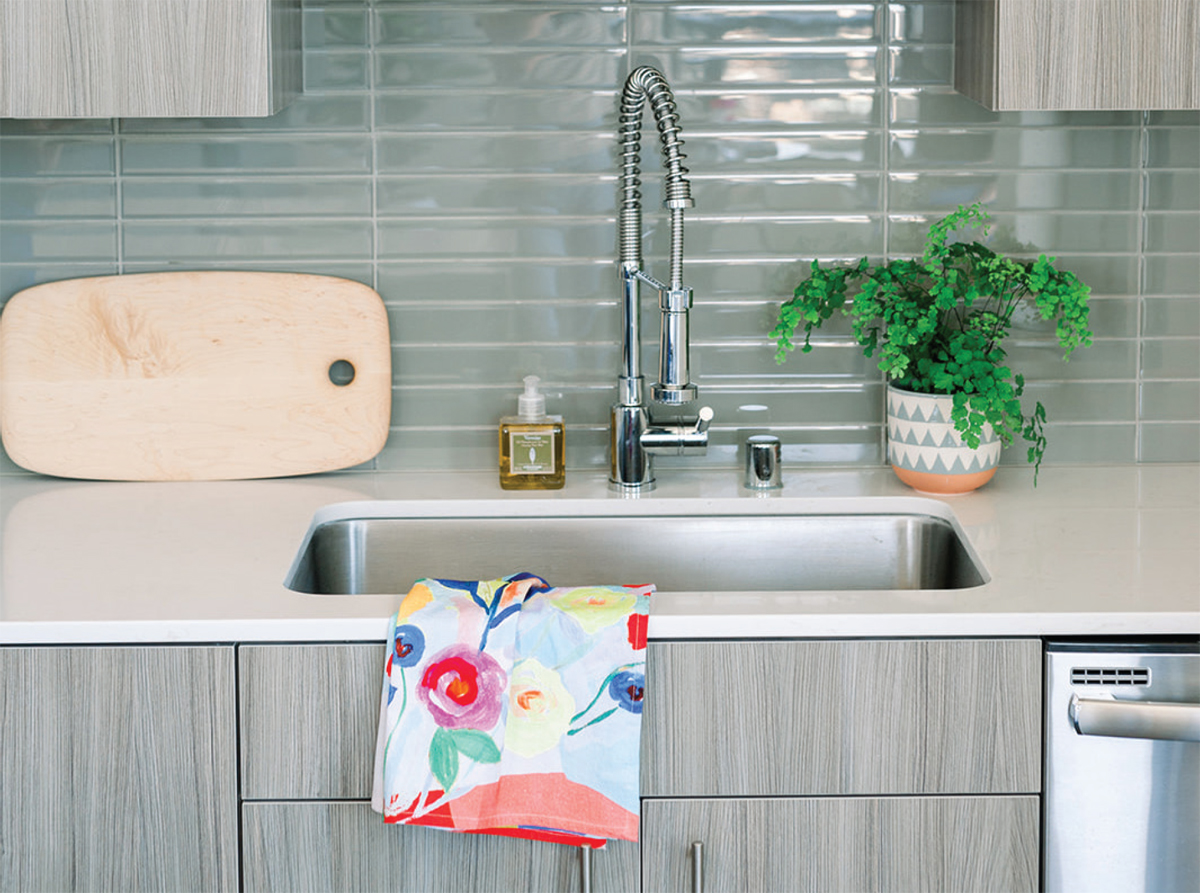
I’m not going to give you a big long list of what to keep around or things you need to buy. (Nothing makes me crazier than a bag of decomposed produce that was pushed to the back of the fridge to rot.) Instead, I’ll give you a few suggestions and then you can customize your space from there.
I tend to think it’s better to have a lean, less-is-more kitchen philosophy. You don’t need special herb cutters (they’re just little scissors! What a racket.), 18 different zesters (one grater for everything is enough for the citrus, garlic, ginger, hard cheeses, and anything else you need to grate finely), or a small appliance for every type of dish out there (I’m looking at you, bread-maker taking up half the counter).
To prevent overwhelm, before you bring something into your kitchen ask yourself, Do I already have something that can do what this does? That’s a great rule to apply to your entire life. Special ceramic pizza cutter? Nah, my sharp chef’s knife will do that. Fancy spiral apple-peeling gadget? Sounds fun, but my $3 veggie peeler does the same thing. New boyfriend who wants my Netflix password? Nope, I’ve already got four family members for that.
Oh laundry, you’re one thing I just want someone else to do for me. But alas, until someone invents magic robots to wash, dry, and fold perfectly, we’re just going to have to do it ourselves.
While I can’t make doing your laundry any easier, I can help you make it healthier. Here’s the rub: We spend nearly a third of our lives sleeping in our sheets. That doesn’t even include all the great sex I hope you’re having that sometimes happens in your bed. But it’s the sheets I’m talking about, so stay with me.
You know that freshly washed scent of your sheets? Well, that scent is not as clean as you think. In fact, it’s not clean at all. Remember when I told you that food companies spend big bucks to create flavors that keep you addicted to food? Well, manufacturing companies do something similar with scent and color additives to make you think you’re using the best detergent.
But the blue color and fake breezy scents aren’t worth it. One study showed that air vented from dryers from clothes washed in top-selling scented liquid laundry detergent contains 25 hazardous chemicals, including two that are classified as carcinogens. Yikes. This happens during each cycle. Double yikes!
Look for laundry detergents free of artificial dyes and fragrances, and avoid fabric softeners and dryer sheets. A half cup of distilled white vinegar in the wash will do the same job as a fabric softener, and wool or silicone dryer balls can eliminate static without the nasty chemicals.
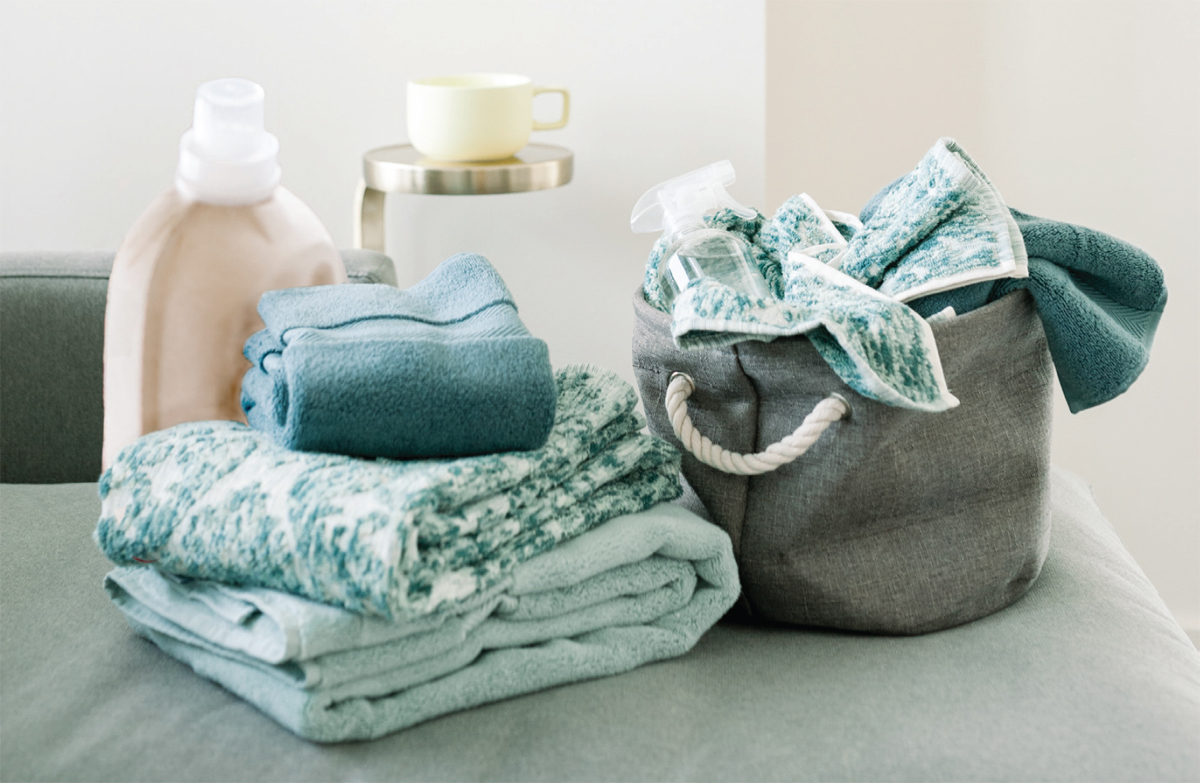
There are also dozens of natural laundry detergents on the market; it’s best to read the company’s mission statement and do your own research to choose one. From my personal experience, they’ve come a long way in being gentler on clothes. At the very least, wash your jammies, underwear, sheets, and towels in a natural detergent to decrease your chemical exposure.
Just like the laundry, the rest of your cleaning supplies might be bringing harmful chemicals into your home unnecessarily. As with food, read the labels—if you can’t pronounce the ingredients, they’re probably not natural.
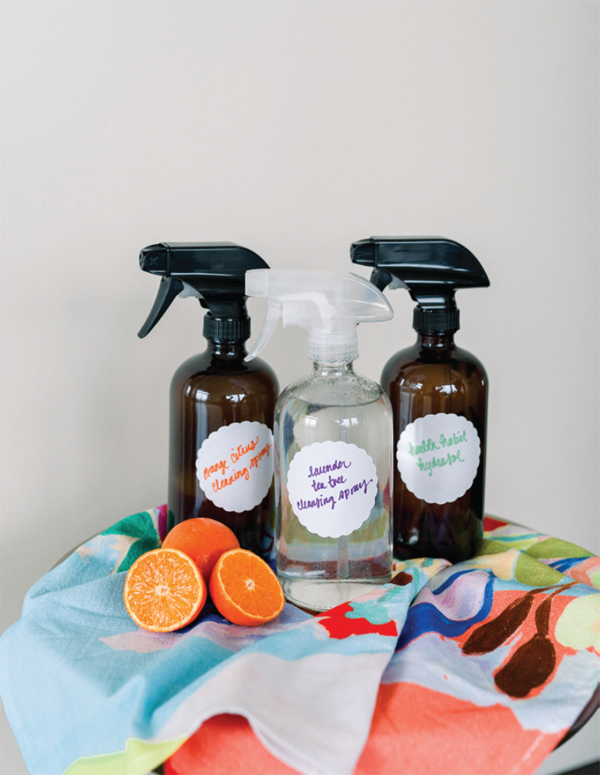
Do your research and buy from brands you trust. Or, make your own natural and inexpensive cleaning supplies at home from OG cleaners such as distilled white vinegar and baking soda. Distilled white vinegar is a natural disinfectant, and baking soda is a way to add grit to natural cleaning sprays (for hard to clean spots). Distilled white vinegar can also decalcify clogged shower heads and faucets. I like to add essential oils to my cleaning spray for a delightful scent (and tend to go a little heavy), so add your favorites and adjust the amounts per your preferences.
| HEALTHY FLOOR CLEANER | Mix a solution of ½ cup distilled white vinegar to ½ gallon of warm water. |
| HEALTHY COUNTER SPRAY | Mix one part distilled white vinegar to one or two parts filtered water (the more vinegar, the stronger it is) in a spray bottle. Optional: add ½ tablespoon of baking soda to give the spray grit for hard-to-clean spots. Optional and recommended: add 10 to 20 drops of your favorite essential oils for a pleasant spelling spray. |
| GREEN GLASS CLEANER | Mix equal parts of distilled white vinegar and water. Elizabeth’s mom’s trick: use black-and-white newsprint on the glass instead of a towel for lint-free cleaning. (It’s strange, but it works!) |
| TO CLEAN THE DISHWASHER | Place 2 cups distilled white vinegar in a glass bowl on the bottom rack of an empty dishwasher. Run a full cycle (no dishes, no soap added). Wipe the inside edges and door with a towel sprayed with the healthy counter spray above once the cycle ends. |
| DECALCIFY YOUR SHOWER HEADS AND FAUCETS | Soak the clogged-up hardware, such as your shower head, overnight in a bowl of undiluted distilled white vinegar; it will run clean in the morning. |
| HEALTH HABIT HYDROSOL | A hydrosol is all all-purpose spray, use it as a room spray, linen spray, or even body spray. Here is my favorite: In a 16 ounce glass spray bottle, combine two cups filtered water with 1 tablespoon witch hazel. Add 10 drops of lavender, 8 drops of frankincense, and 5 drops of orange or lemon essential oils. (I love this scent combo, but feel free to mix up the combination to make it your own.) Shake well before each use. |
| HEALTH HABIT BED LINEN SPRAY | In a 16 ounce glass spray bottle, combine two cups filtered water with two tablespoons witch hazel. Add 15 drops of lavender, 10 drops of rose, and 6 drops of frankincense essential oils. Spray a gentle mist onto your bed linens or bath towels each night before bed. Shake well before each use. (This makes a wonderful homemade housewarming gift as well.) |
| CITRUS EUCALYPTUS CLEANING SPRAY | In a 16-ounce glass spray bottle, combine one cup distilled white vinegar with one and a half cups filtered water. Add 15 drops of orange, 10 drops of lemon, and 10 drops of eucalyptus essential oils. |
| LAVENDER TEA TREE CLEANING SPRAY | In a 16-ounce glass spray bottle, combine one cup distilled white vinegar with one and a half cups filtered water. Add 12 drops of lavender, 10 drops tea tree essential oils. Adjust oils as needed to your preference. |
When you start along a healthier path with your food, the label reading and inclination toward more natural products will (hopefully) move into your beauty routine, too.
According to the Environmental Working Group, the average U.S. woman uses 12 personal-care products and/or cosmetics a day, containing 168 different chemicals.1 It’s estimated that there are more than 13,000 chemicals used in beauty products, and only about 10 percent of them have been studied for safety. Moreover, the FDA does not require approval for personal-care products. Instead, companies are on the honor system for substantiating the safety of their goods. Since there are literally too many chemicals added to beauty products to cover in one book, my best advice is to do your research and buy from brands you trust.
Your beauty product routine covers everything from what you put on your hair and skin, to what you use to brush your teeth and care for your nails. It’s a big category, but there is one ingredient I specifically want to point out.
I mentioned triclosan back in Chapter 3, when we covered your gut microbiome. Triclosan is an antibacterial agent found in hand sanitizer, hand soaps, toothpaste, and other antibacterial products. It’s been linked to low thyroid function and an imbalance of good gut bacteria. Although the FDA banned the use of triclosan in hand soaps and body wash in 2016 because of its harmful effects, it’s still widely used in other products. If anything, do not use toothpaste with triclosan as it can go directly into your digestive system and kill your good bacteria.
When I think about my overall microbiome and the necessity of good bacteria, I always think of a story that my friend and world-renowned OB-GYN Dr. Christiane Northrup told me over lunch. She was reminiscing about her early days as a doctor delivering babies, and how surgical birth prep had become. Women had been giving birth in every environment imaginable since the dawn of time, yet here she was in the 1980s, required to shave women completely for “sanitary” purposes and sterilize everything in sight.
During one delivery, the mother wanted her baby put on her chest immediately. At the time this natural and common postdelivery bonding experience was not practiced because of the fear of germs. When Dr. Northrup followed her wishes and placed the baby on her mother, immediately upon arrival a colleague exclaimed, “You can’t do that! It’s not sterile!” To which she replied, “That baby just came out of the birth canal—if you want it to be sterilized you’re going to have to boil it!” He looked at her, aghast at the descriptive statement. She looked at him, aghast for wanting to take away all of the child and mother’s good bacteria. I’m always grateful for this story—it’s a good reminder not to let people or things rob us of our good bacteria.
Again, do your research when it comes to beauty and personal-care products, and buy from brands you trust. Your skin is your largest organ, and one of your detox organs to boot. When harmful chemicals are absorbed through it, they not only hinder your skin’s ability to detox (toxins are supposed to be coming out through the skin via sweat, not in via products), your liver, lymphatic system, kidneys, and other organs all have to deal with them, too.
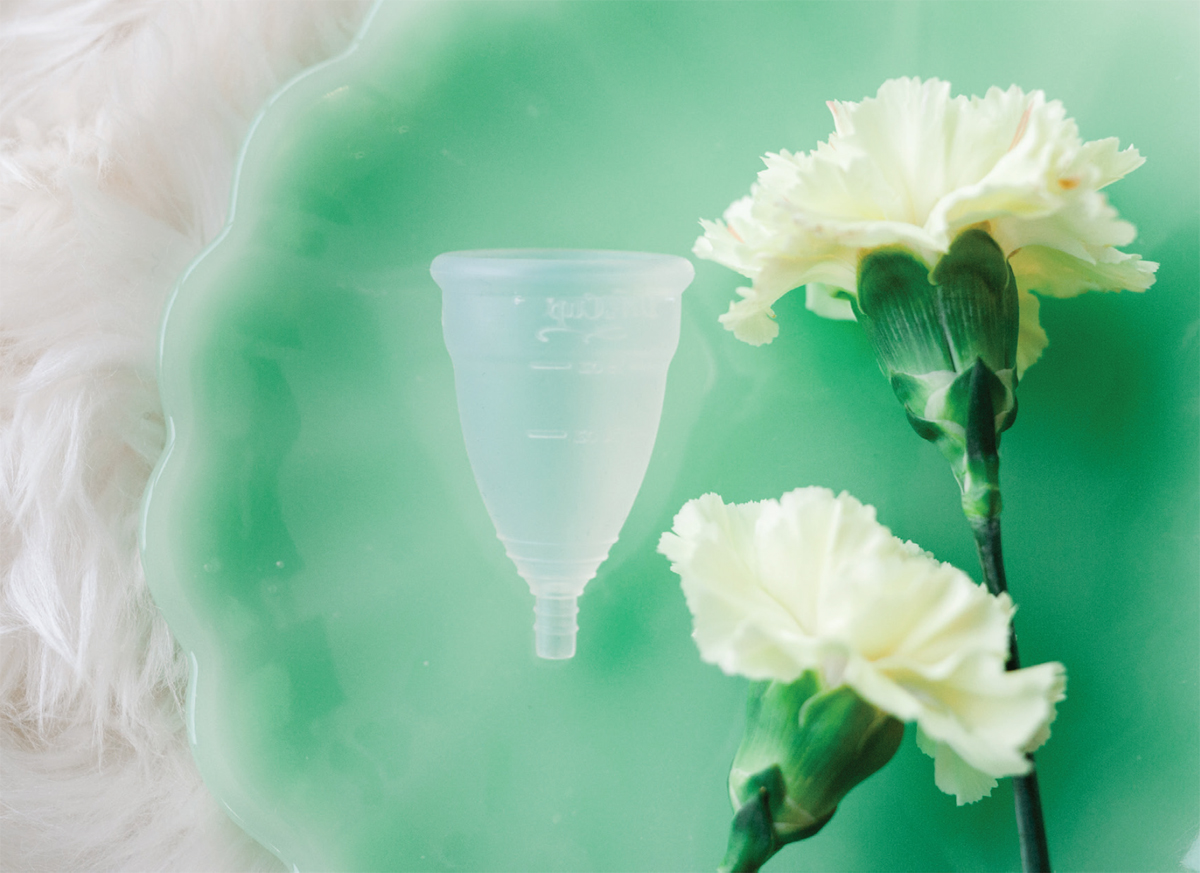
Lighten your overall toxic load by being mindful of what you allow in your personal-care and beauty routines. The Environmental Working Group’s website, ewg.org, is a great place to start if you want to research this topic or particular ingredients further.
Healthier period products have improved by leaps and bounds in the past decade. What you use for menstrual care is a personal choice. If you choose to use tampons, buy organic if possible. The cotton in tampons is (obviously) inserted into one of the most sensitive parts of your body where there’s a highly absorbable membrane. Chemicals, pesticides, and bleach used in conventional cotton can be absorbed into the bloodstream.
An alternative that works for some women is a silicone period cup. Personally, I was hesitant to try this, but now I’m so glad that I’ve made the switch and feel it works better for me. Aside from much less waste, one of the biggest advantages is that it can be left in for up to 12 hours. Just like a tampon, a period cup may still present the possibility of toxic shock syndrome, so read the package insert and use it as directed.
Newer versions of period panties—panties designed with built-in absorbable padding—are also an option. It’s estimated that if a woman selects tampons or disposable pads that she’ll use—and dispose of—more than 10,000 in a lifetime. Just like plastics, these end up in our landfills and oceans. Silicone cups and period panties are reusable options, and I’m sure inventive people will come up with even more alternatives in the future.
Again, menstrual care is a personal choice. Stay mindful and pick the healthiest and best option for you.