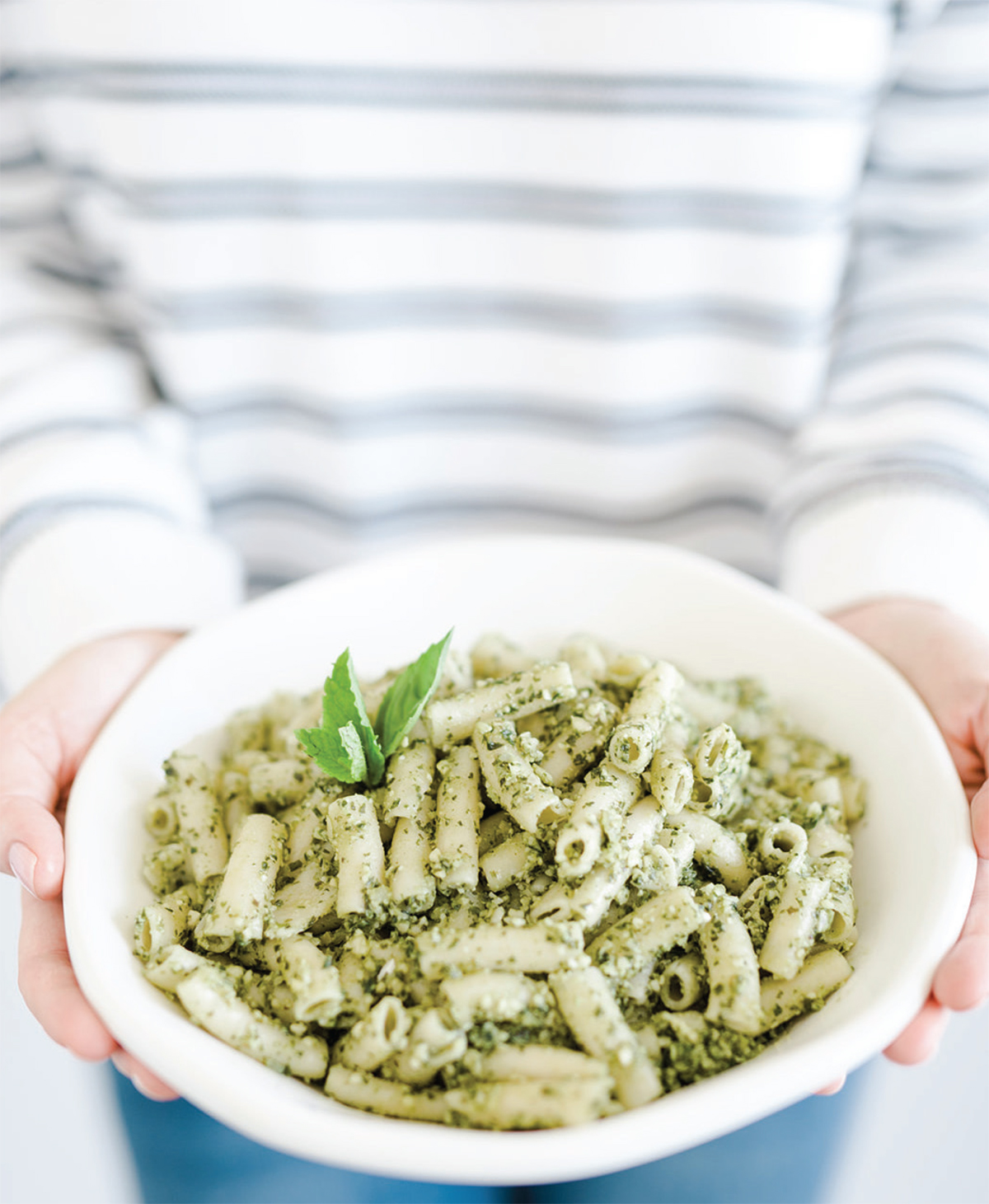

You don’t have to follow a specific diet, but you do have to do this.
With the invention of the Internet, we have access to more information than any time in history. Want to learn how to host a cocktail party like Martha Stewart? Google it. Turn on your underground sprinkler system yourself instead of paying the landscape company $150 per hour to do it? Google it, and an exact step-by-step video pops up. Build a potato gun from scraps around your house? Easy-peasy! Just Google it.
With so much information available these days, you’d think that we’d be armed with the exact tools we need to know exactly how to eat. Yet, like some cruel twist of fate, we’re more confused than ever about what to put in our mouths. Between the packaged food industry reaching more than $378 billion in the United States alone,1 and the ability for anyone to say anything they want on the Internet, we have become entangled in quite a web of information—and misinformation.
In the last 10 or so years, the health industry has pushed consumers to choose a diet label. According to the latest Facebook feeds, chat forums, and celebrity endorsements, to achieve better health you have to be paleo, vegan, raw, keto, or gluten-free—or whatever diet-of-the-year happens to be on trend.
But here’s the truth: Some fad diets work, for some people, but most do not. If you’ve ever had a friend who went paleo, vegan, or “just-eat-grapefruit” (or fill in the blank) and lost 10 pounds, then you tried it but gained 10 pounds, don’t fret. It’s not you. It’s the diet. That specific diet doesn’t work for your biology.
Moreover, you eat about 2,000 meals and snacks per year, give or take a few. I don’t know a lot of people who can get something right 2,000 out of 2,000 times. One problem with diet labels is that if you mess up once you feel like you cheated, which puts you in a negative state of mind and exposes you to high levels of stress. Stress, not just food, can have a detrimental effect on your overall health.
You have to find the best way of eating for you, then make that into a habit. While the best way for you to do this may fit into one of these dietary theory camps, it might not.
Better yet, you can pull from many different ideas—vegi-Medditer-aleo—and create your own eating style that helps you look and feel your best. Not only that, your body is always changing, day to day, week to week, year to year. You might find you want more cooked food in the winter and cooling raw foods when it’s hot out; lean vegetarian during some seasons and head toward meat in others.
In my opinion, aside from those shady types intentionally creating lies and counterfeit supplements for the sheer goal of profit, the biggest reason there’s continual confusion about what to eat is that most people still don’t understand that there isn’t one right way for everyone. A blogger finds a way that works for her or him, raves about it online, and trumpets how “it’s the only way.” They’re not intentionally misleading you, they’re just sharing what they found works for them. The harm comes from when we buy into the idea that there’s only one way to eat to be healthy, and when it doesn’t work, we give up.
But that doesn’t need to be the case.
Before we talk about anything else, let’s discuss whether or not you need to put a label on your eating habits. The first part of establishing a healthy eating habit that works for you in the long term is figuring out if you’re an abstainer, a moderator, or a mix of the two.
The simplest way to do this is to consider both sides and determine which one gives you more freedom. As I talked about in Chapter 1, our lifestyle choices and healthy habits should ultimately make us feel free. If we don’t, we will eventually resent them.
If you’re a moderator, you’re probably thinking, But how can not doing something make you feel free!? And if you’re an abstainer, you’re thinking, Ah, yes, I feel more free when I don’t have so many options. It feels better to be black and white about the habit. You’ll know which one you are based on how it makes you feel and whether or not you can best stick to your healthy habits.
Happiness and habit expert Gretchen Rubin writes:
You’re a moderator if you . . .
—find that occasional indulgence heightens your pleasure—and strengthens your resolve
—get panicky at the thought of “never” getting or doing something
You’re an abstainer if you . . .
—have trouble stopping something once you’ve started
—aren’t tempted by things that you’ve decided are off-limits2
(Note: The exception to this is with an actual addiction to alcohol, drugs, or cigarettes. It’s generally accepted that in these cases abstaining is the only solution.)
One of the biggest problems in the health and wellness world these days is that experts and coaches are trying to convert moderators into abstainers, or abstainers into moderators. Not only does it not work, it feels terrible to be on the receiving end.
You have complete permission to know yourself, determine which approach resonates, and even be a mix of the two. Personally, I’m a moderator with a list of things I abstain from. Moderating qualitarian, perhaps? I eat well at home, and almost always choose a smoothie, salad, or protein and veggies dish when I’m out. Then occasionally I’ll order a pizza with my family, and I can make a mean car-bonara dish from scratch.
But no matter what, the quality of my food matters the most. I always abstain from highly processed breads or meats, fast food, or drinks with sugar in them.
Whether or not you decide to label your eating habits, the most important aspect of the food you choose is that it benefits you. We call this functional food, because it functions for you, not against you.
For example, pancakes made from nutritionally void bleached flour, white sugar, and denatured canola oil might taste good in the moment, but none of the ingredients have any nutritional benefits. Those pancakes don’t function for you.
However, simple two-ingredient Egg and Banana Pancakes can be delicious flavored with cinnamon and vanilla and are loaded with protein, healthy carbs, vitamins, and minerals. This healthier choice delivers nutrition-boosting benefits and functions for your health.
When you combine the concept of functional food with becoming a qualitarian like we discussed in Chapter 2, you’ll be headed toward more health and less confusion. Put another way: Functional Food + The Qualitarian Way = More Health & Less Confusion.
If you’re an abstainer, diet labels can work for you. Words like paleo or vegan are music to your ears. If this is you, by all means label away.
For moderators, labels feel restrictive and absolutes like a life sentence. The 80/20 lifestyle (80 percent strict, 20 percent indulgence) really works for moderators where abstainers are better off with an all-or-nothing approach.
Think about what approach is best for your pursuit of healthy eating habits and do that, no matter what labels others impose on you. Now let’s move on to the most common topic that comes up in my conversations with clients: weight loss.
I promised you that this isn’t a diet book, and it’s not. I debated even mentioning weight loss here and decided to add it because 1) I’m frequently asked about it, and 2) some of you just skipped ahead to this section because it’s why you bought this book (You rebel, you! Promise me that you’ll go back and read from the beginning because you need to understand the previous chapters to make this section effective).
For you rule followers who have read the book from the start, thanks for still reading. Now that we’re all caught up, I need to share some thoughts about weight loss before we get into how to do it:
I deeply believe all of these things are true, and I hope you believe them, too. And, it’s possible to believe those things and also know that you feel better at a certain weight and have a desire to achieve that weight.
Shaming women for wanting to lose weight is the same as shaming women for not wanting to lose weight. Your goals and desired outcomes are yours and yours alone, not your spouse’s, significant other’s, mom’s, sister’s, friend’s, or trainer’s. It’s perfectly healthy to know that you feel more energetic and confident at a certain size or weight, and achieving that is worthy of establishing a Health Habit.
Think back to what we talked about in establishing goals. If weight loss is your desired outcome, shifting your internal dialogue and self-care are a huge piece of this. We’ll cover those in this book soon, but for now I’ll give you the basic facts you need to know about weight loss, because there’s no such thing as one magic bullet that makes everyone lose weight.
The quality of the calories you consume matters. Calories are a metric of energy, not nutrition, and all calories are not created equal. One hundred calories of potato chips sets off a completely different chain reaction of hormonal responses in your body than 100 calories of whole fruits and vegetables.
Empty calories from highly processed food generally burn faster than high-quality calories from nutrient-dense real food. In turn, these lower-quality calories can make you feel hungrier than before you even ate. In line with your new healthy habits as a qualitarian, the quality of the calories you consume should always be your first concern.
If you consume more energy than your body uses, you will store that energy as fat. Highly processed carbohydrates and added sugars will fast-track you to overconsumption.
If you burn more energy than you consume, your body will shed and release weight. This means creating a deficit in calories consumed to calories burned.
The biggest thing most people miss is that simply reducing calories is NOT always the best way to tip this balance. It’s one way, but it’s not necessarily the best way. It can backfire, as I explain below.
Maintaining a healthy weight has far more to do with the food you consume than the amount of exercise you perform. Expecting to “exercise away” excess consumption of energy (food) will lead to a lot of frustration.
If you’re within 5 to 10 pounds of your goal weight, then weight loss might not be what you’re after. You may simply need to change your body composition (e.g., build more muscle while losing a little fat); if you change your body composition, you may drop one to two sizes but you’ll weigh the same on the scale.
Per these five truths, consuming fewer calories than what your body burns will lead to weight loss. However, that’s not as straightforward as it sounds.
The oversimplification of “eat less, exercise more” leads to confusion and a whole lot of frustration because there are a variety of factors other than calories that influence how your body uses energy.
Your hormones—specifically insulin, ghrelin, leptin, cortisol, and thyroid hormones—your lean muscle mass, the quality of food you eat, the amount you move in a day, your stress levels, and some genetic factors all affect how much you will burn. Simply counting or restricting calories can backfire, because reducing calories consumed, or consuming poor-quality calories, can also change the rate at which your body burns those calories.
And don’t blame your genes; your lifestyle has much more to do with your weight than your heritage. The field of epigenetics has shown that lifestyle choices can turn genes “on and off” (i.e., change the way they are expressed).
If you notice familial trends—like everyone in your family is overweight—it’s possibly because you grew up with the same examples of lifestyle habits and developed the same emotional patterns, not just because of your genes. I mention this to remind you again that you are the master of your own fate. You have control over your lifestyle to set healthy habits that can ultimately express those genes in a different way (phew!).
An unhealthy calorie deficit comes from starving yourself, overexercising, extreme dieting, or eating lab-created “low-calorie” packaged food. This is generally not sustainable. The sensations of hunger, toxic burden, and obsession will make you feel miserable, and can potentially even slow down the rate at which your body uses energy, working against your desire to burn more calories than you consume.
Moreover, food is information because your cells talk to each other. This phenomenon is known as cell signaling. Every time you eat—or more accurately, every time you digest a certain food—the combination of nutrients you absorb allows your cells to talk to each other.
You might be wondering if you should weigh yourself. Here is my take: From a clinical perspective, most practitioners agree that weighing yourself once per week (right when you wake up, at the same time of day and under the same conditions to control variables) provides important information for you to understand where you’re at and keep you on track. You do not need to weigh yourself every day. Once a week gives you a more accurate measurement as your hormones, monthly cycle, stress, and meal choices can cause slight fluctuations. However, if the scale triggers any type of dysmorphia or disordered behavior (for example, not eating), or if you have a history of an eating disorder, then it’s best to say goodbye to the scale.
As Dr. Mark Hyman says, “Some calories are addictive, others healing, some fattening, some metabolism-boosting. That’s because food doesn’t just contain calories, it contains information. Every bite of food you eat broadcasts a set of coded instructions to your body—instructions that can create either health or disease.”
Nutrients and combinations of nutrients in food signal your cells to take certain actions (aka cell signaling). This means that the information in whole rolled oats and blueberries with a small amount of raw, enzyme-rich honey gives your cells different (better) information than the nutrient-void flour and processed sugar in a prepackaged blueberry muffin.
A healthy deficit can be created by filling up on nutrient-dense, quality food (it typically burns more slowly!) to keep hormonal responses on track, crowding out empty calories from highly processed carbs and sugar (I’m looking at you, breakfast pastries and packaged breadsticks), reducing stress (even the good kind), and getting your 10,000 steps in each day (we’ll talk more about these in Chapter 6: no gym membership required).
A healthy deficit will leave you feeling satisfied, energetic, and—dare I say it—healthy without feeling like your new healthy habits are too hard.
A recent study out of Stanford University School of Medicine has finally solved the low-carb or low-fat debate for good.3 It’s a draw.
Yep, that’s right. They both work equally well. The study recruited 609 participants between the ages of 18 and 50. About half were women and half were men. All were randomly placed into one of two dietary groups—low-carbohydrate or low-fat—and each group was instructed to maintain their diet for 12 months. By the end of the study, everyone had lost an average of 13 pounds, with no significant differences between the two groups.

In my view, the most important part of this study is that each group was instructed to eat real (or very minimally processed) food. Based on claims from hundreds of fad diets, how could this be? Each group has die-hard fans praising the merits of their program while demonizing the other.
The reason it’s a draw is simple: Both styles of eating reduce sugar, limit highly processed carbohydrates (and highly processed food in general), and encourage eating a plethora of fruits and vegetables. Both groups also consumed a moderate amount of protein while on the study. The same study also noted, “On both sides, we heard from people who had lost the most weight that we had helped them change their relationship to food, and that now they were more thoughtful about how they ate.”
A note of caution: The people in the low-fat group still ate some healthy fats, and their carbohydrates came from whole food sources, including vegetables, whole fruits, and legumes (beans, peas, and lentils), not croissants and double-mocha frappuccinos.
Trust me, I secretly wish I could live on a high-carb, bagel-for-breakfast-lunch- and-dinner diet and stay healthy, too, but that’s not the case. In my opinion, this study highlights that one reason why people lose weight and gain health when they go hardcore paleo, vegan, or other diet du jour is because they are focusing more on real food that is nutrient-dense and slow burning, not necessarily because of the diet guidelines themselves. These strict diet labels can certainly have benefits and allow the gut to heal over time; however, it may be the focus on real food, not the label itself.
I want to explore again the concept that if you’re within 10 pounds of your ideal weight and have a healthy body mass index (BMI), then a change in body composition (i.e., how much lean muscle mass versus fat you have on your body) may be what you’re really after.
You can check with your health professional or go online to find a simple BMI calculator, as long as you know your current height and weight. Keep in mind that BMI is not a perfect measure of health because it doesn’t take into account that muscle weighs more than fat by volume.
If you already engage in muscle-building activity, your BMI may read in the overweight range when really you just have more muscle than the average person. However, if you currently exercise a moderate amount doing mostly walking or cardio activities (or not at all), then the BMI chart will give you a decent picture of whether or not you’re at a healthy weight for your height.
If you’re within the normal range of your BMI for your height but want to be smaller or don’t love your shape, increasing muscle mass will help you shrink and appear to lose weight. Muscle weighs more but takes up less space than fat, so it’s possible to put on muscle and be smaller but weigh more. This is another reason why it’s so important not to obsess about a number on a scale.
If you have 20 or more pounds to lose, then general weight loss, which is still mostly fat loss, may be what you’re after. But if you’re close to your ideal weight and want to feel tighter, add resistance training and weights to your exercise routine. Since I’m not a personal trainer (and my editor keeps telling me to stay on track), I can’t guide you on this, but from my own experience, hiring a trainer to teach me how to lift weights was one of the best things I’ve ever done to maintain my happy weight.
You don’t have to be a gym rat; I’ve never had the need to be in a fitness competition (but if that’s your goal that’s super cool—I admire your dedication). For most of us, just two or three 45-minute sessions a week of weights can help build muscle, burn more fat, and reduce a few inches, even as the number on the scale stays the same. You get more bang for your buck with your time in the gym, so get off of cardio machines and into free weights and resistance training.
For example, I’m five feet eight inches tall. When I have periods of time without strength training—generally because I’m traveling a lot or just want a break—I usually even out at about 145 pounds, which is a size 6 on my frame, even with clocking 10k steps per day from walking, yoga, or doing cardio.
On the flip side, which is where I like to live, when I’m consistent with strength and resistance training, I usually weigh 146 to 150 pounds but am a size 4. I weigh more on a scale at a size 4 than I do at a size 6, because muscle is heavier than fat but takes up less space. I also eat more at my strength training size 4 because muscle needs more fuel.
We cover each of these topics in this book:
More food, smaller pants, and strong legs make the three times a week I lift weights a joy and a worthwhile part of my Health Habit. These don’t have to be your desired outcomes or goals, but if they are, I wanted to share those numbers with you for reference so you’re not mistaking weight loss with body composition changes.
You don’t have to label your eating habits, but you do need to understand the fundamentals of how food affects your body. Whether you want to lose weight, or just simply feel better, be more energetic, and take better care of your health, the solution isn’t another crazy-restrictive fad diet.
It’s getting back to basics that work, and building these basics into your everyday habits. Along with becoming a qualitarian and understanding whether or not you’re an abstainer or a moderator, these basics will help you stay on track to developing healthy habits that can fit into any eating style you choose to follow.
You’ve probably heard of the glycemic index before, but you probably don’t know the whole story. You see, although the glycemic index has been taught for decades, most instructors didn’t realize that what’s low glycemic in one person might not be low glycemic in another. And vice versa. Yep, that’s right. The same food can affect your blood sugar differently than it affects another person’s. But why is this so important?
This distinction is critical to your health because most people who develop type 2 diabetes or other blood sugar disorders live with the condition for years—or decades—before it’s diagnosed. You might think you’re too young or that diabetes wouldn’t happen to you . . . and you’d be wrong. Even if you’re at a healthy weight, you’re at risk. But before we move to blood sugar issues, let’s back up just in case you need a refresher.
The glycemic index rates foods based on how quickly they can cause your blood sugar to rise.4 Foods low on the glycemic index cause a nice slow rise in your blood sugar, which makes you feel good and have optimal levels of energy.
High-glycemic foods, on the other hand, provoke rapid spikes and dips in blood sugar levels, which can make you feel hungry, moody, and low in energy.
A separate measure, called the glycemic load, also measures how quickly the food makes glucose enter the bloodstream and how much glucose it can deliver. This gives you a slightly more accurate picture of a particular food’s impact on your blood sugar.
For instance, watermelon is technically high on the glycemic index, but because it contains so much water and very little carbohydrates it has a very low glycemic load. High-glycemic foods include the obvious offenders such as cookies, candy, and brownies. Items made from processed grain flours, like regular white flour or wheat flour, are also typically high glycemic.
Low-glycemic foods include most vegetables, most whole fruits, legumes (beans, peas, and lentils), nuts, meats, fish, eggs, and some whole grains. Consuming only foods that are low on the glycemic index will help stabilize your blood sugar levels, even out your moods, and release excess weight from your body.
While the glycemic index is an effective tool to create better health, here’s the kicker: It’s just a reference chart used for predictions. It doesn’t tell you how high your own blood sugar will go after eating a certain food. And since everyone’s biology can react differently, you need to use a blood glucose monitor to understand how your own biology responds.
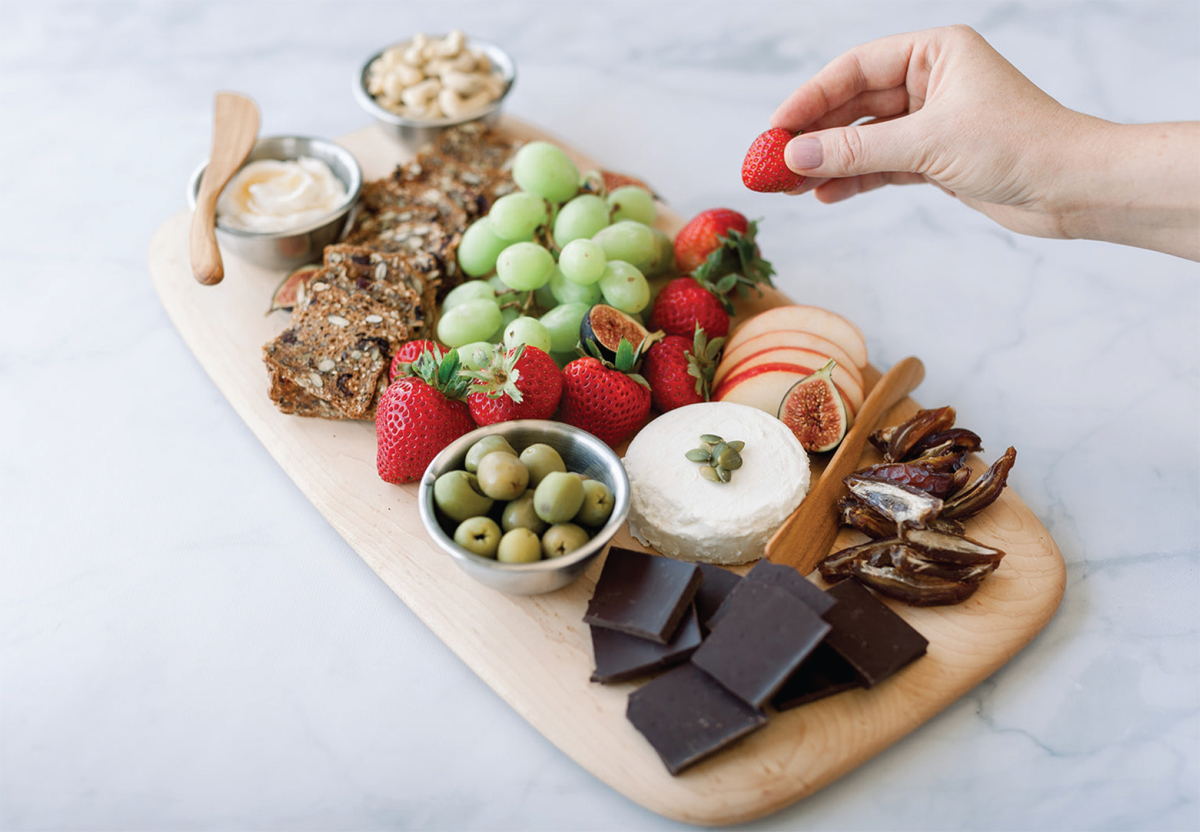
For example, I know when I order pad thai (my favorite takeout, made with rice noodles, green onions, eggs, tamarind, and veggies), 30 minutes after I finish my meal my blood sugar spikes up to 160. Even though this meal is gluten-free, dairy-free, and appears relatively healthy, there isn’t enough protein in the dish to slow down the absorption of the carbohydrates from the rice noodles and veggies.
If I order that same dish with chicken, my blood sugar hovers at about 128 (within the normal range). But remember, this is my experience. A friend did this same experiment with me on the same night, and while my blood sugar went to 128, hers spiked all the way to 180, even with the chicken.
The only way you can know how this meal affects you is to test it yourself. I don’t eat pad thai that often, but now I know how I can enjoy it from that restaurant without having to worry about my blood sugar levels. However, since no two restaurants use the same recipe, you’ll have to experiment when you eat at different places.
You can buy a blood glucose monitor at just about any pharmacy for around $30. The test strips are what cost more, but you can start with the smallest pack available (usually around $20). We’ll talk more about blood glucose (blood sugar) levels in the next chapter, but for reference here, most functional medicine practitioners look for a fasting blood glucose (upon waking) of 90 or less (but not below 70, which is too low). Thirty minutes after eating, it should remain under 135.
If you find yourself outside of the normal range, focus on constructing low-glycemic meals and snacks. To do this, simply combine a protein and/or fat with a good carbohydrate.
If you find fruits and vegetables quickly spike your blood sugar out of the normal range, eat the protein and/or fat before the carb, not at the same time. For example, a nutritionist friend of mine told me that she loves to visit her family’s orchard back East to pick fresh cherries. She’s been in the habit of testing her blood sugar, and she suspected a big handful of cherries on their own would cause a spike. She was right; 30 minutes after eating the cherries her blood sugar was over 175! The next day, she repeated the experiment but ate two slices of nitrate-free organic turkey before she ate the cherries. Sure enough, 30 minutes later, her blood sugar remained under 135.
What’s important here is that she didn’t demonize the nutrient-filled fruit, forgo the delightful pleasure of tasting fresh cherries, or miss out on family time, all of which contribute positively to her health. She stayed on top of her numbers and simply combined the cherries with some protein to remedy the situation.
I found her story interesting so I bought some cherries myself. I ate them without any other food on an empty stomach and 30 minutes later my blood sugar was 132 still well within the normal range. I suspected that would be the case because I know that I feel great when I eat fruits and veggies and sluggish if I eat an excessive amount of fats, even healthy ones.
My body tends to do better on real, natural carbohydrates as opposed to a paleo style of eating. This just goes to show that we all respond to foods differently, so it’s important to get that blood glucose monitor and see for yourself. Try and test every morning and after lunch and dinner for a week; if you’re in the normal ranges, then no need to keep on testing. Just repeat that experiment every six months to a year to make sure you’re on track.
I’m going to teach you how to get intimate with your blood glucose levels in the next chapter, but first, let’s cover a few more ways to easily develop daily healthy habits that will serve you for life.
Intermittent fasting has been used for centuries to improve health. It’s simple, effective, and easy to follow . . . when done right. Intermittent fasting isn’t about eating less, it’s about eating smarter. It works by allowing your body to lower insulin levels for longer periods of time. This helps prevent insulin resistance and keeps your body in a fat-burning zone longer.
With what I consider the least sexy, most unappealing name ever, the label “time-restricted eating” is here for the win, and although the name alone makes food-loving women want to hide under their desks, it’s something you need to know about. I’m going to stick with the name now because that’s what the scientists call it, but later on I’ll refer to this as “your eating window” because that sounds much more tolerable. And trust me, this is way easier than it sounds at first glance.
Time-restricted eating is a form of intermittent fasting where meals are consumed within a specific period of time. A popular and extremely effective form of this way of eating is an 8-hour eating window, then fasting for the remaining 16 hours of the day, called 16:8. Generally, this is done every day or almost every day.
Benefits of time-restricted eating can include:
Along with everything else I teach in this book—you guessed it—you get to find an eating window that works for you. Here are a few examples:
| SAMPLE TIMEFRAME | EATING WINDOW |
|---|---|
| 8-hour eating window, with 16 hours of fasting between dinner and breakfast the next day | 8 A.M. TO 4 P.M., 9 A.M. TO 5 P.M., OR NOON TO 8 P.M. |
| 10-hour eating window, with 14 hours of fasting between dinner and breakfast the next day | 8 A.M. TO 6 P.M. OR 10 A.M. TO 8 P.M. |
| 12-hour eating window, with 12 hours of fasting between dinner and breakfast the next day | 7 A.M. TO 7 P.M. |
The most important thing about utilizing time-restricted eating is giving your digestion and insulin levels a rest between dinner and breakfast the next day. A slow trickle of food or drinks (except water) up until you go to bed will keep your insulin levels high, which can deplete your energy, affect your sleep, increase inflammation in the body, and make it difficult to lose or maintain weight.
I find most women do well with a 9- or even 10-hour eating window for optimal health. Most days I personally have breakfast around 9 A.M. and dinner between 5 and 6 P.M., which has garnered me the loving nickname “blue-plate special” from some of my girlfriends. But the joke’s on them because restaurants usually have better prices from 4 to 6 P.M., and I sleep much more soundly when I stick to this practice.
Detoxing is built into the magnificence of this miracle we call a human body. Your lungs, skin, liver, kidneys, circulatory system, digestive system, and lymphatic systems work tirelessly, 24/7, on autopilot (thanks, autonomic nervous system!), efficiently ridding your body of toxins and metabolic waste. They are pretty darn good at it.
Going on a detox or doing a cleanse doesn’t automatically make your detox organs any better than they already are. However, lessening the burden on them by decreasing the toxic inputs can allow your body to use some of that saved energy to do more healing. But just doing it for three to five days isn’t necessarily a big win. Lessening the burden over time, as part of your Health Habit for the long haul, by following the lifestyle outlined in this book will help the most.
One significant benefit to doing a short-term cleanse or a detox is that it can reset your habits and your expectations of how you follow your habits. This can be tremendously beneficial to set you on a good path, and is something I do a few times per year.
If it’s helpful for you to do a cleanse or detox to kick-start better habits, then by all means do it. That’s why I give you a 28-Day Kick-Start Plan at the end of this book. But please don’t starve yourself for prolonged periods of time, as that doesn’t benefit you in the long term.
If you’re new to this concept and generally snack before bedtime, even shortening your eating window to 10 or 11 hours will have health benefits.
Remember, time-restricted eating does not mean starving yourself. I can’t emphasize that enough. The biggest mistake people make when trying intermittent fasting is not eating enough.
It’s not about eating less, it’s about eating the same amount but in a shorter time period. So be sure to eat enough at dinner so you don’t feel hungry before bed. Sticking to this type of intermittent fasting is safe to do every day, and has proven benefits if it’s followed at least five days per week, which goes back to your goal of consistency, not perfection, in establishing your Health Habit.
When you have an occasional night on the town, just have fun! Don’t miss out on the benefits of a loud-and-late dinner with friends. (Or, if you’re a social introvert like me, going out with friends then coming home early because you love them but want to be alone and enjoy a 9 P.M. black bean burrito while you catch up on Netflix.)
And, for the love of God, just enjoy Thanksgiving Day without freaking out about the feast. Aim for high-quality foods and ingredients on special occasions, but bless and release it all on a big day. One meal outside of your eating window every once in a while isn’t going to sabotage you, it’s what you do after (i.e., getting back on track the next day, and the next, and the next) that matters.
Moderators, you will be delighted with those statements. Abstainers, I know you just had a mini panic attack. It’s okay, breathe. You don’t have to stick to time-restricted eating only five days per week. It’s healthy to do every day and never miss a beat, if that feels better to you. Pregnant women or individuals with a history of disordered eating should abstain from all types of fasting. People with diabetes or cancer should consult a health-care provider before engaging in any type of fasting.
Your digestive tract is one big ecosystem, made up of hundreds of diverse bacterial species. This ecosystem, including the microbes and their DNA, is called your gut microbiome. In fact, you have more bacterial cells in your digestive system than cells in your body—about three to five pounds worth.
The gut microbiome is a subset of your body’s microbiome. Both inside and out, your body hosts a huge array of microorganisms on your skin, in your organs, and circulating through your entire system. A lack of good bacteria in your digestive system can lead to a variety of digestive disorders, including leaky gut, small intestinal bacterial overgrowth (SIBO), or another type of gut dysbiosis such as an overgrowth of candida. For the purposes of this book I’m going to give you some overly simplified explanations of these, since we’re not sitting in a medical conference and I’m trying desperately hard not to sound boring.
Leaky gut is a condition in which unhealthy processed foods, preservatives, high amounts of sugar, pharmaceuticals, lack of good bacteria, and even stress can cause the lining of the small intestine to develop microscopic holes. Particles of food or other things can then pass through these tiny openings and into your bloodstream, where they are not supposed to be.
As an example, think of it like stretching plastic wrap over a bowl of water. If you turn the bowl of water upside down, no water should come out. But if you poke a few pinholes in the plastic, water will drip through. The plastic wrap in this case is like the lining of your small intestine. It shouldn’t have any holes.
Your small intestine isn’t smooth like plastic wrap, rather it’s covered by tiny thread-like projections called villi that increase your intestinal absorptive surface to somewhere in the neighborhood of 160 square feet! That’s a lot of area to absorb the nutrients (and toxins) from your food. In addition to the culprits I listed above, refined grains, gluten, sugar, dairy, genetically modified organisms (GMOs), pesticides, and artificial sweeteners can all contribute to leaky gut.
Your gut microbiome—a sub system of your overall microbiome—is the collection of good and bad bacteria in your digestive system. It’s responsible for keeping your health in balance. SIBO is a condition where normal bacteria are misplaced in your digestive tract, throwing everything out of balance. This can come from bacteria that is supposed to live in your colon working its way backward in the digestive tract (yikes!) and making itself at home like your unemployed brother-in-law. It’s unwelcome in the small intestine and needs to get kicked out to do its real job back in the colon.
But the goal isn’t to get rid of all bacteria—that’s impossible and we need it—but rather to get the bacteria back into balance. This can be accomplished by introducing good bacteria via fermented foods and probiotics, and eliminating the root cause of the dysbiosis, including processed foods, foods that you may have a sensitivity to, excess sugar, excessive use of pharmaceuticals, and stress.
Gut dysbiosis is an imbalance of bacteria somewhere in your digestive tract, for example your stomach, small intestine, or colon (large intestine). It’s broadly defined as any change to the composition of resident commensal communities relative to the community found in healthy individuals.5 In layman’s terms, it means your gut bacteria is out of whack.
Candida is one type of bacteria that lives in your gut. It loves sugar and feeds on it like a sleep-deprived mom feeds on coffee. When too much sugar is present in the gut, candida goes hog wild feeding on it, growing and taking over. You may have heard people say, “I have candida,” which is correct for us all. A little candida is normal and supposed to be there, a lot can cause an imbalance (dysbiosis) and is a problem.
In many cases leaky gut, SIBO, or most types of gut dysbiosis can be healed by removing all processed sugar and preservatives from your regimen in combination with an elimination diet and/or implementing a gut-healing protocol. These digestive disorders can cause painful bloating (feeling like you look pregnant when you’re not), uncomfortable or uncontrollable gas, loose stool, autoimmune conditions, or even food allergies or sensitivities.
An elimination diet does not have to be a death sentence for a certain food group. The real goal of an elimination diet is to pinpoint if a food is causing problems for your health, then heal the condition to be able to reincorporate the food.
If you have an actual allergy then yes, you will probably have to eliminate the food forever. But if you eliminate a food to heal a food sensitivity or a gut condition, you can usually reincorporate high-quality versions of that food back into your meals, which was the case for me with dairy. I suspected leaky gut, so I decided to diligently remove dairy from my diet about five years ago, and my skin magically cleared up—especially around my jaw line. I couldn’t believe the difference; after having permanent breakouts on my chin for years, it completely healed after about eight weeks off dairy.
Over the next few years, every time I tried dairy, I had a breakout within 24 hours, like clockwork. I pinpointed that it was cow’s milk cream that was the worst offender, which is usually in soups, sauces, and desserts.
After a few years off dairy, I got really serious about healing my gut by eating high-quality food, eliminating processed grains, and incorporating collagen and probiotic supplements. I can now have goat cheese and real Italian Parmigiano-Reggiano (a hard, long-fermented cheese that is low in cream, not the fake stuff in a plastic shaker bottle) with no issues.
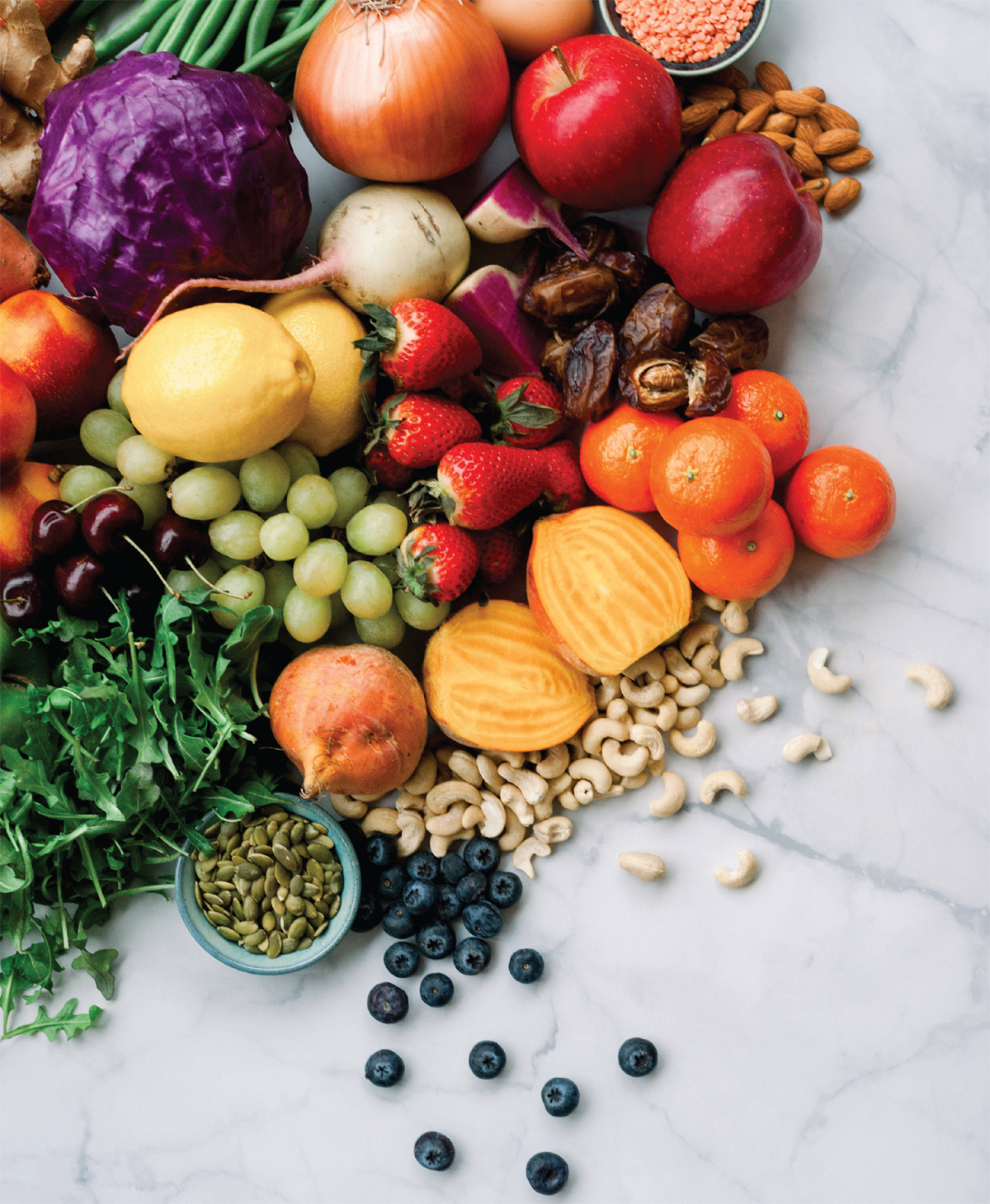
If you suspect you have leaky gut, SIBO, and excess candida or another gut condition, please seek help from a health-care provider. It’s perfectly healthy to engage in an elimination diet on your own to gain more self-awareness into what foods heal you (in fact, I included the concept in your 28-day kick-start!), but do not self-diagnose a medical condition. Lean on an expert for assistance. For now, let’s talk about creating a healthy gut microbiome with your daily eating habits.
For optimal gut health, it’s crucial to create an inviting place for beneficial bacteria to flourish in your digestive tract, as your gut microbiome can influence your microbiome as a whole. Lactic acid–producing bacteria, such as lactobacillus and bifidobacteria (found in naturally fermented foods and probiotics), will do just that.
You’ve probably heard of probiotics before, and they’re now more crucial than ever. Stress, processed foods, and widely used (but mostly unnecessary) antibacterial agents in everything from hand soap to toothpaste, and the overuse of antibiotics in our modern world may have killed a good amount of your good gut bacteria. So it’s great to focus on amping up your good gut bacteria because they can multiply and have a cumulative effect.
Naturally fermented foods contain a multitude of friendly bacteria (aka probiotics) that your body needs to thrive. They also add a wonderful, tangy flavor that can take a dish from just okay to wowza, that’s good. Add some kraut to your salads or mix some coconut yogurt (or Greek yogurt if you tolerate dairy) into your smoothies or overnight oats.
Sorry, even though alcoholic beverages are fermented, they don’t count. The alcohol and acids used to ferment the drinks make it nearly impossible for good bacteria to thrive (bummer for us wine lovers, I know).
When I was young, I used to detest sauerkraut. But little did I know, I wasn’t eating real sauerkraut. My mom’s mom, with steely black hair and Russian roots, was madly in love with her husband, my mom’s German dad, thus learned how to make his favorite German dish, called knoephla. Knoephla is basically a dumpling made from white flour and milk, sometimes served in soup, sometimes with more potatoes. It’s gluten-and-dairy-carb-city, and as her version didn’t contain any spices or flavoring, in my opinion it tasted like flour paste. Even as a kid I knew I didn’t like it (I was apparently destined to become a health coach).
My grandmother was a whiz at canning cucumbers with fresh dill, so dinner was usually pickles, knoephla with sauerkraut (another German invention/discovery), and Tang. Remember Tang? That orange drink invented by Germans that became popular in the United States when NASA used it on spaceflights? It was my grandmother’s way of showing us that she loved us—Tang did contain vitamin C, along with a whopping 29 grams of sugar per serving. As a result my cousins, my sisters, and I were bouncing off the playset in the backyard while she made the knoephla.
Just like Tang, food companies were starting to make convenience foods and my grandmother’s sauerkraut came in a can. Here’s what she didn’t know: It was just cabbage soaked in vinegar with preservatives made to taste like real sauerkraut.
Real sauerkraut is fermented—lactofermented, to be exact—and contains loads of healthy bacteria that keep your gut healthy. Once the canned stuff came out, my grandmother, along with women around the world, stopped making the real versions, both of sauerkraut and other foods. Over the next few decades and into the 1990s, when the low-fat craze hit, the rates of chronic diseases skyrocketed.
It’s not my grandmother’s or the women (and men) in her generation’s fault, it’s simply the side effect of overconsuming highly processed food replacements. The good news is that real sauerkraut is actually delicious, inexpensive, and almost ridiculously simple to make yourself at home. You just need cabbage, salt, spices if you want them, a mason jar, and some counter space. You can make it at room temperature and it will keep in your refrigerator for a few weeks.
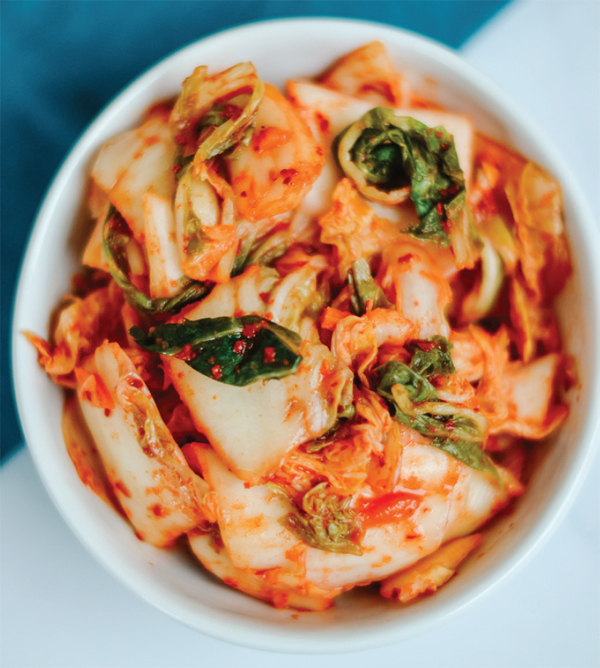
You can also buy fermented veggies, like sauerkraut or kimchi (sauerkraut’s delicious Korean cousin); just remember that the real thing will always be refrigerated at the store. Read the label and make sure they are fermented, not just simply canned in vinegar.
The fermentation process gives foods a naturally tangy bite, which from a culinary perspective adds flavor and interest to your dish while also cutting heavy fatty flavors, which is why you’ll usually see some type of pickle on a burger. Real fermented pickles are tangy because of the lacto-fermentation, not simply from being soaked in vinegar like pickles that you find on the shelves of grocery stores.
Fermented pickles are making a comeback, which is good news for your gut health—give them a try and enjoy the flavor along with the natural probiotics. Remember, you can find them in the refrigerated section of the grocery store with the other fermented products.
Some examples of naturally fermented foods include:
There are three ways to incorporate a daily probiotic dose into your eating habits:
As I mentioned before, real fermented foods are found only in the refrigerated section of your store. Look for raw (unpasteurized) and read about the company before choosing your product. These days, it’s easy to find things like fermented “krauts,” fermented veggies, or kefir at the grocery store. Like all foods you purchase, be mindful of added sugars and don’t heat real fermented foods, as the heat can kill the good bacteria. Enjoy them raw.
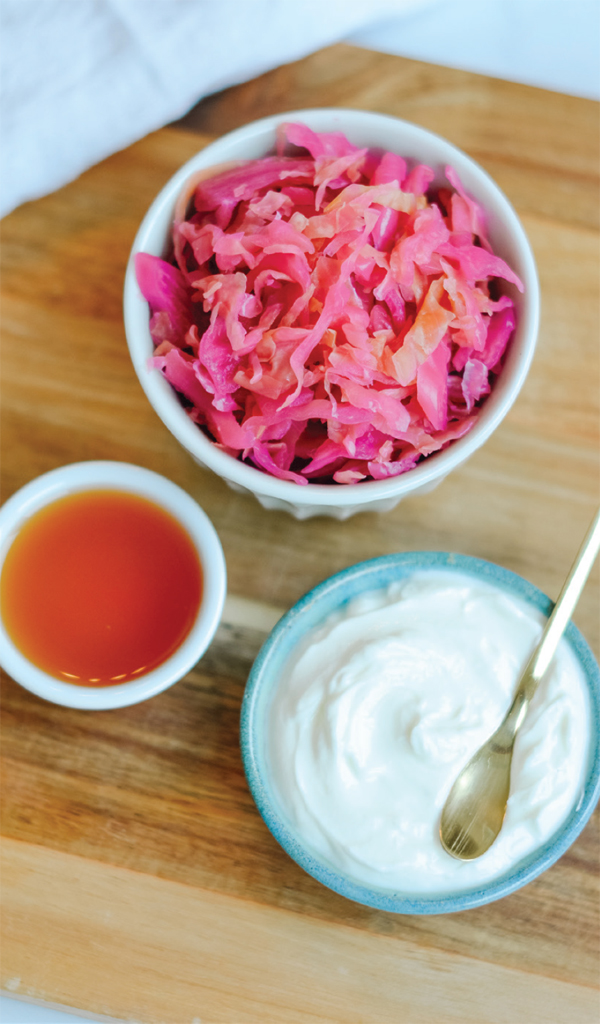
The process of lactic acid fermentation turns seemingly plain veggies like cabbage and cucumbers into the aforementioned deliciously tangy and healthful foods like sauerkraut and pickles. Homemade sauerkraut is one of the easiest and cheapest things you can make at home. You can also make your own yogurt at home, or two-ingredient coconut yogurt if you prefer dairy-free like me.
If you find it difficult to incorporate fermented foods into your daily meal plan, or just want extra probiotics, a high-quality probiotic supplement can help. Look for a dairy-free probiotic that contains at least 10 billion to 15 billion colony-forming units (CFUs) at the time of manufacture. That information should be listed on the package.
I eat fermented foods as often as I can, but I’ll admit I don’t find a way to incorporate them every single day. I do take a probiotic supplement every day when I take my multivitamin.
Since you and I are pretty good friends by now, let’s break taboos and talk about that thing that people aren’t supposed to talk about. Don’t worry, it’s not politics (we don’t know each other that well), it’s money. Specifically, your food budget.
I have friends with very small budgets who spend a lot on food because they value what they put in their mouths, and I have friends with quite a lot of money who spend very little on what they eat because they were raised to believe that food should be as cheap as possible. The opposites are also true: Some people with money spend more because they can, and some people skate by on what they have.
Severe poverty aside, your beliefs and value system set the tone for how you see food and what you spend on it.
I’m not here to tell you what’s right or wrong, but I do want to reframe a common belief that eating well has to be expensive. Sure, if you buy grass-fed filet mignon, greens imported from another country, and a lot of packaged yet still heathy convenience food like premade bone broth or cashew butter, then your grocery bill is going to skyrocket.
To maintain a reasonable food budget, buy in-season produce and make most of your own food. In-season produce is usually located at the center or front of the produce section and will vary depending on where you live. Not only does it usually cost less, but it’s also the most delicious option in the store, as it was harvested most recently.
Another tip is to use frozen fruits and veggies (read the labels and make sure nothing is added), and shop in bulk bins—and to only buy what you’re going to use.
For example, if a recipe calls for one tablespoon of a spice you don’t own and you’re not sure how much you’ll use it, only buy a few tablespoons from the bulk section at your natural grocer instead of an entire jar. Need some pine nuts for a new recipe? Buy the exact amount you need from the bulk section.
Include inexpensive staples like eggs, beans, and lentils in your meal plans, and if you eat meat and fish, ask the meat counter what’s the best price that day. Your healthy grocery receipt can be even less than what you spend on all of that highly processed food if you shop smart and buy in season.